



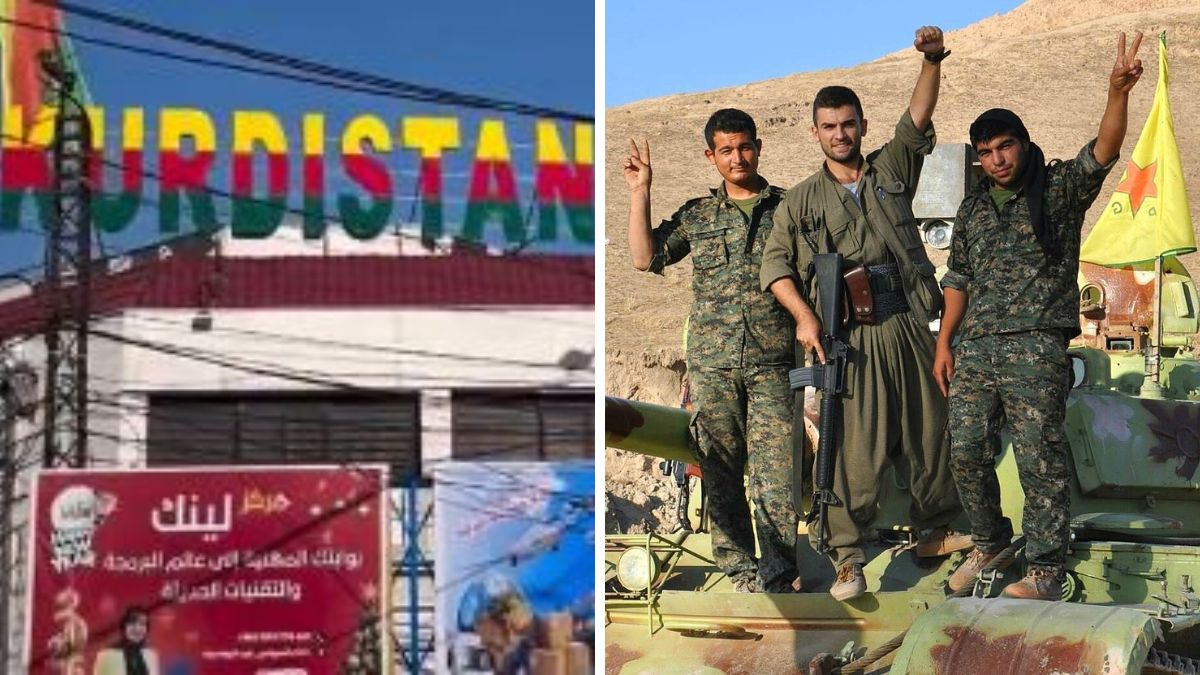
The Kurdistan Region of Iraq (KRI) sits at a unique geopolitical crossroads, bordering Syria, Türkiye, and Iran. The KRI remains a constitutionally recognised federal region within Iraq and maintains a high degree of administrative, security, and economic autonomy. By maintaining semi-autonomous status in Iraq, it has faced several regional challenges while navigating precarious survival over the past decades. Moreover, the KRI’s semi-autonomous status does not confer sovereign status; it remains under the ambit of the Iraqi state. However, to date, the governing Kurdistan Regional Government (KRG), which monitors border crossings, faces a humanitarian crisis and threats. Managing these refugees and asylum seekers has become a pillar of the KRG’s survival strategy amid a dual-front crisis: a low-intensity conflict with the Islamic State (ISIS) and a recent spillover from the US-Israel-Iran conflict.
According to the United Nations High Commissioner for Refugees’ (UNHCR) operational data portal, as of March, Iraq hosts around 3,49,402 refugees and asylum seekers, of whom 88.4 percent (3,08,797) are Syrians and the remaining 11.6 percent are from Iran (2.6 percent; 8,953), Türkiye (2.1 percent; 7,224), Sudan (0.5 percent; 1,866), and unidentified countries (6.5 percent; 22,562). Additionally, a whopping 82 percent of the Syrian refugee population resides in camps in KRI governorates, including Erbil (42.6 percent; 1,48,985), Dahuk (26.4 percent; 92,244), and Sulaymaniyah (11.5 percent; 40,012).
Meanwhile, the contemporary refugee condition in the KRI has severe implications for its security architecture. Unlike the federal government in Baghdad, which pushes for the closure of refugee camps, the KRG maintains a policy of calculated hospitality that benefits it in two ways. First, it helps the KRG uphold its international image as a stable, pro-Western democratic partner and ensures the continued flow of foreign aid and military support. Second, integrating Syrian Kurdish refugees into the urban areas of its major governorates provides a critical workforce and reinforces a pan-Kurdish identity that transcends Sykes-Picot borders.
However, this strategy has been strained by the resurgence of ISIS sleeper cells in the refugee camps. Before 2020, the Kurdish armed forces fought extensively against ISIS jihadists and imprisoned many, leaving their spouses and children in refugee camps outside the cities. Many of these female family members were indoctrinated with radical ideology, and their proselytising of their children with similar jihadist ideas poses a security threat to the KRI and its KRG.
Additionally, the threat has risen sharply in recent years, and ISIS has shifted its tactics from large-scale territorial conquests to targeted assassinations and infrastructure sabotage, especially in territories between Erbil and Baghdad. For refugees, this has led to heightened surveillance and restricted movement, as the KRG security apparatus, Asayish, the primary intelligence and internal security forces operating in Kurdish-controlled regions, fears that the refugee camps could be exploited for insurgent recruitment or used as hideouts for militants. To ensure safety, security personnel conduct ongoing search operations as a precaution.
Another serious concern for the KRI in refugee administration is the growing threat from Iran. Since early 2025, the KRI has been a frequent target of Iranian ballistic missiles and drone strikes, which Iran justifies by alleging the presence of foreign intelligence hubs or Iranian-Kurdish opposition groups within KRI borders. Many Iranian refugees in the KRI are ethnic Kurds from the Rojhelati region who fled political persecution. The increased pressure from Iran to disarm or expel these groups remains a priority, leaving the KRG in a trap. Protecting these refugees to maintain its internal legitimacy and human rights record fails to appease Tehran, risking potential escalation.
Meanwhile, the KRG’s response to these challenges is often perceived by the displaced as sophisticated diplomacy, in which the government uses the refugee presence to lobby for advanced air defence systems and a continued military presence, arguing that its collapse would trigger a secondary migration crisis into Europe. By linking the refugee situation to a global security framework, the KRG maintains cordial relations with the international community, especially with the West. However, amid the recent US-Israel-Iran conflict, the KRG’s silence largely disappointed the US, which may pose serious problems for the latter in the long run. At the same time, Iranian-backed militias in Iraq (the Popular Mobilisation Front) are gaining more power and the growing shadow wars of ISIS in the deserts of Anbar and the mountains of Hamrin, placing KRI’s peace under duress.
Thus, the KRI’s refugee strategy should be understood through the lens of securitised humanitarianism, which treats its refugees merely as a demographic shield and a diplomatic lever. Although the KRG’s open-door policy towards refugees is relatively better than that of its neighbours, the escalation of regional tensions, the Iran factor, and the persistent insurgency of ISIS have narrowed its margin for error. The war in the Middle East is currently at a stalemate; it is difficult to predict whether the US-Israel alliance will overthrow the Ayatollah regime. In such circumstances, will the KRI’s long-term strategy of using refugees as a transactional tool sustain?
The author is a doctoral candidate at the Centre for West Asian Studies, Jawaharlal Nehru University, New Delhi.
