



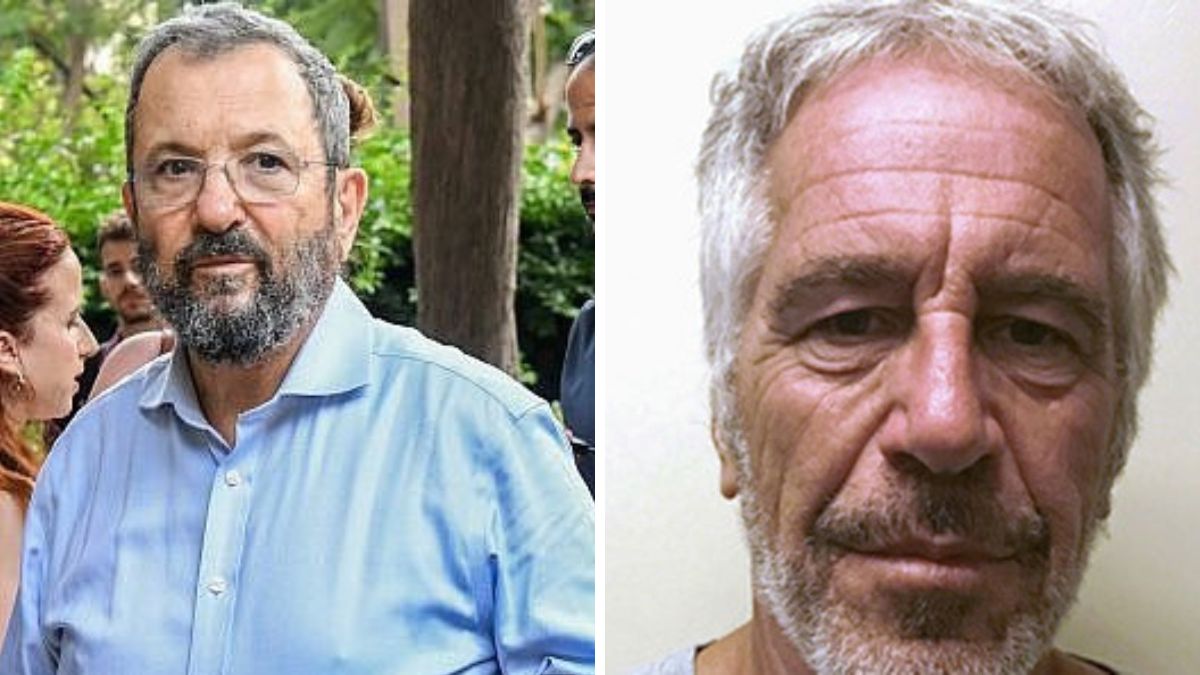
The recent release of an audio file containing the conversation between Jeffrey Epstein and Ehud Barak, along with millions of other documents, by the US Department of Justice has sparked a major controversy. However, buried in a three-hour recording of Ehud Barak—who is a former Prime Minister of Israel, defence minister, and Chief of Staff of the Israeli Defence Force (IDF)—is his strategy for “mass conversion” and “selective immigration” to Israel. Recorded around 2013 or 2014 during Barak’s personal transition from politics into the private sector, the conversation reveals a deep-seated anxiety about Israel’s changing demographics.
While the recording itself dates back to the mid-2010s, its emphasis on the systematic intake of an additional one million Russian immigrants remains surprisingly relevant. It provides a rare glimpse into how Aliyah is used as a strategic tool, not only for Zionist ideals but also to stabilise a Jewish majority and shift Israel’s demographic path.
Before discussing the problems of demographic transition, it is important to understand the population itself. Israeli Arabs make up about 20 percent of the total population. Data from the Statistical Yearbook of Jerusalem on Israel's annual population growth is surprising. Since 1978, the population growth of Arabs (Muslims, Druze, and Christians) has been higher than that of Jews and others, with 3.5 per cent compared to Jews, who were only 2 per cent at that time. Until 2015, there was a noticeable difference between the two, but this gap decreased in subsequent years. In 2023, growth rates are 1.8 percent for Arabs and 1.6 percent for Jews and others. Adding another million immigrants from Russia will help Israel strategically in multiple ways.
First, according to population projections, by 2050, Arabs will make up the majority of Israel's population and the influx of additional Russian immigrants will dramatically help Israel maintain Jewish dominance. Israel primarily views the Arab citizens through a security lens, which could further Jewish-Arab tensions. Russian immigrants, on the other hand, tend to align politically and socially with the Jewish majority, even though many are not halachically Jewish.
Second, the new immigrants would serve as a counterbalance to Israel's growing Haredi population. According to the Israeli Democracy Institute (IDI) and the Central Bureau of Statistics (CBS), Israel's Haredi population is expanding rapidly. It is projected to reach 22-25 per cent by 2050, up from 14 per cent today. Furthermore, Haredim oppose military service and see it as a threat to their religious way of life. For Barak, unlike other groups, Russians quickly integrate into the Israeli Defence Force (IDF). Immigrants from Russia are often perceived as holding more secular views and an anti-clerical outlook. A notable example is the immigrants from the Former Soviet Union (FSU) in the 1990s, many of whom had lower levels of religious belief or no prior connection to Judaism. Similarly, a new influx can help stabilise the state’s secular-democratic foundation against an internal religious-conservative rise.
Thirdly, the significance of these potential immigrants in boosting Israel’s educational and technological sectors cannot be overstated. The one million are not just regarded as citizens but as human capital. Historically, Russian immigrants to Israel have demonstrated higher levels of education and technical skills and have been more likely to work in highly skilled jobs than the general Israeli population. They excelled mainly in scientific and technological fields, a valuable asset for Israel.
Although Israel gains from another million Russian immigrants in the current situation, there is still a consequence. In Israel, the debate over ‘Who is a Jew?’ continues even decades after its founding. The Israeli Rabbinate has upheld a strict, Halakhic definition of Jewishness, which requires a person to have a Jewish mother, a rule that many immigrants do not meet. The need for more immigrants has clashed with the political power of the religious right, which wants to limit Aliyah only to those who meet the strictest religious standards.
While this influx provides a pragmatic solution for Israel to maintain a Jewish majority and strengthen its technological and defence sectors, it also increases internal tensions. Conversely, acting as a secular counterbalance to the Haredim, they would reinforce the nation’s democratic foundations by challenging traditional religious authority. Ultimately, as Zionism has always championed, Immigration is not just a demographic issue but also a security challenge.
The author is a doctoral candidate at the Centre for West Asian Studies, Jawaharlal Nehru University, New Delhi.
