



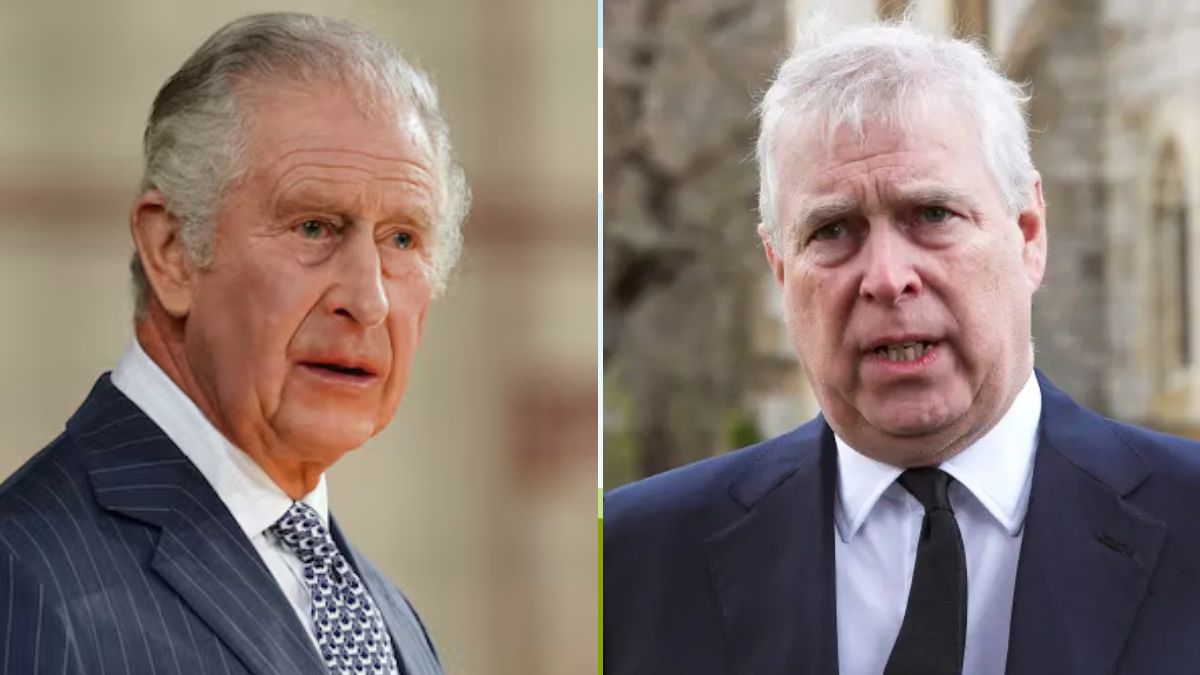
The Thursday arrest of former British royal Andrew Mountbatten-Windsor over his links to notorious sex offender Jeffrey Epstein has sparked questions of whether he will receive a life sentence, King Charles III issued an official response.
The unusual arrest is said to have taken the royal family by surprise, as they were reportedly not informed beforehand. King Charles has said in a statement that the the "law must take its course" in investigating the allegations against his brother.
This is the first such arrest in the royal family's history, and may also be the first conviction in that regard, should he be sentenced in court.
Stating that the news of Andrew's arrest had caused him the "deepest concern", he added that the investigating authorities had the "full and wholehearted support and co-operation" for the probe into the ex-Prince.
Specifically, the former prince's alleged misconduct in public office is a part of the latest tranche of three million Epstein files, which was released by the US Department of Justice (DOJ) on January 30.
Andrew, who is currently detained by the Thames Valley Police Department on his 66th birthday, is suspected of having sent confidential government documents to Epstein during the ex-prince's time as a trade envoy, a BBC report has said.
The Epstein files have also shown that the ex-Prince—who was stripped of his royal title just last year by his brother, King Charles III—had advocated for the disgraced financier on a 2010 state visit to the UAE. He had been accompanying the Queen during the official visit.
What next for Andrew Mountbatten-Windsor?
Andrew can legally be detained by the Thames Valley PD for up to 24 hours without establishing charges. This limit can be extended to an upper limit of 96 hours, subject to approvals, a Daily Mail report said.
Before this period ends, he must either be charged or released, which in turn could see him placed on bail under various conditions.
Before and during any interview, Andrew has the right to seek legal advice and to have a lawyer present.
At non-interview times, the former Prince will likely be held in a standard custody suite cell, which usually have just a bed and a toilet.
