



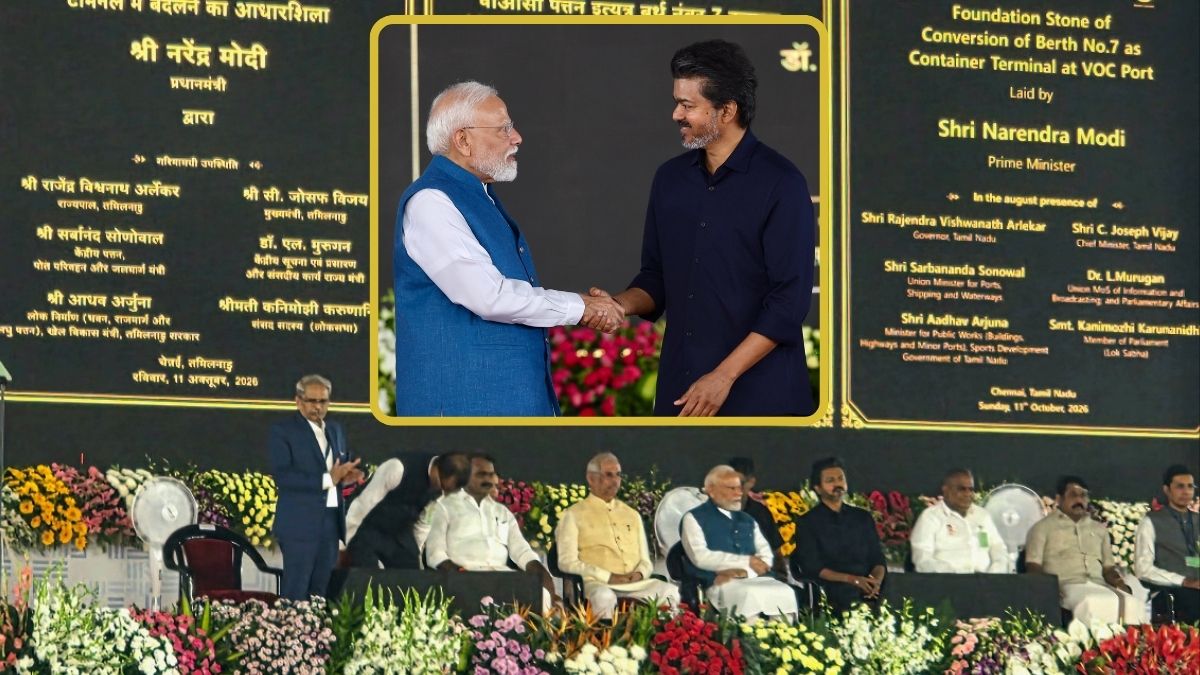
A week after the Union Cabinet approved the ₹17,167-crore Outer Harbour project at V.O. Chidambaranar Port, Prime Minister Narendra Modi flagged off eight projects worth ₹753.68 crore at the Thoothukudi port. When you look closely, these latest projects plug a hole in India’s current maritime sector and move it closer to the larger Maritime Amrit Kaal Vision 2047.
The ₹753.68-crore package involves increasing the capacity inside the port, a more aggressive move to cleaner fuels, and improving the efficiency in the movement of cargo to and from the gate.
The largest item is a ₹517.19-crore conversion of Berth No. 7 into a container terminal. Planned capacity is 4.2 lakh TEUs a year, with a 370-metre quay, about 10 hectares of backup area, three quay cranes and nine rubber-tyred gantry cranes. This is expected to bring the draft to 14.2 metres to accommodate larger mainline vessels.
This terminal at Thoothukudi is different from the much larger Outer Harbour scheme, which is designed to expand the port’s role in transhipment.
But what it does is tie the two together into the larger vision—the VOC Port will be able to handle more containers locally while improving access to international shipping services, going forward.
Among the latest projects are the aggressive green-fuel plans, from pilot activity towards dedicated infrastructure.
The port will get a 3MW green hydrogen production and refuelling station, estimated at ₹81.33 crore, for port vehicles. Another green methanol bunkering and refuelling facility, costing ₹38.12 crore, includes two 750-cubic-metre tanks and a 2.8-kilometre pipeline to the oil jetty.
Both these are special infrastructure for India’s green maritime push. Last year, VOC Port launched a ₹3.87-crore pilot green hydrogen facility and saw the foundation stone laying of a pilot green methanol facility to align with the proposed Kandla–Tuticorin Green Shipping Corridor.
Moreover, another 2MW solar plant, expected to generate 3.77 million kWh annually, and four electric buses will surely add to the port’s green ambitions.
Other projects include a 3.37-kilometre four-lane road, a truck terminal with space for about 230 vehicles, and mechanised fertiliser bagging equipment.
A big part of Maritime Amrit Kaal Vision 2047 is its emphasis on port capacity, connectivity and green shipping. Along with VOC Port’s ₹17,167-crore Outer Harbour plan, these new projects are expected to expand India’s maritime infrastructure to help in faster trade and lower-emission maritime operations.
The launch event in Chennai on Sunday, saw PM Modi accompanied by Tamil Nadu Governor Rajendra Vishwanath Arlekar and Chief Minister C. Joseph Vijay, and other ministers.
