



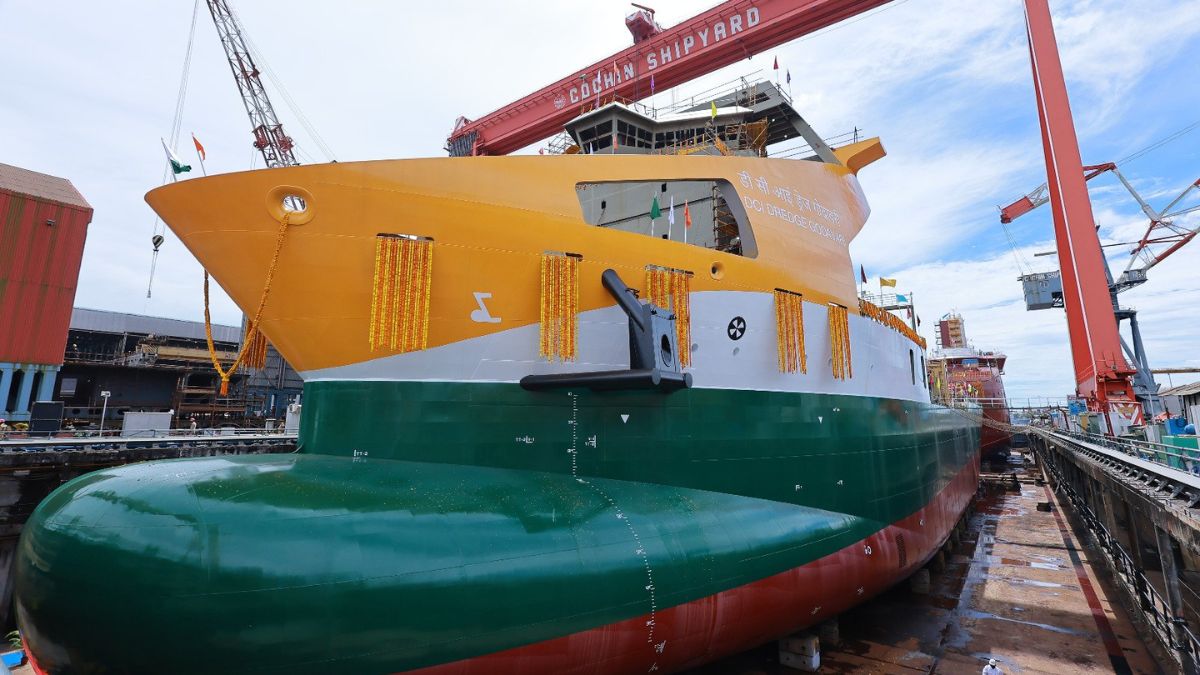
India is doubling down on "green shipping" as it tries to grow its maritime economy without worsening pollution along its 7,500-km coastline.
A recent statement from the Centre described a sweeping plan that ties together clean fuels, renewable power at ports, greener vessels and tougher environmental rules under the Maritime India Vision 2030 and the longer-term Maritime Amrit Kaal Vision 2047.
Union Minister for Ports, Shipping and Waterways (MoPSW) Sarbananda Sonowal is leaving no stone unturned in this intensive maritime move by India.
Under the National Green Hydrogen Mission, the government aims to produce 5 million tonnes of green hydrogen annually by 2030, attract about Rs 8 lakh crore of investment and create roughly 6 lakh jobs, while cutting fossil fuel imports by Rs 1 lakh crore.
The Centre identified three major ports—Kandla, Paradip and Tuticorin—as future green hydrogen hubs where ships can eventually refuel on low-emission fuels such as hydrogen and ammonia. These efforts are meant to support cleaner transport in sectors like steel, fertilisers and heavy vehicles as well, according to the government.
Maritime India Vision 2030 projects investment of Rs 3–3.5 lakh crore across ports, shipping and inland waterways, including the recent Rs 69,725-crore package to boost shipbuilding and the broader maritime ecosystem.
Building on this, the Maritime Amrit Kaal Vision 2047 laid out nearly Rs 80 lakh crore of long-term investment, covering ports, coastal shipping, inland waterways, shipbuilding and dedicated green shipping initiatives like green corridors and methanol-fuelled vessels.
The flagship Sagarmala programme alone includes 840 projects worth Rs 5.8 lakh crore to be implemented by 2035, with 272 projects already completed, as per the Centre's note.
At the port level, the Harit Sagar Green Port Guidelines of 2023 have pushed operators to cut emissions, use sustainable materials and move towards carbon neutrality without disturbing fragile coastal ecosystems such as mangroves and coral reefs, stated the Centre.
Ports are being encouraged to install rooftop and floating solar plants, tap onshore and offshore wind, test tidal and wave power, and electrify cranes and other cargo-handling equipment so that at least 50 per cent of such machinery runs on electricity by 2030.
On the water, the Green Tug Transition Programme (GTTP) looks to shift harbour tugs from conventional fuels to cleaner alternatives, with the government offering up to 30 per cent financial support and major ports like Jawaharlal Nehru Port and VO Chidambaranar Port slated to procure green tugs. Earlier in December, Sonowal virtually greenlit India's first all-electric green tug to be delivered to Gujarat's Deendayal Port as part of the GTTP.
The Harit Nauka guidelines seek similar green technology adoption for inland vessels, while a first coastal green shipping corridor between Kandla and Tuticorin will be developed with support from the Shipping Corporation of India and key port authorities.
India is also updating its laws and strengthening global partnerships to support this transition. The Indian Ports Act 2025 replaced the colonial-era framework with modern rules that mandate global green norms and disaster readiness, at a time when cargo at major ports has jumped to 855 million tonnes and turnaround times are near global standards.
