


 Add as a preferred source on Google

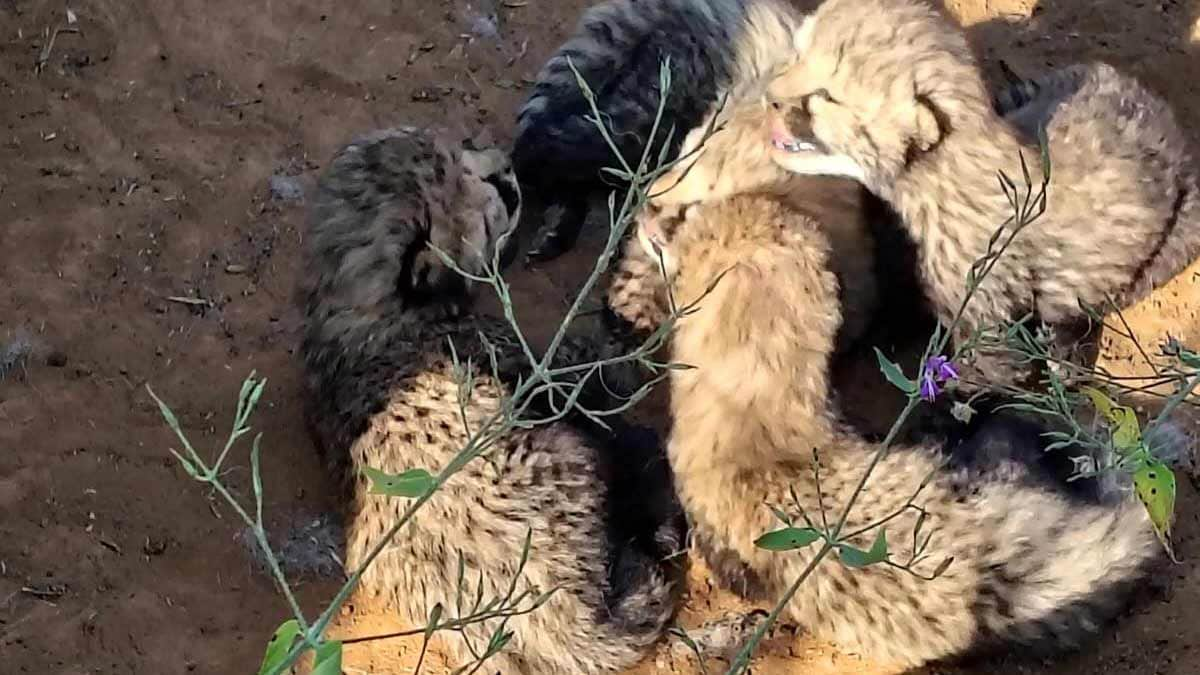
KOMG 3, a two-and-a-half-year-old female cheetah brought from Botswana in southern Africa, gave birth to four cubs in the wild at Madhya Pradesh’s Kuno National Park on Friday, taking India’s cheetah population to 62.
Of these, 43 have been born in India since Project Cheetah began in September 2022. KOMG 3 is the first female cheetah from Botswana to give birth in the country. She had spent more than four months in the wild before delivering the litter. This is also the programme’s second recorded birth under natural conditions.
Union Minister for Environment, Forest and Climate Change Bhupender Yadav announced the development on X, acknowledging the work of project managers, veterinarians and frontline forest staff involved in the initiative.
Security under scrutiny
The birth comes amid concerns over the safety of cheetahs outside protected areas. On October 25, a 19-month-old male cheetah, KNG22, was found injured in the territorial forests of Morena, outside Kuno. Five firearm pellets were recovered during surgery. Despite treatment, the animal died on October 27. The incident prompted a high-level investigation by the Centre, while MP’s Special Task Force arrested three people in connection with the killing.
The incident has exposed the risks faced by cheetahs that move beyond protected forest boundaries. Their safety depends on effective surveillance in adjoining territorial forests, timely intervention by field teams and cooperation from communities living near these areas.
Expanding the habitat
To reduce pressure on Kuno, MP has extended the programme to Gandhi Sagar Wildlife Sanctuary and Nauradehi Tiger Reserve, the state’s third cheetah habitat. The move is intended to provide additional space for the animals and spread the population across a wider landscape.
This expansion will require forest authorities to monitor animals over a larger area and coordinate protection across different forest divisions.
MP is home to 785 tigers, the highest among Indian states, according to the 2022 national tiger estimation. It also has the country’s largest leopard population, estimated at 3,907 in the 2022 leopard census. With cheetahs now part of its conservation landscape, the state is managing three major big cat species. The addition of cheetahs brings another challenge for the state’s forest department: managing the needs of several large carnivores across shared landscapes.
The four cubs mark a welcome addition to India’s cheetah population. The bigger test will be ensuring that they, and the adults, survive beyond the protection of Kuno and establish themselves in the wild.
