



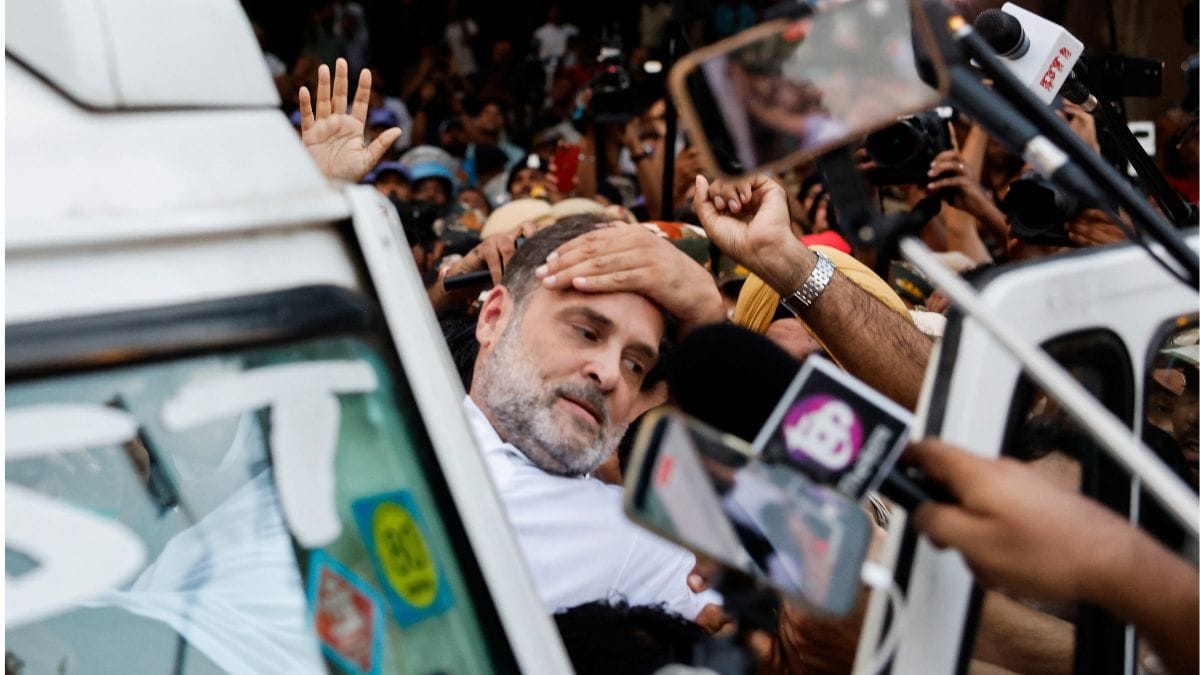
Congress leader and Leader of the Opposition in the Lok Sabha Rahul Gandhi has announced that Opposition parties will march to the Supreme Court on Monday, October 12, demanding an end to alleged electoral manipulation, a halt to the Special Intensive Revision (SIR) of electoral rolls, and the resignation of Chief Election Commissioner Gyanesh Kumar.
In a social media post on X(formerly Twitter), Rahul Gandhi called on people, opposition parties and civil society organisations to participate in the proposed march. He said the demonstration would bring people together beyond political party, caste, gender, community and state boundaries.
The announcement comes amid escalating Opposition protests over the Election Commission’s electoral roll revision exercise and allegations of irregularities in the electoral process.
Rahul Gandhi calls for opposition unity
In his post, Rahul Gandhi mentioned that young people who participated in peaceful protests in Delhi had faced violence. Condemning the reported incidents, he said the country needed to protect democratic values and uphold the Constitution.
"Yesterday, the nation's young came out in Delhi to peacefully protest. They came with love in their hearts, not hatred or anger. They were beaten, both by cops and BJP goons. This is not the India we want. Tomorrow, we will march to the Supreme Court as Indians, united beyond party, gender, caste, community and state," the official post mentioned.
He also mentioned that as part of the march, a memorandum will be submitted to the Chief Justice, demanding an end to vote chori, halting of SIR and the resignation of Gyanesh Kumar.
According to HT, opposition leaders will assemble at India Gate and march to the Supreme Court to meet Chief Justice of India Surya Kant after 4 pm. Samajwadi Party chief Akhilesh Yadav, who was absent from the previous two marches, is expected to join the march tomorrow.
