



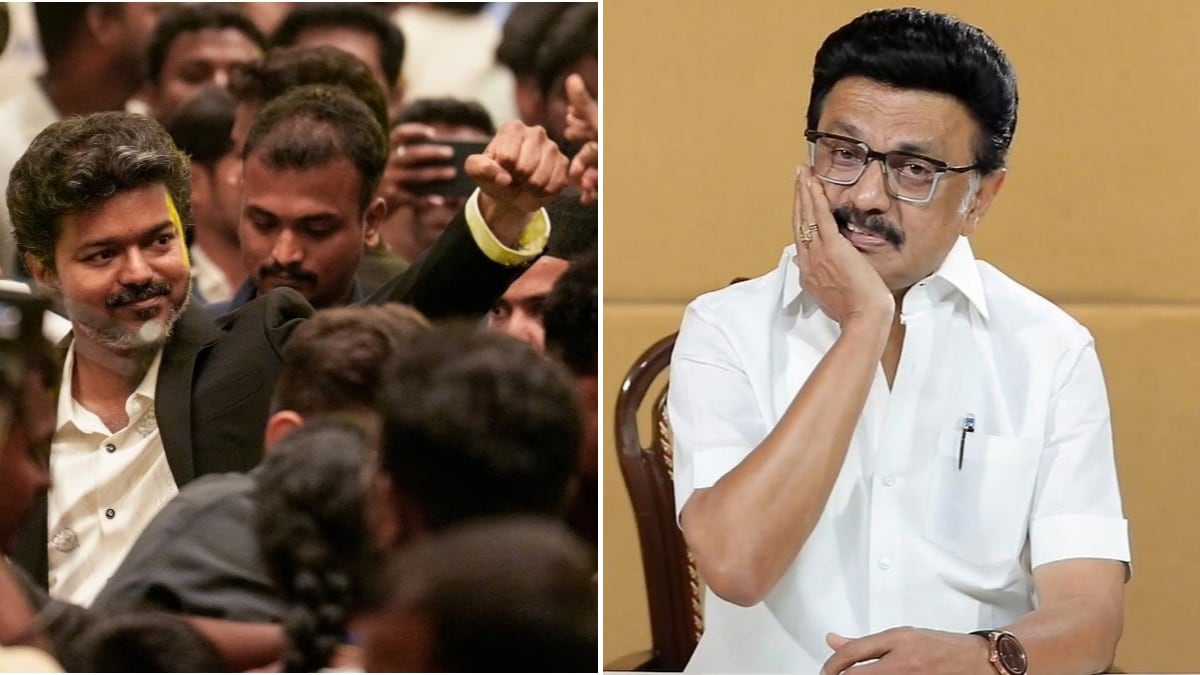
The Dravida Munnetra Kazhagam (DMK) may have lost the bypoll battle in Madurantakam and Dharapuram, but it would be premature to conclude that the party has lost its core vote bank. Its candidates finished second in both constituencies, securing substantial support even as the Tamilaga Vettri Kazhagam (TVK) of Chief Minister C. Joseph Vijay won the seats.
In Madurantakam, DMK’s candidate I. Paranthamen secured 51,675 votes or close to 31 per cent, and in Dharapuram, Dr. S. Suganya scored 57,370 votes which is 31.78 per cent.
The results convey clearly that the party retains an electoral base, but faces difficulties in converting that support into victories against a new political challenger like TVK. The immediate question, therefore, is not whether the DMK has become irrelevant, but whether its traditional support can withstand the TVK’s growing appeal.
The DMK’s political strength has historically rested on its Dravidian ideology, organisational network and welfare politics. The Madurantakam and Dharapuram bypoll results alone do not demonstrate that the party has simply lost to a new political force. Nor do they establish that the TVK has permanently captured the DMK’s traditional voters.
A detailed comparison of the April Assembly election and the October bypolls indicates that the DMK’s vote share has not declined, it has not lost the ground and the changes in turnout may not affect its performance in the long run.
Soon after the election results came out, a video of the DMK Dharapuram candidate talking with her party leader M.K. Stalin over the phone went viral. In the video, Stalin is heard saying that she should thank all the 57,000 odd voters who voted for her and that it is not a loss. Of course, for the DMK, the absolute total and the victory margins convey a different picture.
The fact that the TVK candidates were former AIADMK legislators is also significant: their local influence also contributed to the victories alongside the TVK and Vijay’s wider appeal. But for the DMK, fighting the election without its core alliance has proved that it is still the largest Dravidian force to reckon with.
For the DMK, retaining its core supporters was only part of the task. From now on, the party will have to persuade undecided voters, reconnect with those who may have abstained, and prevent political discontent from translating into support for the TVK.
This requires more than relying on its Dravidian legacy or past governance record, for which the party needs to demonstrate that its political message continues to address the differences within the party.
The results also call for a review of booth-level mobilisation and the loss of Dalit, Christian and Muslim votes. While in Dharapuram, the DMK has managed to win the maximum Muslim votes, it has to regain its lost Dalit votes.
The bypoll results reveal that the DMK has not been reduced to a marginal political force, but it continues to remain a substantial contender. But the twin defeats show that its existing support is not enough to secure victories against the TVK.
