



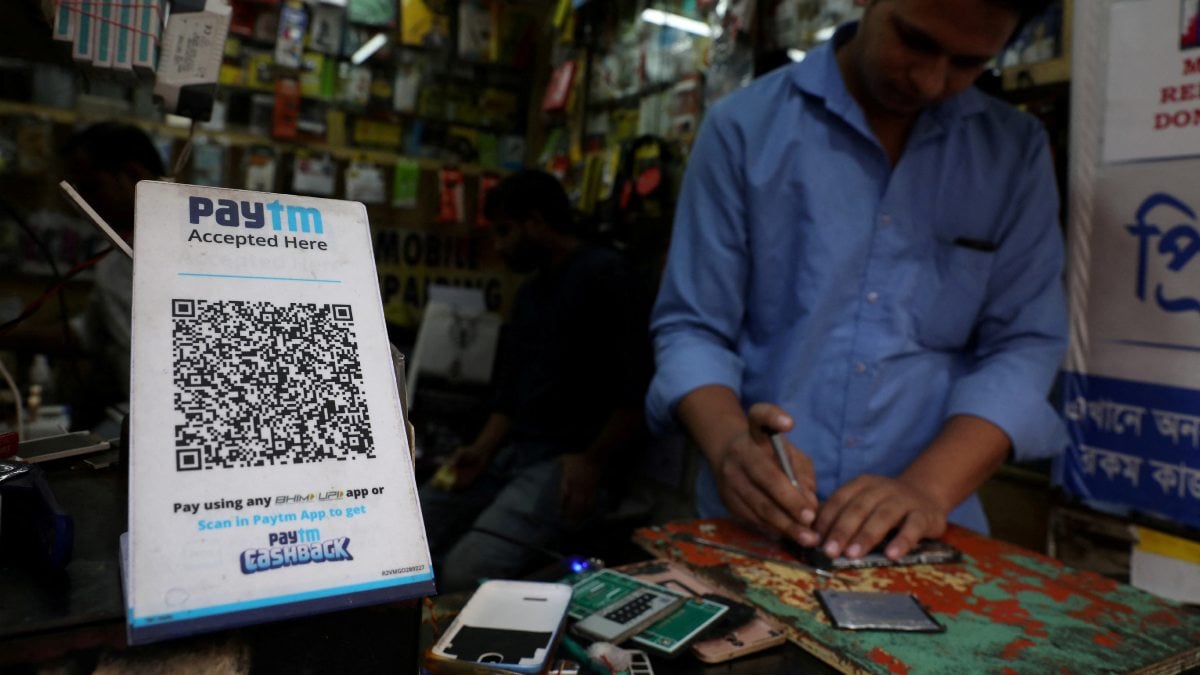
The political war over the government's decision to introduce a 0.4 per cent fee on certain UPI merchant transactions intensified on Wednesday. The Congress alleged that the move came under pressure from the US—a claim that the government categorically rejected, even as government sources clarified that there will not be a rethink on the move.
Leading the Congress attack, MP and Leader of Opposition in Lok Sabha Rahul Gandhi accused Prime Minister Narendra Modi of "prostrating" before US President Donald Trump and asked him to "have a spine" and roll back what the opposition party has termed the "UPI tax".
The government on Tuesday introduced a 0.4 per cent fee on transfers of more than ₹2,000 made to merchants through UPI from October 15. Person-to-person transactions and smaller payments have been kept outside the charge.
In a video posted on X, Gandhi urged Modi to "stop lying down in front of the US, have a spine, stand up" and roll back the decision.
Invoking former prime minister Indira Gandhi, Rahul said, "Indira ji was once asked whether she leans left or right and her response was 'I don't lean left, I don't lean right, I stand straight'. Modi ji has a completely different concept, he is neither left nor right, he has decided to lie down straight and prostrate himself in front of Donald Trump."
"He has put a tax on every single Indian person by taxing UPI and giving a huge amount of money to the United States," Gandhi alleged.
"Modi ji, rollback the UPI tax. Now," he said in a post accompanying the video.
Other senior Congress leaders joined Gandhi in attacking the government over the decision.
Congress general secretary K.C. Venugopal called the 0.4 per cent charge a "new Modi tax" and alleged that it was the result of the prime minister's "surrendering attitude" towards the US. "Every day they are giving punishment to the people of this country. Every day, common people are in great distress," news agency ANI quoted Venugopal as saying.
Congress MP Karti Chidambaram, meanwhile, warned that the move could mark the beginning of what he called a "creeping taxation policy".
"A transaction that was previously not taxed will now be taxed if it exceeds ₹2,000," Chidambaram said. He claimed that once such charges were introduced, they could eventually be expanded to other transactions, with the costs ultimately being passed on to consumers.
Congress general secretary and MP Randeep Singh Surjewala also alleged that the US had raised concerns over UPI and RuPay affecting the business of American companies Visa and Mastercard in India.
Government rejects claims
According to news agency PTI, a top official, when asked whether the government was considering to roll back the proposed Merchant Discount Rate charges on UPI transactions, said a decision has been taken, and there was no question of reversing it. Sources said the decision to impose MDR charges was taken in the larger interest of the UPI ecosystem and to strengthen its safety and security.
The decision to levy charges, as prevalent in other countries, was taken at the time of introduction of the UPI system in 2020, sources said, adding that new the MDR framework will make UPI self-sustainable, reported PTI.
The finance ministry, meanwhile, rejected the allegation that the change was brought about by external pressure.
"Some claims suggest the change is due to foreign influence. This is false. India's UPI policy decisions are made independently, with the clear goal of building a self-sustaining, inclusive, and affordable digital payments ecosystem," the ministry said in a social media post.
The BJP also accused the Congress of spreading "fake news", pointing out that the government had made it clear that MDR charges would not be levied on consumers.
BJP MP Vivek Thakur accused the Congress of "twisting facts" and described the allegation of American pressure as "unfortunate".
"UPI has been in place for 10 years, and 96 per cent of transactions remain completely free. A nominal charge applies only to merchant transactions exceeding Rs 2,000," Thakur said.
He claimed the measure would "make no difference to the common man's life" and accused Gandhi of indulging in "the politics of making noise".
Plea filed in SC
Amid the escalating political battle, the issue has also reached the Supreme Court. A plea has been filed seeking the quashing of Gazette notifications issued by the Union finance ministry announcing charges on commercial UPI transactions.
According to news agency ANI, Advocate Anjan Datta filed the plea on the ground that the newly announced charges would ultimately affect ordinary citizens.
The petition has been filed against the Union government, the Reserve Bank of India, the National Payments Corporation of India and UPI.
