



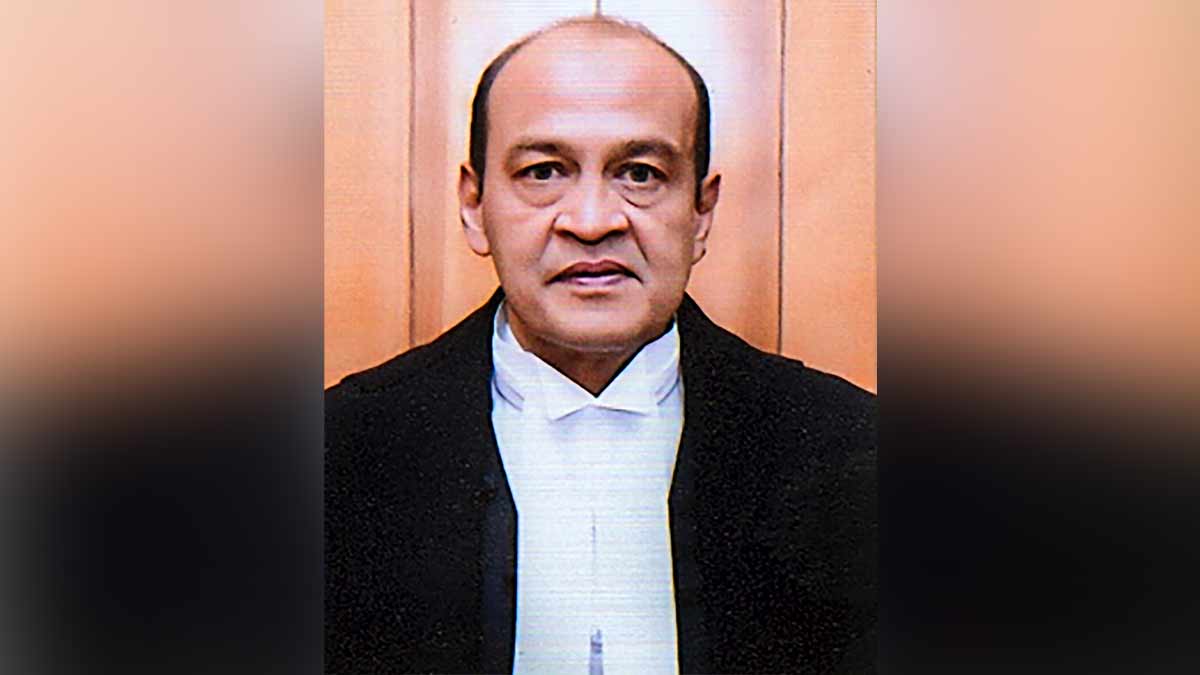
An impeachment motion was moved in Parliament against Justice Yashwant Verma, then judge of the Delhi High Court, who had been transferred to the Allahabad High Court when corruption charges were made against him.
Under the Indian Judges (Inquiry) Act, 1968, when an impeachment motion against a Supreme Court or High Court judge is moved by the requisite number of MPs (either 100 from Lok Sabha or 50 from Rajya Sabha), the motion is admitted and sent to a three-member committee constituted under section 3(2) of the Act. If the committee finds the charges proved, it sends the motion to Parliament, which decides whether to impeach the judge or not by a two-thirds majority of each House, vide Article 218 read with Article 124(4) of the Constitution.
While the three-member committee constituted under the Judges (Inquiry) Act was considering the matter, Justice Verma sent his resignation to the President, who received it.
Now, in the case of resignation by a Supreme Court or High Court judge, which is sent to the President and received by him or her, there is no requirement under the Constitution for the President to accept the resignation to make it effective (unlike in the case of a government servant where acceptance of the resignation by the government is necessary to make it effective). The resignation by a Supreme Court or High Court judge is effective the moment it is received by the President. Acceptance by the President or notification of the resignation in the official gazette is not necessary to make it effective.
This legal position is settled by the five-judge bench decision of the Supreme Court in Union of India vs Gopal Chandra Mishra, 1978.
Once the resignation is received by the President, further proceedings in the impeachment process become infructuous, since the purpose of impeachment is to remove a judge from office. When he has resigned and is no longer holding the office of a judge, where is the question of his removal from office?
One may recall the instance of Justice P.D. Dinakaran, then chief justice of Sikkim High Court, who had earlier been a judge of the Madras High Court and then chief justice of Karnataka High Court, against whom impeachment proceedings were initiated in Parliament on corruption charges but who resigned before they could be completed, and the proceedings were then dropped as the matter had become infructuous.
Surprisingly, however, the three-member committee, even after Justice Verma's resignation, continued its proceedings and has submitted a report to Parliament holding him guilty.
It is surprising that the members of the three-member committee, one of whom is a Supreme Court judge, another a Chief Justice of a High Court, and the third a distinguished jurist, do not know the law on this point.
I am not expressing any final opinion whether Justice Verma can be prosecuted on charges of corruption in a court of law. Section 2(c)(iv) of the Indian Prevention of Corruption Act, 1988, includes judges in the definition of public servants who can be prosecuted. But even if that is done, it has to be done in a court of law, not by Parliament, and after following the legal procedure.
Justice Markandey Katju retired from the Supreme Court in 2011.
The opinions expressed in this article are those of the author and do not purport to reflect the opinions or views of THE WEEK.
