



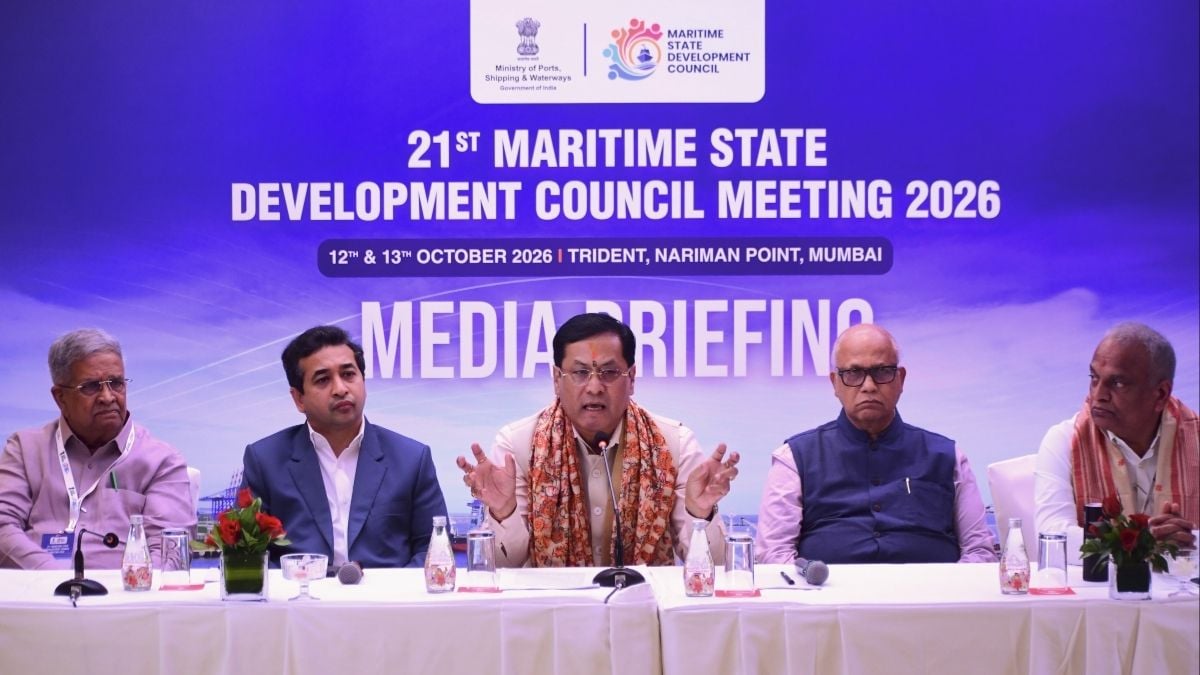
The Ministry of Ports, Shipping and Waterways gave India’s ports a March 2027 deadline to implement common operating processes and join a unified digital platform. Two new credit-risk insurance products were also introduced as measures to protect shipbuilders against financial disruption. The decisions emerged from the Maritime State Development Council’s meeting in Mumbai on Tuesday.
The council resolved that One Nation One Port Process reforms, covering documentation, port procedures and inter-ministerial processes, should be implemented across all ports by March 2027.
Ports must also integrate with the Maritime Single Window, Sagar Setu, by that deadline and publish tariffs electronically, according to the ministry.
For businesses moving cargo through different ports, the intended benefit is greater consistency in paperwork and procedures, alongside clearer information on charges. However, these are implementation commitments, not confirmation that uniform processes are already available nationwide.
The meeting was the council’s first since its recognition as a statutory consultative body under the Indian Ports Act, 2025.
“The Indian Ports Act gave the MSD council its legal foundation,” Union Minister of Ports, Shipping and Waterways Sarbananda Sonowal said. “Today the Centre and the coastal states turned that foundation into a shared work plan, with deadlines every one of us has agreed to meet.”
Shipbuilding reforms
Shipbuilding received a separate financing intervention. ECGC’s Shipbuilding Project Credit Risk Insurance Policy will cover export projects, while New India Assurance’s Business Credit Shield Policy–Shipbuilders will protect domestic projects.
The government will subsidise premiums and support insurers when shipyards file claims, the ministry said.
However, the ministry is yet to clarify on premium subsidies, coverage limits, exclusions or claim conditions. Those details will determine how effectively the policies address payment risks during lengthy construction schedules.
States were also asked to develop port-linked industrial clusters with available land, plug-and-play infrastructure and faster approvals, coordinated with port expansion and multimodal connectivity.
