



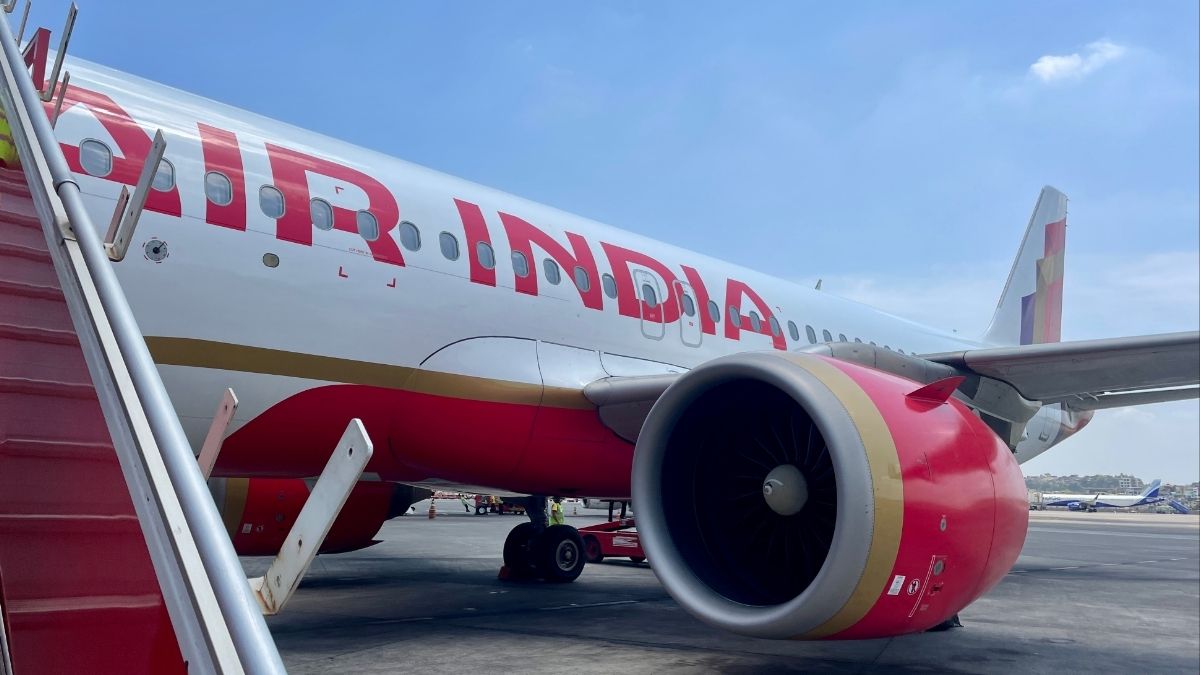
The pilot-in-command who flew the Phuket-Delhi Air India flight that faced a sudden loss of altitude last week has now tested positive for marijuana, a laboratory report confirmed on Tuesday.
This comes after the AI 2379 suddenly dropped by about 300 feet while mid-air, after which it stabilised and subsequently landed safely in Delhi.
The incident had led to the injuries of at least 17 of the 137 passengers and eight crew members onboard.
However, the initial reports had only indicated that the pilot was "non-negative", which meant that a second confirmation test had to be taken to make sure that he had been under the influence of drugs during the flight, because some foods and medications can throw up false positives in initial screenings.
It is that second test that has now confirmed that the pilot had been under the influence of marijuana during the flight, as per a Hindustan Times report.
Both pilots of the flight have already been de-rostered as the potential tragedy continues to be probed by the Aircraft Accident Investigation Bureau (AAIB).
What comes next?
In cases where confirmatory tests return positive results, the medical in-charge of the airline will have to consult a medical review officer (MRO) to determine the exact details of the positive drug result—whether it was due to a legitimate therapeutic treatment, and not drug abuse, per se. For instance, medication containing codeine may trigger a positive result for opiates.
MROs are doctors who are certified to review and evaluate laboratory results of psychoactive substance testing programmes.
If the MRO rules out therapeutic treatments and confirms drug use itself, a series of disciplinary actions come into the picture, in line with rules established by the Directorate General of Civil Aviation (DGCA).
If it is the first time that the pilot tests positive at this level, they are referred by their organisation to a specialist doctor, counsellor, or de-addiction centre for a rehabilitation programme monitored by the MRO.
To return to active duty, they must then undergo new tests, receive a negative report, and obtain a fitness certificate from the organisation’s medical in-charge.
However, if the exact same incident happens a second time, the punishment is more severe—their licence will be suspended for three years. A third offence leads to their licence being cancelled.
The DGCA also treats refusals to undergo testing with severity.
In that regard, after the initial refusal, the employee is removed from duty and must clear a drug test within 48 hours. If they fail to do so, their licence will be suspended for a year, at which time they are mandated to undergo rehabilitation before returning to active duties.
As in the previous case, subsequent refusals can lead to a three-year suspension, and even the cancellation of their licence.
