



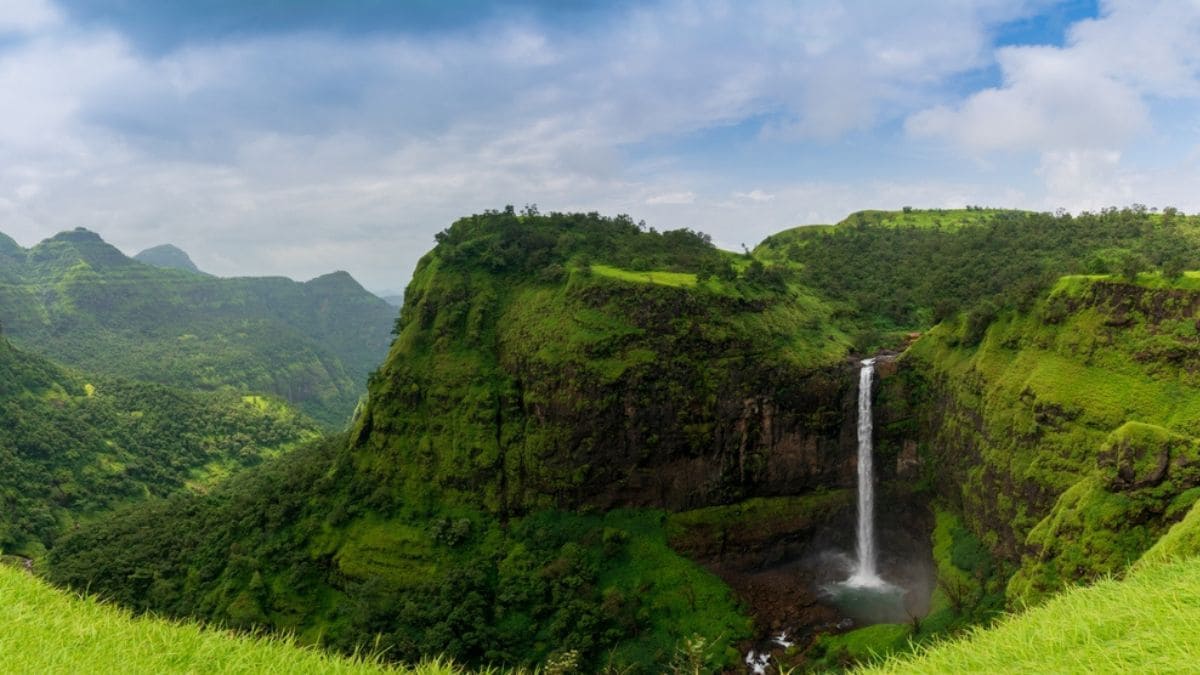
According to the new draft notification, 56,825 sq. km of the Western Ghats has been identified as an Ecologically Sensitive Area (ESA). Mining, industrial activities, and large-scale construction are proposed to be restricted in these areas.
Some states, including Kerala and Goa, continue to oppose the proposed delineation, expressing concerns over its potential impact on tourism, agriculture, and real-estate development.
The process has remained pending since 2011, and the deadline given to the expert committee for the Western Ghats has now been extended to 2027.
The question of identifying Ecologically Sensitive Areas (ESA) in the Western Ghats is not merely an administrative matter concerning a notification issued by the Environment Ministry or territorial objections raised by State Governments. It is a test of the maturity of India’s constitutional framework of environmental governance.
The Western Ghats are not merely a geographical chain of mountains. They constitute an interconnected ecological region intimately linked with water security, biodiversity, climate regulation, agriculture, wildlife, river systems, and the lives and livelihoods of millions of people. Therefore, while regulating this landscape, the carrying capacity of ecosystems, ecological integrity, and the rights of future generations must remain at the center, rather than administrative convenience, political demands, or short-term economic interests.
On 27 July 2026, the Union Government issued a fresh draft ESA notification covering 56,825 sq. km of the Western Ghats. According to the official record, the draft concerns six states—Gujarat, Maharashtra, Goa, Karnataka, Kerala, and Tamil Nadu—and invites objections and suggestions from the public until 25 September 2026.
The fundamental question, however, remains:
How can the developmental aspirations of the states be reconciled with the larger national environmental interest?
The answer cannot lie merely in political compromise. It must be found in India’s constitutional and judicial environmental jurisprudence.
1. ESA Does Not Mean an Area Closed to Development
The first misconception that needs to be removed is a fundamental one.
An ESA is not an area devoid of human habitation.
The objective of an ESA is not to prohibit every form of human activity but to regulate uncontrolled, irreversible, and high-risk development in ecologically fragile or exceptionally important landscapes.
Therefore, the question—“environment or development?”—is itself framed incorrectly.
The Supreme Court, in Vellore Citizens Welfare Forum v. Union of India, made it clear that environment and development are not mutually exclusive objectives. Sustainable development provides the legal framework for reconciling the two. The Court also recognized the Precautionary Principle and the Polluter Pays Principle as essential components of Indian environmental law.
The correct meaning of ESA should therefore be:
“Development with ecological limits, not development without limits.”
2. The Constitutional Position of the Environment
The foundation of India’s environmental governance framework can be seen in three important constitutional provisions.
Under Article 21, the Supreme Court has interpreted the right to life as extending beyond mere physical existence. A clean, healthy, and safe environment is integral to the quality of life and, therefore, to the protection of life itself.
Article 48-A directs the State to protect and improve the environment and to safeguard the forests and wildlife of the country.
Article 51-A(g) recognizes the fundamental duty of every citizen to protect and improve the natural environment, including forests, lakes, rivers, and wildlife.
Environmental protection, therefore, is not merely an administrative policy of the Government. It is a constitutional obligation, closely connected with the fundamental right to life and the responsibilities of citizens.
3. The Precautionary Principle: Prevent Harm Before It Happens
In the context of the Western Ghats, the Precautionary Principle assumes exceptional importance.
The Supreme Court has held that where there is a possibility of serious or irreversible environmental damage, protective measures cannot be postponed merely because complete scientific certainty is unavailable. Where the possibility of serious harm exists, the responsibility of governance is to prevent or minimize that harm.
Applied directly to the Western Ghats, this means that it is not enough to investigate whether damage has occurred after a mountain has been cut, a forest fragmented, a watershed destroyed, or a river altered.
The question must instead be:
“Is there a reasonable possibility that such damage may occur, and if it occurs, can it be reversed?”
If the answer indicates serious or irreversible consequences, regulation must come first.
Otherwise, preventing landslides after slopes have been destabilized, restoring watersheds after rivers have dried, or rebuilding wildlife corridors after habitats have been fragmented becomes merely an exercise in correcting administrative failure.
4. Public Trust Doctrine: The State Is a Trustee, Not an Owner
Another fundamental principle relevant to the Western Ghats is the Public Trust Doctrine.
Land, forests, rivers, water bodies, mountains, and biodiversity are not merely assets recorded in revenue registers. They are natural resources held in trust for the larger public interest.
The State does not possess an unrestricted right to exploit or privatize such resources. Its role is that of a trustee.
Thus, even where a State Government or local authority possesses administrative control over a particular area, that power must be exercised within the limits imposed by the public environmental interest.
A forest, watershed, or critical wildlife corridor in the Western Ghats cannot therefore be viewed merely as “State land,” “revenue land,” or “private land.”
Ownership rights and environmental responsibility are two distinct questions.
5. Inter-generational Equity: The Present Generation Is Not the Final Owner
Perhaps the deepest ethical foundation of the ESA framework is the principle of Inter-generational Equity.
The present generation is not the ultimate owner of the Western Ghats. It is merely the temporary custodian of a natural heritage entrusted to it by future generations.
If a mineral deposit is exhausted, alternatives may eventually be found. But once biodiversity created over millions of years, natural river systems, indigenous forests, or unique mountain ecosystems are destroyed, they cannot be recreated overnight.
Therefore, when evaluating development decisions, it is not enough to ask:
“How many jobs will this project create today?”
We must also ask:
“For how long will future generations have to bear the ecological cost of this decision?”
6. The Western Ghats Cannot Be Divided by State Boundaries
Although the Western Ghats extend across six states, their ecological systems do not recognize administrative boundaries.
A single watershed may have its upper reaches in one state and its lower reaches in another. Deforestation in one state may affect river flows in another. An infrastructure project in one state may disrupt the integrity of a wildlife corridor extending into another.
Therefore, ESA regulation should not be based merely on a state-wise administrative approach but on a landscape-level ecological approach.
This does not mean denying the powers of the states. It means ensuring that those powers are exercised within a coordinated national environmental framework.
7. Late Shri Madhav Gadgil and Dr. Kasturirangan: Two Approaches, One Fundamental Concern
The Gadgil Committee viewed the Western Ghats through a landscape-level ecological perspective and proposed differentiated levels of regulation according to varying degrees of ecological sensitivity.
The Kasturirangan Committee, on the other hand, sought to bring a more limited area—particularly the remaining natural landscapes—within a framework of protection. According to the Central Government’s official record, subsequent ESA drafts have continued to be substantially linked to areas identified by the Kasturirangan Committee.
The real question today is:
Which areas, based on current scientific knowledge, are indispensable for maintaining ecological integrity?
The maps of 2011 or 2013 cannot necessarily be treated as the final truth. With the availability of improved satellite imagery, GIS, biodiversity data, watershed analysis, wildlife movement information, landslide susceptibility mapping, climate-vulnerability assessments, and cumulative-impact studies, the delineation should be scientifically reassessed using contemporary data.
8. Every Village Is Not Equally Sensitive, but Every Sensitive Area Is Not Equally Important
A uniform approach to ESA delineation may prove inadequate.
One village may contain dense natural forests, an important wildlife corridor, and critical water sources, while another may already have substantial habitation and agricultural activity.
Therefore, micro-level ecological sensitivity mapping is essential.
For example, special consideration may be given to:
Critical wildlife corridors
High landslide-susceptibility zones
Important watersheds
Natural forests
High-endemism areas
Important river origins
Lateritic plateaus
Shola-grassland systems
Elephant and tiger movement landscapes
Important wetlands and riparian zones
Treating all such landscapes as ordinary “development zones” would be scientifically inappropriate.
What is required instead is ecological-gradient-based regulation.
9. Rights of Local Communities: Not an Obstacle to Conservation, but Its Foundation
One of the most sensitive aspects of ESA implementation concerns the rights and livelihoods of local communities.
Forest rights, traditional agriculture, local housing, essential village infrastructure, and local economies cannot be placed on the same footing as large commercial projects.
Making local communities insecure in the name of conservation can itself become detrimental to long-term conservation.
Therefore, ESA governance should incorporate a participatory process along the following lines:
Gram Panchayat → Local Ecological Mapping → Community Consultation → Scientific Assessment → Regulatory Zoning → Monitoring
Public participation should not be restricted merely to inviting objections to a notification. Local communities must be made partners in ecological governance.
10. Environmental Rule of Law: Having Rules Is Not Enough
In Hanuman Laxman Aroskar v. Union of India, the Supreme Court gave particular importance to the concept of the Environmental Rule of Law.
Environmental decisions must be transparent, reasoned, based on scientific information, and subject to law.
Therefore, in the context of the ESA, three elements are indispensable:
Scientific transparency It must be clear why particular boundaries have been drawn, what ecological criteria have been applied, and why particular areas have been excluded.
Institutional accountability Whenever the State or the Centre takes a decision, the ecological reasoning underlying that decision should be properly recorded.
Public participation Local citizens, Gram Panchayats, scientific institutions, Forest Departments, local authorities, and civil society must be given meaningful opportunities to participate.
Environmental governance cannot be reduced to file processing.
11. Cumulative Impact Must Be at the Core of the ESA Framework
When each project is examined independently, it may appear environmentally manageable.
One road—acceptable. One hydropower project—acceptable. One resort—acceptable. One transmission line—acceptable. One quarry—acceptable.
But what happens when all of them are located within the same landscape?
The combined impact may be far greater than the simple arithmetic sum of individual impacts.
Therefore, in the Western Ghats, Cumulative Environmental Impact Assessment and Carrying Capacity Assessment should receive greater importance than project-wise Environmental Clearance alone.
The Supreme Court, in matters concerning the Western Ghats, has raised questions where environmental impacts of projects were not adequately or specifically assessed.
12. Hydropower Projects: “Green Energy” Does Not Automatically Mean a “Green Project”
Hydropower is renewable energy; however, renewable does not automatically mean environmentally impact-free.
The submergence of forests, alteration of natural river flows, changes in sediment transport, impacts on aquatic biodiversity, downstream ecological flows, and local social consequences all require careful assessment.
Therefore, a project should not automatically become acceptable within an ESA merely because it carries the label “renewable energy.”
Energy transition must also be an ecological transition.
For the Western Ghats, every major hydropower or pumped-storage project should preferably be evaluated through a river-basin-level cumulative assessment.
13. Tourism: Friend of Conservation or Pressure on the Ecosystem?
Tourism is an important component of the local economy of the Western Ghats. Therefore, “closing tourism” cannot be the answer.
However, a clear distinction must be made between mass tourism, high-density construction, and ecologically responsible tourism.
The following parameters could be considered for tourism within the region:
Carrying capacity
Water availability
Sewage treatment
Solid-waste management
Slope stability
Traffic load
Biodiversity sensitivity
Disaster vulnerability
Groundwater extraction
Cumulative built-up density
The question therefore should not be:
“Should tourism exist or not?”
It should be:
“How much tourism, and what kind of tourism, can the ecosystem sustain within its ecological limits?”
14. ESA Needs Clear Categories of “No-Go” and “Regulated-Go”
From a policy perspective, it may be useful to have at least two broad categories within the Western Ghats.
A. Critical Ecological / Inviolate Areas Areas containing:
Primary natural forests
Important wildlife corridors
Highly sensitive watersheds
High biodiversity
Very high landslide risk
Rare habitats
River-origin areas
should be subject to an exceptionally stringent protection regime.
B. Regulated Development Areas In areas that already contain settlements, agriculture, or traditional human use, low-impact and regulated development may be permitted subject to scientifically determined criteria.
This would enable the ESA framework to evolve from an absolute prohibition regime into a risk-based regulatory framework.
15. Respect for State Objections, but No Abdication of National Environmental Responsibility
In a federal system, the views of the states are important.
State Governments often understand local conditions, land use, agriculture, settlement patterns, and socio-economic realities in greater detail than the Centre.
However, ecological systems do not stop at state boundaries.
Therefore, consultation is constitutionally desirable, but an ecological veto by any single stakeholder cannot be the governing principle.
The suggestions of the states should be considered seriously, but their ultimate evaluation must be based on scientific evidence, ecological carrying capacity, and national environmental obligations.
16. The Way Forward
The way forward can be broader and more scientifically robust:
Independent ecological verification Areas proposed for inclusion or exclusion by the states should be independently examined through GIS analysis and ground-truthing.
Landscape-level assessment Assessment should be undertaken not merely project by project but according to watersheds, wildlife landscapes, and ecological regions.
Inter-State coordination The six states should work towards common ecological criteria for the Western Ghats.
Ecological carrying capacity Development limits should be determined for each sensitive landscape based on its ecological carrying capacity.
Periodic review ESA boundaries should not necessarily be treated as permanently frozen. They should be subject to periodic scientific review based on ecological monitoring and emerging knowledge.
Public transparency All maps, datasets, criteria, and reasons for inclusion or exclusion should be placed in the public domain.
17. The 2026 Draft Should Be Seen Not as the Final Notification, but as a Last Major Opportunity for Improvement
The draft issued by the Centre on 27 July 2026 represents another stage in a process that has continued for many years. According to the official record, inclusion of 56,825 sq. km has been proposed.
However, the prolonged delay of more than a decade provides an important lesson:
Uncertainty itself can become an environmental risk.
Notification remains pending → development pressure increases → land-use change accelerates → ecological fragmentation increases → conservation becomes progressively more difficult.
Therefore, instead of allowing the process to continue indefinitely, it is now essential to develop a scientifically defensible, legally robust, and administratively implementable final framework.
Conclusion: For the Western Ghats, Ecological Limits Must Come Before Development Rights
The ultimate question concerning the ESA of the Western Ghats is not merely:
“How much area should be protected?”
The deeper question is:
“What ecological limits can any government, institution, or individual claim the right to cross?”
Indian environmental jurisprudence has already provided substantial answers.
The Precautionary Principle tells us to exercise caution before serious damage occurs.
The Polluter Pays Principle tells us that the cost of environmental degradation cannot simply be shifted onto society.
The Public Trust Doctrine tells us that natural resources are not the private property of the State but resources held in trust for the public.
Inter-generational Equity tells us that the present generation has no right to exhaust the share of future generations.
Sustainable Development tells us to seek a path where development and environmental protection can coexist over the long term rather than treating them as mutually exclusive objectives.
And the Environmental Rule of Law tells us that these principles must not remain confined to judicial pronouncements or policy speeches; they must be translated into transparent, scientific, and accountable decision-making.
The ESA framework for the Western Ghats should therefore not be viewed as an administrative wall erected against development.
It should instead be understood as a constitutional framework that brings ecological discipline to development.
Protecting the Western Ghats does not merely mean protecting a few forests.
It means protecting the water security of southern India.
It means maintaining the integrity of wildlife habitats and ecological corridors.
It means reducing the risks of future landslides and ecological disasters.
It means safeguarding the ecosystems that sustain agriculture and human life.
And, above all:
The Western Ghats are not a property-development project belonging to the present generation; they are a natural trust entrusted to us by generations yet to come.
Therefore, the true test of the ESA will not be the quantum of area finally notified. The real test will be whether the ecological integrity of the notified landscape is actually maintained over the next fifty or seventy years.
The ultimate objective of the ESA should not be to create a confrontation between “development versus conservation” but to institutionalize the principle of “ecology within development.”
Because, ultimately, the question is not:
“How much more can we extract from the Western Ghats?”
The question is:
“How wisely can we develop while preserving the life-supporting capacity of the Western Ghats?”
And perhaps the legal expression of that wisdom is—ESA.
The author is a former IFS officer and retired as the principal chief conservator of forests and chief wildlife warden of Maharashtra.
