



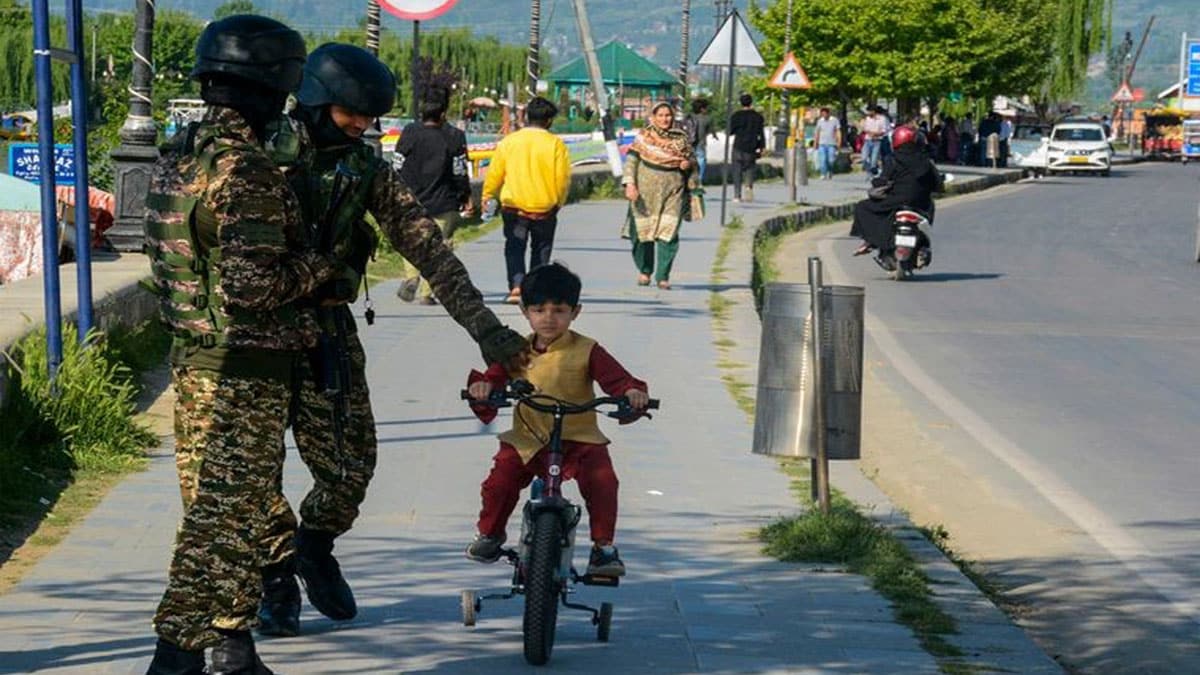
Every August 5, security grids tighten across Jammu and Kashmir, checkpoints multiply along the Jammu - Srinagar Highway, and vigilance heightens in border districts, marking the anniversary of the abrogation of Article 370. The ritual underscores both the persistence of risk and the state’s determination to project control. Yet beneath this choreography of security lies a far more complex reality, seven years on, the Union Territory is defined as much by contradictions as by progress.
Kashmir’s economy continues to rest on two legs, tourism and agriculture. Both have shown resilience, but both remain vulnerable. Tourism has revived businesses and created jobs, turning the valley into one of India’s great success stories. Yet climate change and violence threaten its sustainability. Shorter winters and earlier snowmelt shrink ski seasons, while contracting wetlands and stressed lake ecosystems erode the very landscapes that attract visitors. The Pahalgam attack in 2025, has caused tourist arrivals to collapse by more than 50 percent, laying bare how swiftly fear can unravel a tourism‑driven economy.
From increasing lavender cultivation dubbed the ‘Purple Revolution,’ to saffron terraces in Shopian, and vertical rice cultivation in Kulgam, agriculture in Kashmir has produced inspiring innovation. Kashmiri saffron, GI-tagged and globally prized, brought in nearly ₹486 crore in exports in 2024 - 25. And yet the production of apples, Kashmir's most iconic and famous agricultural product, fell by 30 percent for two consecutive years due to erratic weather, and walnut exports continue to struggle with fluctuating volumes and weak domestic off-take. This year, fruit drop and limb damage hit both apples and walnuts placing notable downward pressure on growers already squeezed by cheaper foreign imports. For many families, these agricultural setbacks compound the unemployment crisis, leaving educated youth without opportunities and farmers without stable markets.
Despite investment proposals worth Rs. 1.17 lakh crore, only Rs. 3,389 crore materialized in 2023 - 4, leaving the region dependent on government salaries and contracts rather than private enterprise. The promise of entrepreneurship through the Startup Policy 2024 - 7 is real, but execution gaps remain wide.
Unemployment remains the most pressing concern, with nearly 46 percent of educated youth still without jobs. Recruitment drives dominate political speeches, but sustainable employment systems receive less attention. This frustration has been compounded by visible dissatisfaction over reservation policies.
Alongside unemployment, drug addiction has surged alarmingly. The valley now counts more than 54,000 addicts, with adolescents disproportionately affected. Addiction here is not merely a policing problem, it reflects political uncertainty, disrupted routines, and exposure to trafficking networks that have embedded themselves in daily life.
Amid the turbulence of politics, unemployment, and addiction, sport has emerged as one of the valley’s most powerful counter‑narratives. Jammu & Kashmir’s maiden Ranji Trophy triumph after seven decades testify to the valley’s capacity to break barriers and inspire. And now At 29, Auqib Nabi has earned his maiden India call -up, replacing the injured Jasprit Bumrah for the Sri Lanka Tests. If Auqib makes his Test debut, he will be the first Test cricketer from Jammu and Kashmir to do so. Equally inspiring was Owais Yaqoob, whose first‑round TKO against Bulgaria’s undefeated Delyan Georgiev at BRAVE CF 107 signaled Kashmir’s arrival on the global mixed martial arts scene.
“While sports and tourism offer glimmers of hope, Kashmir remains caught in contradictions that resist easy resolution. In 2026, Jammu and Kashmir operates under a political framework markedly different from the one that existed before 2019. The National Conference’s return to power in 2024 carried promises of statehood restoration, identity protection, and employment relief. But constitutional authority is concentrated in New Delhi, statehood remains pending, and Article 370 survives only as political memory, even as practical politics moves in another direction. Political pressure is mounting, public frustration is growing, and questions about governance are beginning to eclipse the optimism that accompanied the NC’s comeback.
The election of Engineer Abdul Rashid in Baramulla in 2024 epitomizes the paradox of democracy in Kashmir. Despite being in judicial custody under UAPA in an alleged NIA terror-funding case, Rashid defeated Omar Abdullah by over two lakh votes. His victory was historic, but his parliamentary presence remains hostage to court permissions. On July 1, 2026, he surrendered again before Tihar Jail authorities after interim bail expired, leaving his constituency without a consistent voice in Parliament. The prolonged pretrial detention effectively silences a democratic mandate. Citizens can elect a representative, only to see him absent for most of his term.
Despite claims of normalcy, terror networks remain disturbingly embedded. The Kulgam attack in July 2026, which killed two labourers from Chhattisgarh, came days after a personnel was shot point-blank in neighbouring Anantnag. Two strikes within a short radius, within days, are not desperation but design. These attacks target tourists, minorities, and migrant workers, symbols of Kashmir’s fragile return to pluralism and opportunity. Each strike is calculated to instil fear, disrupt investment, and undermine the valley’s image as a safe destination.
Seven years after abrogation, Jammu and Kashmir embodies a layered conundrum. Economic ambition is constrained by execution gaps; social vitality is shadowed by addiction and unemployment; political mandates are undermined; and security gains are contested by persistent militancy. The valley is not without hope, its saffron fields, startups, and athletes testify to resilience, but the contradictions between aspiration and reality continue to define its trajectory.
The author is a security and economic affairs analyst.
The opinions expressed in this article are those of the author and do not purport to reflect the opinions or views of THE WEEK.
