



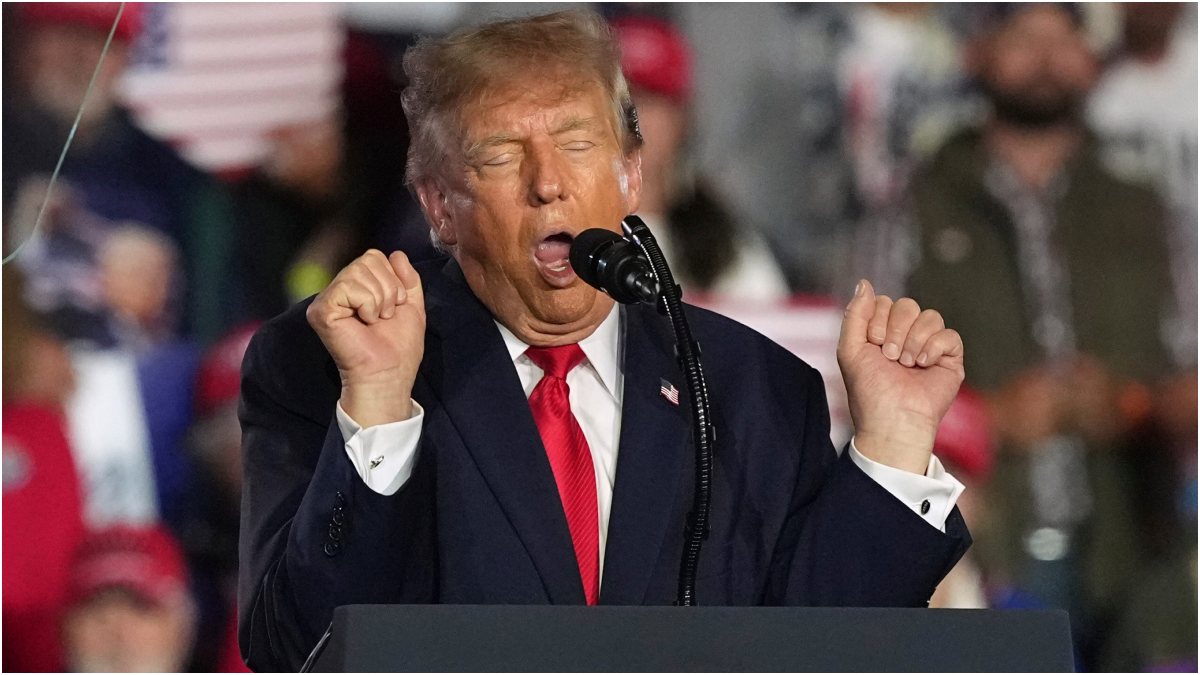
The midterms have delivered a stunning rebuke to Donald Trump, ending the Republican control of both chambers of Congress and producing Democratic gains across traditionally conservative states. A closely contested cycle became a sweeping rejection of the president’s second-term agenda. The personalisation of the contest, economic discontent, the Iran war and Trump’s interference in Republican primaries converged to give Democrats an opening they exploited across the country.
The personalisation of the contest
Trump made the midterms personal, urging supporters at rallies to “pretend I am on the ballot”. The strategy backfired by making every Republican candidate answerable for every controversy of his presidency. Exit polls showed 71 per cent wanting Congress to exercise greater checks on executive power, while more than six in 10 disapproved of his performance. Nearly 75 per cent were dissatisfied with the country’s direction. His election-night claim that Republicans would have won in a landslide had he been on the ballot only sharpened the contradiction. The results exposed the limits of his ability to convert personal loyalty into electoral success.
Economic discontent and the cost of living
The economy, expected to be his strength, became the main reason for the Republican collapse. Inflation, expensive housing and rising grocery bills weighed on working-class voters who had backed Trump on his promise of affordability. Nearly 60 per cent blamed him for rising prices, while Democrats enjoyed a 15-point advantage on the cost of living. Tariffs, sold as protection for American industry and workers, pushed up costs for consumers. Petrol prices offered a daily reminder. Republicans found themselves defending an economic record that had become a liability.
The Iran war and the retreat from restraint
The Iran war proved a second vulnerability. The conflict unsettled global energy markets and raised domestic fuel prices, deepening the pressure on households. It also cut against one of Trump’s central promises: that he would keep the United States out of costly foreign entanglements. For Republican candidates, the war posed a dilemma. Defending the administration risked alienating independents opposed to another open-ended conflict, while distancing themselves looked like abandoning their own president. The conflict thus left Republican candidates defending a foreign policy that sat uneasily with the administration’s promise to prioritise domestic concerns.
Primary interference and the problem of candidate quality
Trump’s meddling in the primaries added to the damage. His interventions reinforced his hold over the MAGA base but narrowed the party’s appeal beyond it. In Texas, Ken Paxton’s candidacy proved particularly costly, while Darline Graham failed to establish herself as a credible contender in South Carolina. Michael Whatley in North Carolina and Mike Rogers in Michigan also lost. By sidelining candidates with broader appeal in favour of loyalists, Trump weakened his party’s ability to defend vulnerable seats.
Democratic expansion beyond the traditional map
Democrats won well beyond their comfort zones. James Talarico’s victory in Texas was the state’s first Democratic Senate win since 1988. Adam Hamilton’s win in Kansas ended a Republican Senate streak dating to 1932. Democrats also took a Senate seat in South Carolina and unseated the long-serving Susan Collins in Maine. The governors’ races told the same story. Gina Hinojosa defeated Greg Abbott in Texas, and Democrats flipped governorships in Ohio and Georgia. The party’s appeal now reaches beyond metropolitan strongholds and its traditional constituencies, while Republican dominance in several states looks far less secure than assumed.
The victories also brought a more diverse incoming class to Washington, broadening the party’s ideological, religious and demographic representation. Abdul El-Sayed becomes the first Muslim elected to the Senate, while Hamilton is a moderate former Republican pastor. Chris Pappas becomes the first openly gay man in the chamber, while candidates such as Annie Andrews campaigned on public health and institutional accountability. Hinojosa and Keisha Lance Bottoms, the first Black woman to be elected governor of any state, widen that representation further.
Congressional oversight and the limits of executive power
Control of both chambers hands Democrats formidable powers of scrutiny. Robert Garcia, the incoming chairman of the House Oversight Committee, has promised aggressive investigations into the president’s finances, cryptocurrency interests and immigration enforcement. Control of the Senate also gives Democrats leverage over confirmations, while their legislative powers provide further means to obstruct the administration’s agenda. Trump retains his executive authority and veto powers, but his ability to advance his legislative priorities will be considerably constrained.
The midterms have broken the assumption that Trump’s dominance would translate into lasting Republican control. His party now faces a Congress that can subject his administration to sustained scrutiny and challenge its policies. Trump asked to be on the ballot. The voters obliged.
