



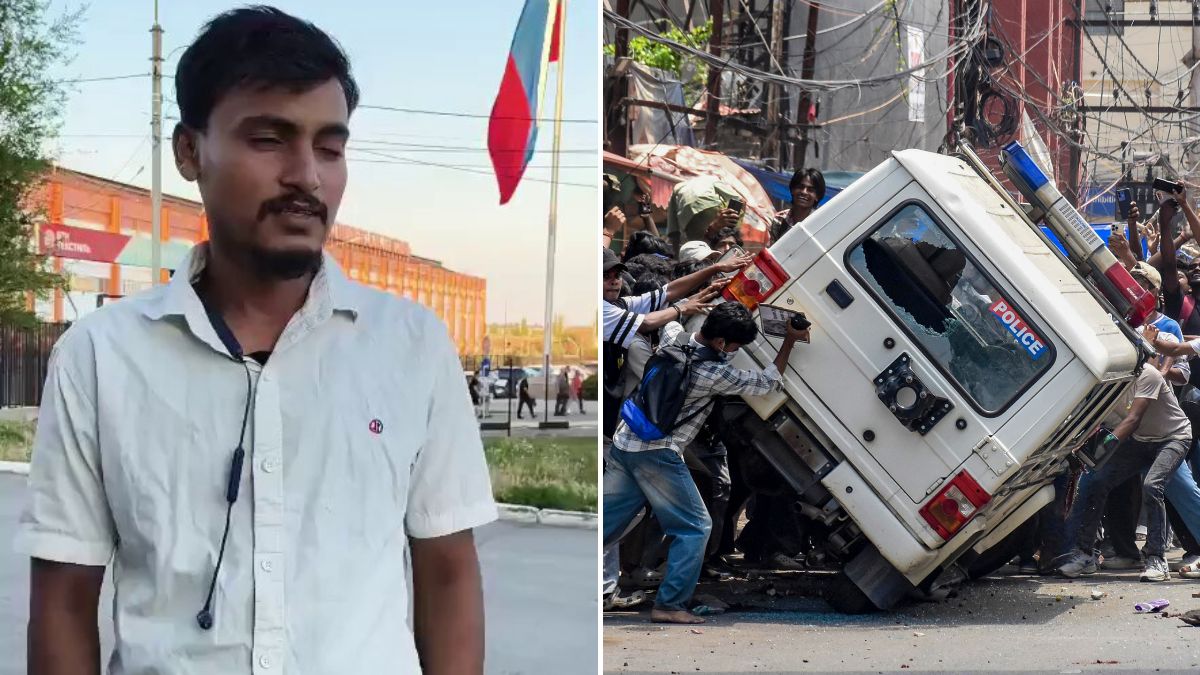
An Indian man allegedly living abroad has been named by the police in last week's protests against the NEET paper leak, which has sparked questions.
The Bihar man, who identified himself as Mohammad Sadaqat, claimed in a video—allegedly shot in Russia—that he had been staying there for the past four months, but the police in the Kishanganj district had still named him as a protester.
“On July 24, there was a protest against the NEET leak, at LRP Chowk, and the Bahadurganj administration have named me in that. I have been in Russia for the past four months," he claimed in a now-viral video.
Behind Sadaqat, what looks like a Russian flag can be seen on a flagpost just in front of a building.
“Since I am in Russia, I request the administration to remove my name from there. I will remain indebted to the administration for this,” he added.
However, neither THE WEEK nor PTI could independently verify the authenticity of the video.
Kishanganj SP Hari Mohan Shukla also neither confirmed nor denied the claim.
"All those who have any grievances related to the protests could approach the police for redressal," he told PTI, when specifically asked about Sadaqat's video.
This comes after nearly 700 people, almost half of whom were minors, were arrested by the Bihar Police last week in connection with protests last week in solidarity with the Cockroach Janta Party's (CJP) protest in Delhi against the NEET paper leak case.
The Bihar protesters had attempted to enforce a state-wide bandh, which had turned violent.
Notably, the arrests of protesters and volunteers had taken place in Delhi, West Bengal and Bihar in the aftermath of the satirical collective ending its Jantar Mantar protests.
This led the CJP to warn the Centre of restarting its protests as per its agreement, after which the Bihar government on Monday night relented, and agreed to withdraw "all FIRs, complaints and show-cause notices issued in connection with incidents that took place before 6 AM on July 26".
