



Euphoria had reached the skies among the people of state when the Assam Accord was signed on August 15, 1985. It brought an end to the historic Assam agitation (1979-1985) raged against illegal immigrants that impacted the state’s demography. But the Accord came at a cost. More than 850 young lives were lost. Not to speak of loss of academic years.
During those days, the All Assam Students Union (AASU) was the top focus in public discourse. The young student leaders were the cynosure of the global media that had gathered in strength in Guwahati. The inevitable question was how did a student organisation lead a mass movement for several long years?
A mass movement by its very nature is not sustainable for long. Students have to go back to their studies, householders had to go back to their families and think of ways to put food on the table. That is the reason why the Assam agitation, with non-violence as its main mantra, had its own periods of active protests and halts. The students knew that the people needed to rest so as to prepare for another round.
The Indian freedom movement followed the strategy of S-T-S or Struggle-Truce-Struggle. That is the reason why Gandhi would suddenly and inexplicably call off the movement before kick-starting it again. Known to feel the pulse of the people more than anyone else, Gandhi knew that people needed a breather every now and then.
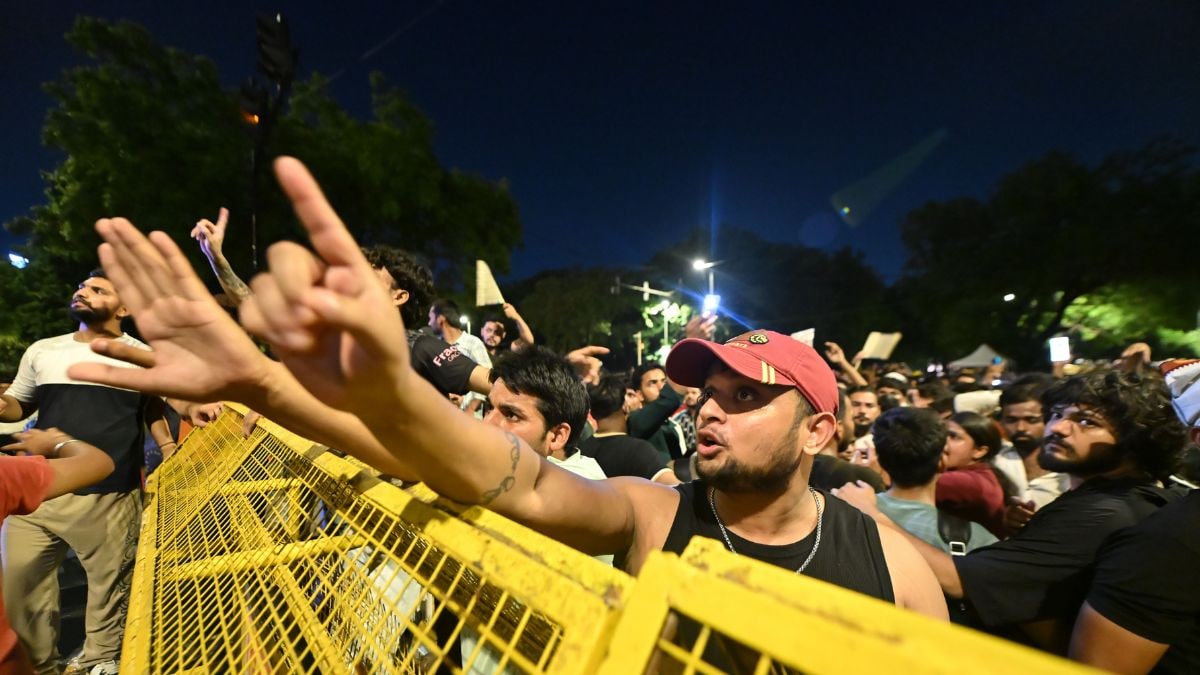
There is a need to understand the nature and character of the events at Jantar Mantar.
That this is a composite and spontaneous movement that has strands of several entities. The first and biggest category are the apolitical students with their own unique outpouring of a caged rage who are determined and committed to claiming and safeguarding their own interests. The second category are activists and proponents of what the Cockroach Janta Party (CJP) stands for. The third category are leftist elements be it from groups like the SFI, AISA etc. The last category belongs to affiliates of the Congress and the Aam Aadmi parties.
The fluid manner in which the movement has spread aligns with the maxim of Russian revolutionary Leon Trotsky who stated: “March separately, but strike together”. That explains why a Congress call draws the young crowd in a Kota or an Uttarakhand town and a CJP call brings in the crowd in Delhi.
Whether this movement will continue in the same spirit and temp? Obviously not. But the protesters have an important tool not to let the spirits ebb during the periods of recess. And that is the ubiquitous mobile phone. The mobilisation and devising of strategy can well continue even during the recess. And that is what is bothering the government of the day much more than anything—the long-term implications. Notably, the Gen Z population comprises about 28 per cent of India's total population.
There is also this creeping realisation that banning or putting curbs on the internet network will actually make the situation explode. For the Gen Z, banning the internet is like depriving them of oxygen and it matters the most, much more than the burning issues of the day or curbing human rights. Nepal is a good example of how the internet ban led to uncontrollable rage among the young leading to a regime change.
The movement is also indicative of the politics of the day undergoing a transformative shift from the caste-community-creed dynamics to one that abhors these very factors. A vote for something that is almost akin to a class element. What will give it a very big fillip is if the government of the day remains obdurate.
