



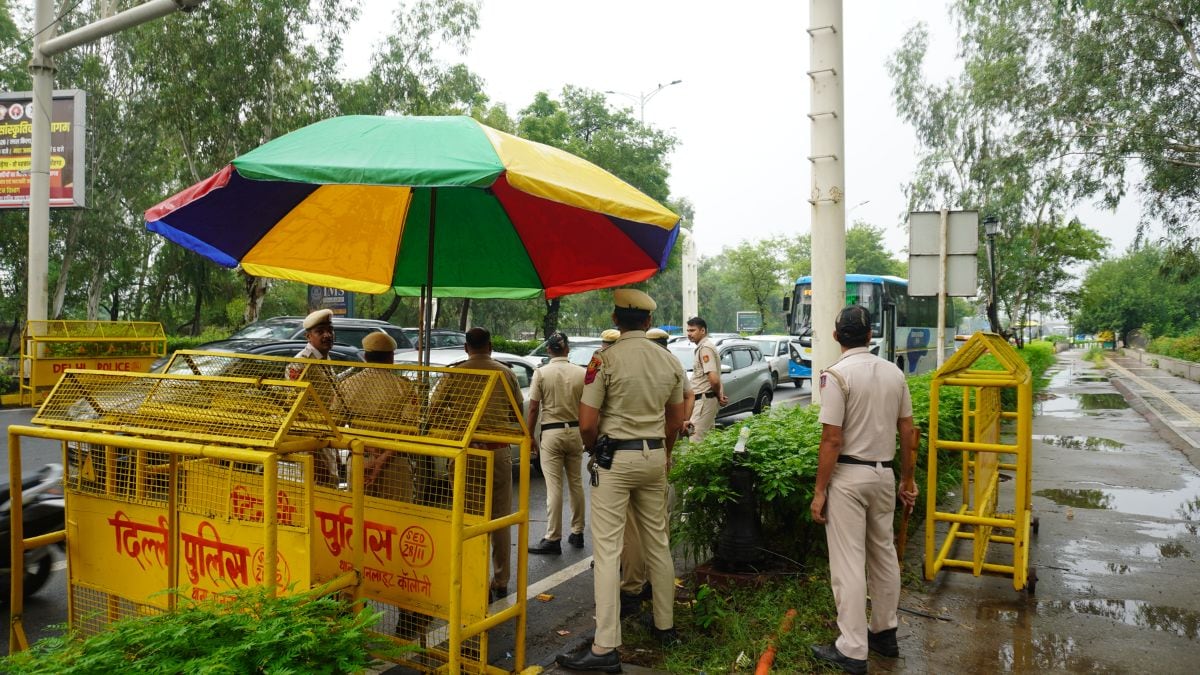
Farmers from several states, including Punjab, Himachal Pradesh, Rajasthan and Haryana, are gathering at Kisan Ghat in Delhi on Tuesday to protest against the proposed India-US trade deal. The rally is being organised under the banner of the 'Desh Bachao Morcha'.
The protesters are demanding the immediate scrapping of the yet-to-be signed deal. According to reports, hundreds of farmers carrying flags and raising slogans are travelling to Delhi to participate in a day-long 'Kisan Mahapanchayat'.
The Haryana Police have stepped up security arrangements at the Shambhu border to prevent protesters from moving towards the national capital. They have also sealed the bridge over the Ghaggar river by placing barricades and cemented blocks.
Why farmers oppose trade deal
India has historically imposed high tariffs on products imported from the US, with rates around 37 per cent for agricultural products and above 100 per cent for certain items. India has also maintained non-tariff barriers, including a ban on select US exports to protect and promote domestic supply.
The proposed US-India bilateral trade agreement seeks to reduce these import duties, allowing cheaper, subsidised products from the US into the Indian market. In turn, the United States will lower the reciprocal tariff on India from 25 per cent to 18 per cent.
The farmers claim that this can directly increase competition for small traders and labourers.
They argue that an average Indian farmer only holds around two to three acres of land, while American agriculture is highly mechanised and heavily subsidised by the US government, highlighting that this disproportionately favours multinational corporates over the efforts of local farmers.
The proposed deal mentions a cut in import duty for dried distillers’ grains (DDGs), red sorghum, tree nuts, fresh and processed fruit, and soybean oil. However, vague statements about other agricultural products have raised concerns about whether highly sensitive sectors, including dairy, poultry, wheat, rice, soybeans, and sugar, will be included in the deal.
The protesters claim that the bilateral agreement can negatively affect not just the farmers, but the broader Indian public, as it proposes to remove or reduce tariffs for e-commerce, digital trade, and intellectual property rights.
They accused the Centre of pursuing the deal without consulting agricultural stakeholders, livestock rearers and small businesses.
