



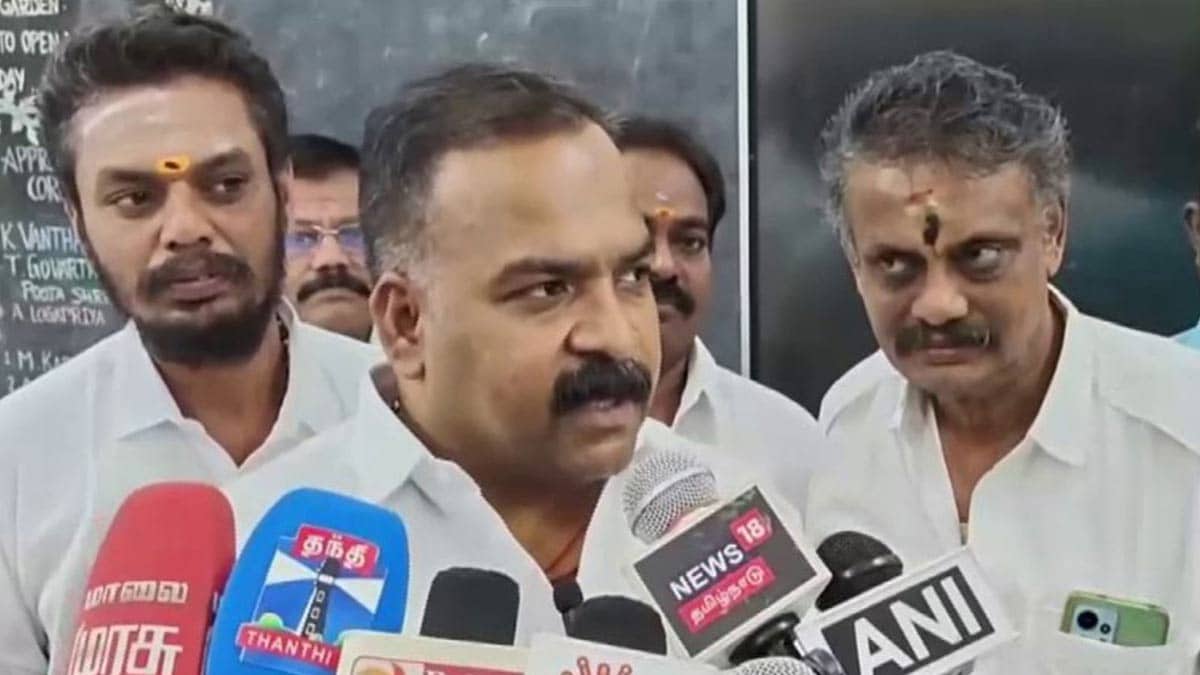
The image of Chief Minister C. Joseph Vijay in the Tamil Nadu Assembly, mimicking former chief minister and DMK leader M.K. Stalin’s “it’s all finished” gesture, wasn’t just a piece of theatrical bravado—it was the eulogy for a decade of Dravidian duopoly. As the dust settles on the 2026 hung assembly, the Congress on Saturday appointed 51-year old B. Manickam Tagore as the chief of the Tamil Nadu Congress Committee (TNCC), indicating a complete shift in the national party’s political dynamics in the state.
The three-time Lok Sabha MP from the Virudhunagar constituency will be replacing K. Selvaperunathagai, who had already sent the request to the Delhi high command to relieve him from the president post, immediately after the April 23 election. By tapping a known firebrand to lead the charge, the Congress high command has signalled that the era of being the DMK’s junior partner is over, replaced by a cold, calculated pursuit of realpolitik.
The appointment of Tagore is the final seal on the final divorce from the DMK. For years, the Tamil Nadu Congress acted as a decorative appendage to the DMK, but the 2026 electoral calculus changed everything. With both the DMK and AIADMK failing to secure a majority, a power vacuum emerged. Tagore, the Congress’s Lok Sabha Whip, is looked at as the wartime president chosen to navigate this wreckage. His history of friction with the DMK’s IT wing and his relentless critique of their “big brother” attitude made him the only logical choice for a party finally tasting executive power within the TVK-led government.
“The Congress wants to focus on its future in Tamil Nadu. We want to contest from more seats in the local body polls and the 2029 Lok Sabha polls. This is the reason for the high command appointing a person who is anti-DMK and pro-TVK,” a senior Congress leader told THE WEEK. Tagore is expected to prepare the party for the local body polls. In fact, he has been vociferous over the past eight months that the Congress party should have a larger representation in the civic body. And now the major onus on Tagore is to negotiate a decent seat-sharing arrangement with the TVK.
Manickam Tagore’s elevation, within a section of the Congress is looked at as a significant victory for Rahul Gandhi’s vision of a “new guard,” successfully overriding the preferences of AICC President Mallikarjun Kharge.
While Kharge had previously insisted on Selvaperunthagai—a leader who ultimately failed to win the confidence of the rank and file—Gandhi pushed for a younger, more aggressive face. At 51, Tagore brings a resume built in the trenches of the NSUI and Youth Congress, but it is his status as a close Gandhi confidant that gives him the necessary clout to negotiate with a celebrity-turned-CM like Joseph Vijay. By choosing Tagore over other contenders like Karti Chidambaram and S. Jothimani, the Congress high command seems to have prioritised ideological aggression over internal consensus.
The most radical shift in this new era is the move from “seat-sharing” to “power-sharing.” Under the previous leadership, the Congress was often accused of surrendering its rights to the DMK for a handful of seats. Tagore’s whip status in Delhi and his three terms in the Lok Sabha provided him the leverage to argue that the Congress should no longer be a bystander in the state’s administration. The hung assembly provided the perfect opening – the new guard moved with clinical precision to exit the DMK alliance and secure a direct share in the TVK government. This isn't just a change in personnel but is a fundamental rejection of the “vassal” status that has plagued the TNCC for decades.
However, the road ahead is not without its land mines. Tagore’s ascent comes despite public and embarrassing social media sparring with colleagues, most notably with Karur MP S. Jothimani over allegations of horse trading. The AICC has gambled that Tagore’s ability to take along multiple factions – and his established working relationship with the ruling TVK – outweighs his penchant for internal combat. The party leadership clearly believes that a leader who can take a punch from former allies is better suited for this transition than a diplomat who might hesitate to demand the party’s due.
As Manickam Tagore takes the reins, the immediate horizon is dominated by the upcoming local body elections and the 2029 Lok Sabha polls. The central question is no longer whether Congress can survive in Tamil Nadu, but whether it can thrive as an independent force without leaning on a Dravidian crutch. Tagore has successfully navigated the party into the corridors of power. Now he must prove that the Congress can occupy that space without being swallowed by the next rising tide of regional populism.
