



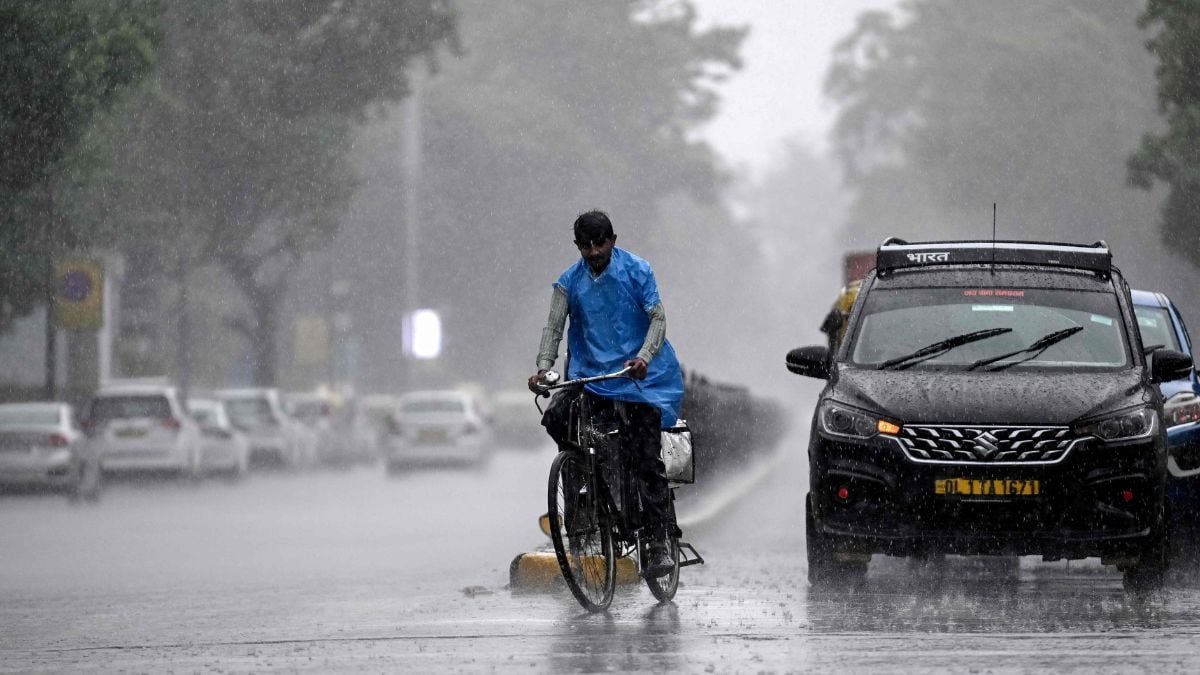
The onset of the monsoon in Delhi will further be delayed after a favourable weather system over the Bay of Bengal, which triggers the rain, failed to materialise. Experts had earlier predicted that India’s southwest monsoon may remain weak or stalled for a week, thanks to the activity of five rain-suppressing factors.
Monsoon usually hits Delhi during the last weeks of July. The expected date this year was June 27, but weather experts now predict the rains to begin only during the first week of July.
According to the IMD, a low-pressure area usually forms over the Bay of Bengal around June 18–19. This causes moisture-laden winds from the Arabian Sea to move towards South India. The system then travels through Odisha, Bihar, and Eastern Uttar Pradesh towards Northwest India. This creates an anti-clockwise circulation that helps advance the monsoon. However, this crucial system has not formed this time.
India Meteorological Department (IMD) scientist Krishna Mishra said that monsoon winds coming from the Arabian Sea have weakened and split into two parts. One part is heading towards South India, and the other towards Rajasthan. This is preventing strong rainfall in North India.
Experts believe that a favourable system has not yet formed over the Bay of Bengal. Such a system is expected to develop around June 25–26. The monsoon could reach Delhi after that, likely during the first week of July.
According to the Meteorological Department, rainfall activity is expected to continue in Delhi until June 21st. After that, the sky will remain cloudy.
Five factors against Monsoon
Meanwhile, the stalling of the monsoon is caused by five rain-suppressing factors active at the same time. According to weather experts, developing El Niño conditions, weak Madden-Julian Oscillation activity, dry westerly winds, a weak Somali Jet and neutral Indian Ocean Dipole conditions are causing the monsoon to stall.
Though the monsoon, which made a delayed onset over Kerala on June 4, gained momentum and covered most of southern, eastern and north-eastern India by June 15, it has since stalled.
While the Arabian Sea branch of the monsoon has been largely stalled since June 8, the Bay of Bengal branch has remained more active. The continued presence of the subtropical westerly jet stream over north-west India has also been reflected in repeated western disturbances over the region.
