



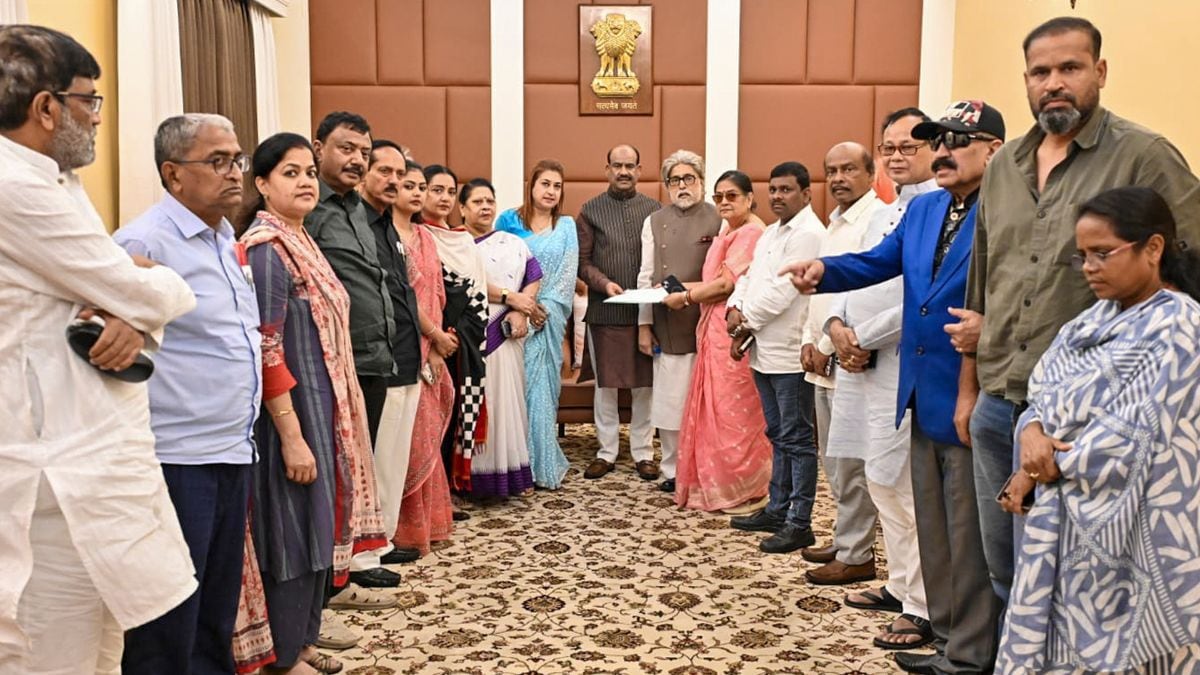
In a fresh twist in the unfolding Trinamool Congress (TMC) crisis, the rebel bloc of MPs led by Kakoli Ghosh Dastidar has decided to join the Nationalist Citizens Party of India (NCPI).
This is a major shift for the rebel MPs, who had earlier indicated that they would become a separate bloc in the Lok Sabha, alligned with the National Democratic Alliance (NDA).
Why join another party?
Ahead of the rebel bloc's crucial meeting with Lok Sabha Speaker Om Birla on Monday, the Mamata Banerjee-led TMC had pointed out a major problem with their idea of forming a separate bloc in the Parliament.
Notably, while the number of MPs leaving the party—likely 22, as per Barasat MP Dastidar—was well past the two-thirds majority rule required to exit their own party without invoking the anti-defection law, there is "no legal provision" for staying as a separate group.
"Crucial condition is that the original party HAS TO MERGE with another party or THEY HAVE TO MERGE with another party. NO LEGAL PROVISION of a ‘separate group’ inside Parliament or inside the Assembly while sitting on a MP/ MLA seat previously won on the ORIGINAL PARTY’s name and symbol," wrote TMC Rajya Sabha MP Sagarika Ghose in a post on X.
It is due to these legal complications that the rebel bloc decided to join another party instead of staying alone in the Parliament.
Why join the NCPI?
The Tripura-based party, which contested the 2023 elections in the state, did not get recognised as either a regional or national party.
As a result, it was given the status of a "registered unrecognised political party" by the Election Commission (EC) that year.
The news of the major merger suddenly sparked interest in a Facebook page purported to belong to the NCPI, which had less than 100 followers (as of 8 PM on Monday).
The NCPI's page also shows its last post from February 2023 about contesting the Assembly elections in Tripura that year.
In that regard, a Hindustan Times Bangla report also points out that the party claimed it had a small "office" in the Sankrail area of West Bengal's Howrah, with the nib of a pen and seven rays of light as its official symbol.
However, the key factor that likely drew the rebel faction to the NCPI, in particular, is what it has called a Bengali-centric identity.
It had maintained a limited presence in Tripura and some parts of Assam, but had not yet made inroads into West Bengal, despite its support for Bengali-speaking communities in the three regions.
Political observers say that this could help the party maintain a regional connect in West Bengal, while also aligning with a national-level alliance like the NDA, which already has friendly relations with the NCPI.
