



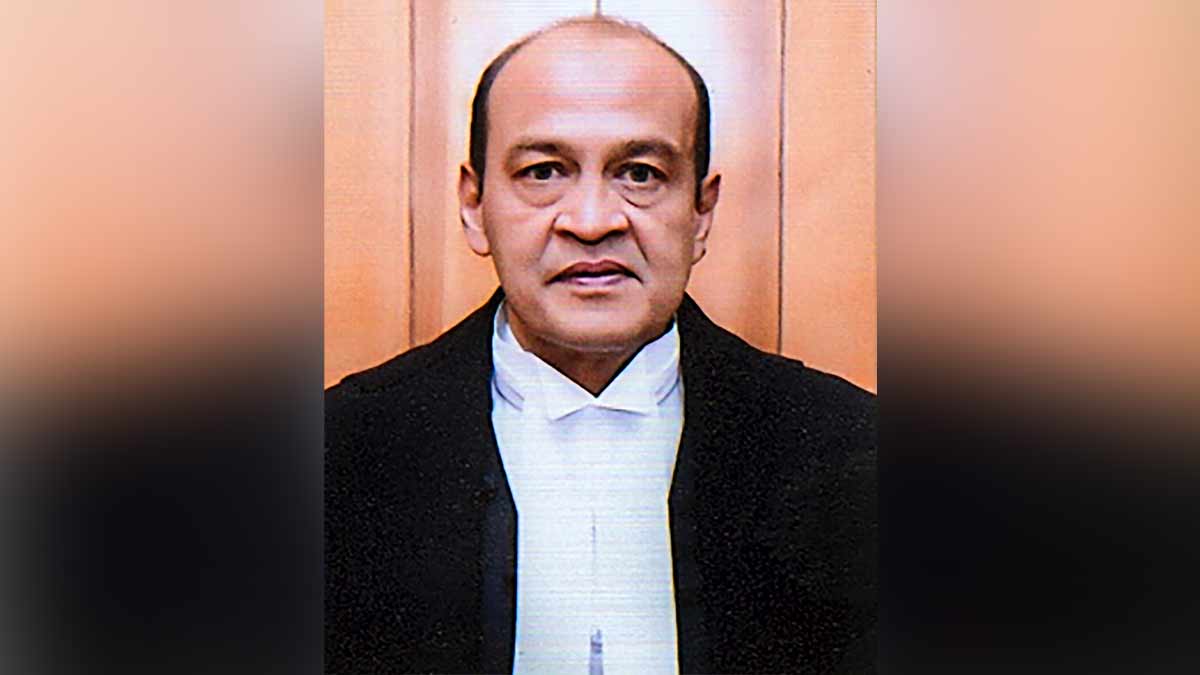
In a huge setback for Allahabad High Court Judge Justice Yashwant Varma, the Supreme Court dismissed his plea challenging the in-house committee report and the procedure adopted.
The petition had challenged the legality and procedure of the in-house inquiry report related to allegations concerning the recovery of burnt currency notes.
A bench headed by Justice Dipankar Datta delivered the verdict, holding that the petition was not maintainable and that the in-house inquiry mechanism enjoys legal sanctity. The Court emphasised that it had tread carefully while pronouncing the verdict, ensuring that no observation in the judgment would prejudice Justice Varma in any future proceedings that may arise.
The ruling is expected to set a precedent in matters involving judicial conduct and the limited scope of judicial review over internal mechanisms meant to uphold integrity within the judiciary.
The matter now effectively shifts to the executive and, potentially, to Parliament. Under the constitutional framework, a sitting High Court judge can only be removed through the impeachment process outlined in Article 124(4) and the Judges (Inquiry) Act, 1968. This means that unless Justice Varma chooses to voluntarily resign, any further action must be initiated by Parliament.
If the impeachment motion is admitted, a three-member committee comprising a Supreme Court judge, a Chief Justice of a High Court, and a jurist would be formed to investigate the charges. Only after this committee submits its report can Parliament vote on the judge’s removal.
The top court, while reading the operative portion of the judgement, said it had framed six questions and answered them.
1. Maintainability: It held that a writ petition challenging the conduct of a sitting judge under an in-house mechanism is not maintainable.
2. Legal Procedure: The in-house procedure enjoys legal sanctity and is not a parallel mechanism outside the constitutional framework.
3. Violation of Rights: The Court found no violation of the petitioner’s fundamental rights.
4. Compliance with Process: The Chief Justice of India and the inquiry committee “scrupulously followed the process.” The uploading of photographs and videos was deemed non-essential, especially as no objection was raised at the time.
5. Communications to Executive: Sending the report to the Prime Minister and President was not unconstitutional.
6. Liberty for Future: The Court left open the possibility for Justice Varma to raise grievances through appropriate remedies in the future, if required.
The verdict is a crucial reaffirmation of the judiciary’s internal disciplinary mechanisms. At a time when questions of transparency and judicial conduct are under increased public scrutiny, the Court has sent a clear message that internal mechanisms like in-house inquiries are part of the judiciary’s self-regulatory framework and cannot be subjected to conventional legal challenges unless specific constitutional violations are shown.
Amid growing public scrutiny over judicial conduct, the Supreme Court has firmly backed the in-house inquiry process as a legitimate, self-regulatory tool.
