



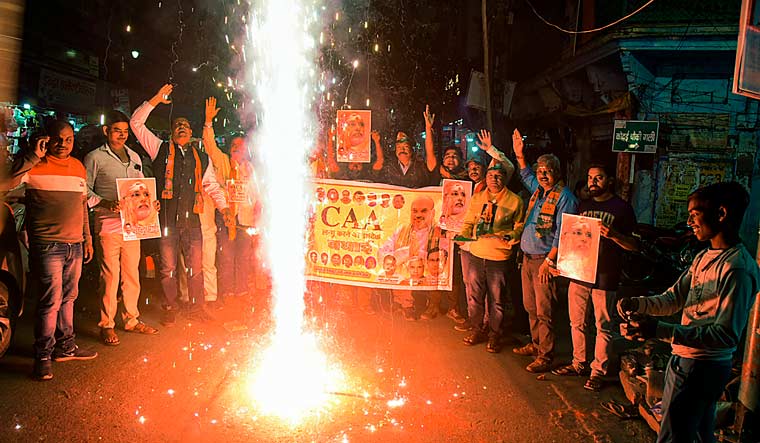
In a big move ahead of the Lok Sabha elections, the Union Home Ministry on Monday announced the notification the Citizenship Amendment Act (CAA) rules.
The MHA had already conducted dry runs of the online registration portal. The district authorities have been empowered to grant long-term visas—a precursor to the CAA—and the maximum number of applications were received from Pakistan.
The CAA, enacted by the Narendra Modi government in 2019, seeks to grant citizenship to persecuted non-Muslim immigrants, including Hindus, Sikhs, Jains, Buddhists, Parsis, and Christians, from Bangladesh, Pakistan, and Afghanistan who entered India before December 31, 2014.
Government sources earlier told THE WEEK that they expect some protests in states such as Assam, West Bengal and Delhi, but adequate steps have been taken over the last several months to remove any reservations on the issue.
With the BJP government ending its five-year term and the model code of conduct coming into force soon for the general elections, sources said the rules needed to be notified to prevent the law from getting lapsed.
They further clarified that the CAA does not take away the citizenship of any religion or community; rather, it enables the persecuted members of these religions living in neighbouring countries who have suffered over the years to apply for citizenship.
In January, Union Minister Shantanu Thakur, while addressing a public rally in West Bengal, claimed that the CAA would be implemented across the country within a week.
The promise of implementing the controversial law served as a major electoral platform for the BJP in the previous Lok Sabha and assembly polls in West Bengal, with party leaders believing it played a pivotal role in the BJP's ascent in the state.
Several states like West Bengal and Kerala have reiterated that they won’t allow the implementation of the law.
