



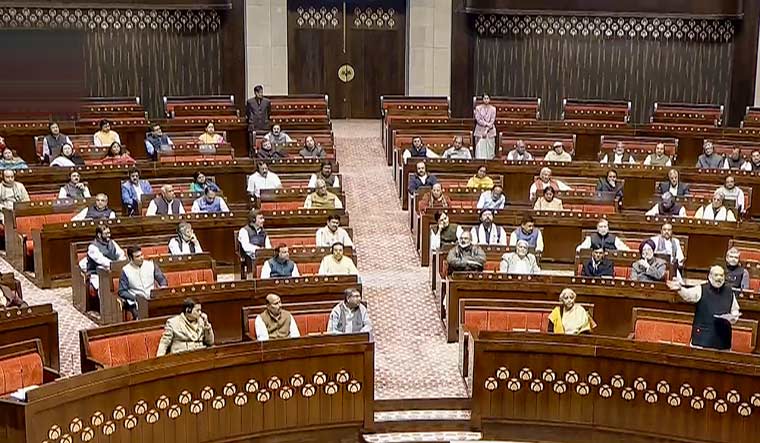
The three criminal reforms bills have got parliament nod with Rajya Sabha passing them on Thursday, a day after Lok Sabha cleared them. The bills were passed when the opposition benches were almost empty after the suspension of 143 MPs from both the houses for causing disruptions.
These three legislations replace the colonial era laws—IPC, CrPC and Evidence Act.
Speaking in Rajya Sabha, Home Minister Amit Shah said the new bills are aimed at changing the very colonial concept behind the old laws and that the intent now is not punishment but giving justice.
Under the Bharatiya Nyaya Sanhita, which replaces the IPC, there will be 358 sections instead of 511 IPC sections, while 20 new crimes have been added. The key changes include removal of section of sedition and addition of provisions against terrorism, mob lynching and snatching.
The imprisonment sentence has been increased in 33 crimes, while the amount of fine has been increased in 83 crimes. Among the other highlights of the new bill, mandatory minimum punishment has been introduced in 23 crimes while penalty of community service has been introduced in six crimes.
Shah said the old law’s main aim was to stop sedition against the government. Now, that section has been removed as people were free to voice their concerns against the government, but not against the country.
The IPC section 124A talked about acts “against the Government”, but Bharatiya Nyaya Sanhita section 152 talks about “sovereignty or unity and integrity of India”.
Under Bharatiya Nyaya Sanhita section 152, it will be crime to encourage the sentiments of separatist activities and threaten the sovereignty or unity and integrity of India. In the existing IPC, there was no mention of 'intent or purpose' but in the new law there is mention of 'intent' in the definition of treason, which provides safeguards for freedom of expression. Now, words like hatred and contempt have been removed and words like ‘armed rebellion, destructive activities and separatist activities’ have been included, the officials said.
Another key feature of the BNS is that ‘terrorism’ has been defined for the first time where provision of death penalty and life imprisonment without parole has been made.
Under the section 113 (1), the terrorism has been defined as “Whoever, with intent to endanger or is likely to endanger the unity, integrity, sovereignty, security or economic security or sovereignty of India or to cause or spread terror among the public or any section of the public in India or in any foreign country, commits any act using bombs, dynamite, explosive substances, poisonous gases, nuclear with intent to cause death to any person or persons, damage to property, or manufacture or smuggling of currency or so he commits terrorist acts”.
The new bill makes it a crime to destroy public facilities or private property. The acts which cause 'widespread loss by reason of damage or destruction of critical infrastructure' are also covered under this section.
The new bill has introduced new criminal section related to organized crime. Illegal activity done by a syndicate has been made punishable. The new provisions include armed rebellion, subversive activities, separatist activities or any act threatening the sovereignty or unity and integrity of India.
Among other new provisions included are the introduction of crime related to mob lynching. The new provision on crime related to murder committed on the basis of race, caste, community has been included, for which a provision of life imprisonment or death penalty has been made. A new provision related to snatching has also been included.
The government argued that the British government considered protections against treason and treasury more important than murder or atrocities against women. In three new legislations’, the crimes against women and children, murder and crimes against the nation have been given prominence.
The Bharatiya Nyaya Sanhita has introduced a new chapter titled 'Crimes against women and children' to deal with sexual crimes. The bill proposes changes in the provisions related to rape of women below 18 years of age while a provision has been made for life imprisonment or death penalty. A provision for 20 years imprisonment or life imprisonment in all cases of gang rape has also been made.
In the Bharatiya Nagrik Suraksha Sanhita which will replace the CrPC there will have 531 sections in place of existing 484 sections.
In the Bharatiya Sakshya Adhiniyam which will replace the Evidence Act, there will be 170 provisions instead of the 167 provisions. Time limits for initiation of criminal proceedings, arrest, investigation, charge sheet, proceedings before magistrate, cognizance, charges, plea bargaining, appointment of assistant public prosecutor, trial, bail, judgment and punishment, mercy petition have been provided.
“The biggest loophole in our criminal justice system is delay... Justice delayed is justice denied, and therefore, keeping this in mind, we have tried to stipulate a timeframe for the police, lawyers and court,” Shah said in his speech. The three bills will now go to the President for her assent before they become laws.
