



The Election Commission's order withdrawing the national party status of three key political parties—the Trinamool Congress, the Communist Party of India, and the Nationalist Congress Party—while granting the coveted tag to the Aam Aadmi Party, based on their past electoral performance, has changed the top pecking order. Now, there are six parties with a national party status, down from eight, thus signalling the changing fortunes of political players.
The six parties with national party status are BJP, Congress, BSP, CPI(M), AAP and National People's Party. Meghalaya Chief Minister Conrad Sagma-led NPP is the first and only party from the Northeast to get this tag in 2019. The national party status has come as shot in the arm for just a decade-old AAP as it is focussing on aggressive national expansion to emerge as the chief opposition party against the BJP. Numbers-wise, the party is not represented in Lok Sabha, but in terms of perception, it shows its expansion across the states primarily eating into the Congress vote bank. It got the status as it is now a state party in four states—Delhi, Goa, Punjab and Gujarat.
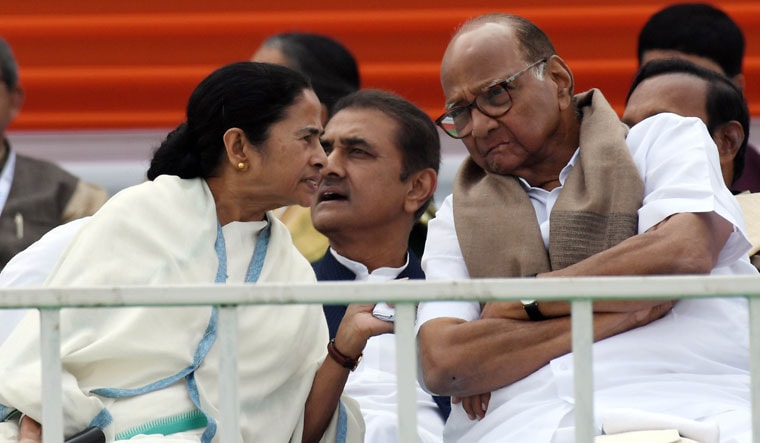
The BJP and the Congress remain the main national players. The dwindling fortunes of the BSP and the CPI(M) may spell trouble for them in the future. Mamata Banerjee-led Trinamool, which got the national party tag in 2016, lost it in 2023; it also lost the state party status in Arunachal Pradesh and Manipur. Sharad Pawar-led NCP, too, has lost the tag it earned in 2000 as it ceased to be a state-level party in Goa, Manipur and Meghalaya. It, however, earned the state party status in Nagaland.
The lesser number of political outfits with national tags also signals a move towards a bipolar polity at the national level. Will the changed national party status impact the opposition unity moves as the national march of some players has been halted, while a new player is rising ? Jury is till out.
The methodology to give national and state-level party tag is based on the electoral performance. The lose of the tag for the CPI, formed in 1925, shows the Left’s shrinking support base. The CPI was recognised as a national party in 1989. It is the only political party to contest all general elections on the same electoral symbol and has maintained uninterrupted presence in the Lok Sabha. It was the first non-Congress party to form government in any state and since then has been part of many governments. The CPI's regional party status has been withdrawn from West Bengal and Odisha. It will, however, continue to enjoy the state party status in the states of Kerala, Manipur and Tamil Nadu.
In a statement issued on Tuesday, the CPI said, “The Election Commission should have given due consideration to the rich history of the Communist Party of India and its pre-eminent role in the fight against the British raj and its role in shaping the national agenda in post-independent India. The CPI has remained at the forefront in strengthening the democratic polity of the country. The CPI is one of the oldest political parties in the country and continues to have pan-India presence and mass following.”
The major advantage of a national tag is that the party can have common symbol across the country for its candidates thus making it easier for people to recognise it. For example, the hand for Congress and lotus for BJP are the most recognised symbols which help electorate vote for the party even when a local candidate may not be known. The 'national' tag also helps in getting free airtime on public broadcaster during polls and to have more star campaigners during electioneering.
The Election Commission dismissed suggestion from different parties that the review of status be done after the 2024 elections, saying it was going by the rules as prescribed in the Symbol Order 1968. The parties contended that the year 2023 was important as elections to nine states were being held and it would provide them a chance to recover the lost ground.
The commission, however, claimed that the parties which got the status under the Symbols Order, 1968, now cannot say that it has not served the purpose or question the methodology. The EC in its order said, from the date of notice to national parties in 2019 to December 2022, elections to 21 state assemblies were held which gave ample time for the parties to improve their electoral performance to maintain the tag.
For a national party status, a political outfit should fulfill one of the conditions: Secure not less than six percent of the total valid votes polled in the state; and win two seats in assembly, or for Lok Sabha; party secure not less than six percent of the total valid votes polled in the state, and elect one MP; win at least three per cent of the total number of seats in Assembly, or at least three seats in the Assembly.
The commission also revoked the state party status granted to Jayant Choudhary-led-RLD in Uttar Pradesh, Telanagana CM K.Chandershekhar Rao-led BRS in Andhra Pradesh, PDA in Manipur, PMK in Puducherry, RSP in West Bengal and MPC in Mizoram.
The state level status has been granted to NCP and Lok Janshakti Party (Ram Vilas) in Nagaland; Trinamool and and Voice of the People Party in Meghalaya; Tipra Motha in Tripura.
