



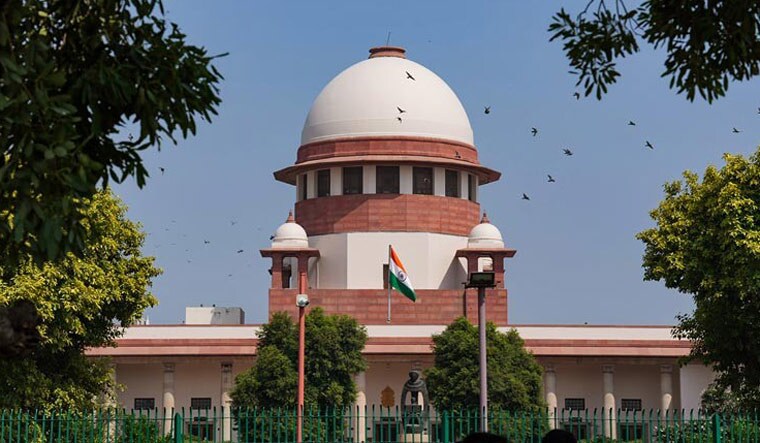
The Congress' reaction to the recent Supreme Court's decision to free all the remaining six convicts in the Rajiv Gandhi assassination case is a reminder of how politically charged the case has been, be it with regard to the investigation or release of the convicts later.
While the politically sensitive case has also seen the Tamil Nadu parties be it the AIADMK or the DMK take a stand that has been sympathetic to the convicts serving life imprisonment. The parties asserted that they were minor players in a plan with implications they were not fully aware of.
The Congress' immediate reaction to the SC order, offered by Jairam Ramesh, AICC General Secretary in charge of Communications, was that the court's decision was totally unacceptable and completely erroneous. “The Congress Party criticises it clearly and finds it wholly untenable,” Ramesh said.
The Congress was hostile to the DMK for several years, holding them responsible for Rajiv's assassination by not curbing the activities of the LTTE.
In November 1997, the Congress had pulled the plug on the I K Gujral government over the issue of the continuation of ministers belonging to the DMK despite the findings of the Jain Commission that had probed the assassination and concluded that the Dravidian party had given “tacit support” to the LTTE.
“Remove DMK, save the country”, was the slogan of Congress members in the Parliament as they had disrupted proceedings.
The then Congress President Sitaram Kesri is believed to have been not very keen on the move to withdraw support from the Gujral government, and his subsequent downfall in the party is believed to be a result of this. Also, earlier, the strained relations between P V Narasimha Rao, when he was the prime minister, and Sonia Gandhi were said to because of the latter's view that the Rao government was not doing its best to ensure a speedy investigation into Rajiv's killing.
If the case had an impact on intra-party dynamics outside, the party did recalibrate its relations with the DMK in the face of political necessity. The party became a coalition partner when the United Progressive Alliance came to power in 2004 and has been a staunch ally of the Congress ever since.
The relations have survived the diametrically opposite stand of the two parties with regard to the debate on whether the assassination case convicts could be released since they had served more than 30 years in jail.
