



As the tussle between the government and the judiciary over judicial appointments escalates, the High Courts and the Supreme Court are suffering from a large number of vacancies, with many of the courts functioning with a working strength that is around 50 per cent of the sanctioned strength.
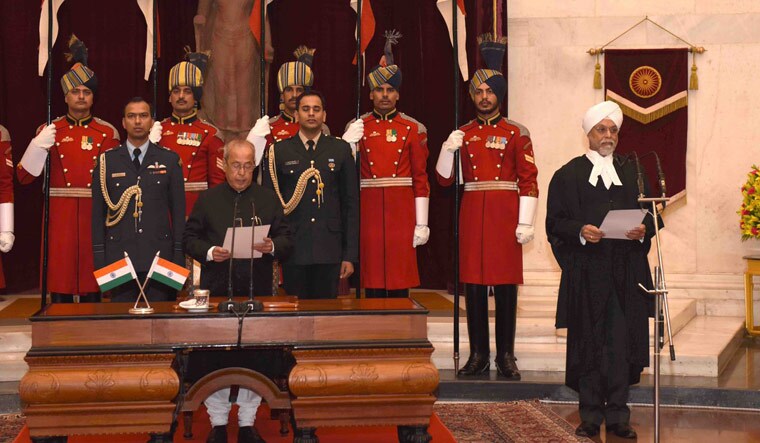
The Supreme Court, with the appointment of senior advocate Indu Malhotra as one of its judges on Friday, now has 25 judges as against the approved strength of 31. With six judges set to retire this year, the number of vacancies could go up to 12.
As of April 1, 2018, the total number of vacancies of judges in the 24 High Courts is a staggering 410. While the approved strength is 1,079, the High Courts are functioning with 669 permanent and additional judges, which works out to around 38 per cent posts being vacant.
The biggest High Court in the country, the Allahabad High Court, has a sanctioned strength of 160 judges, out of which 60 posts are vacant. High Courts such as the ones at Telangana and Andhra Pradesh, Calcutta, Chhattisgarh, Gujarat, Karnataka, Patna, Manipur and Tripura are functioning with around 50 per cent vacancies.
The Telangana and Andhra Pradesh High Court has a working strength of 30 judges as against a sanctioned strength of 61. The Calcutta High Court has 33 judges, while the total approved strength is 72. As against a total approved strength of 22 judges in the Chhattisgarh High Court, there are only 12 judges.
In the Gujarat High Court, there are 22 vacancies, while the total sanctioned strength is 52. The Karnataka High Court is functioning with just 30 judges as against a total approved strength of 62. The Madhya Pradesh High Court is placed slightly better, with 32 judges as against a total sanctioned strength of 53 judges.
The Meghalaya High Court has only one judge, while the total sanctioned strength in the High Court is four judges. The Sikkim High Court is the only High Court with no vacancy. It has three judges.
The rising number of vacancies in the higher courts has to be seen in the backdrop of the delay in the finalisation of the Memorandum of Procedure for appointment of judges to the High Courts and the Supreme Court. The Supreme Court, while rejecting the National Judicial Appointments Commission, which would have involved the executive in the choice of judges, had asked the government to frame a new MoP for appointment of judges. However, the new MoP has been hanging fire, with the judiciary and the executive failing to come to a consensus on it.
There is also outrage over the delay in the government processing the Supreme Court collegium's recommendations for appointment of judges to the higher courts. Chief Justice of India Dipak Misra's colleagues in the collegium have written to him on the issue, urging him to initiate a wider discussion among the judges of the Supreme Court on the issue.
“One-third of the posts in the Supreme Court will soon be vacant. The High Courts are dealing with a large number of vacancies. The CJI, the law minister and eminent jurists should come together to find a solution to the impasse,” said Shivaji Jadhav, president of the Supreme Court Advocates-on-Record Association.
