



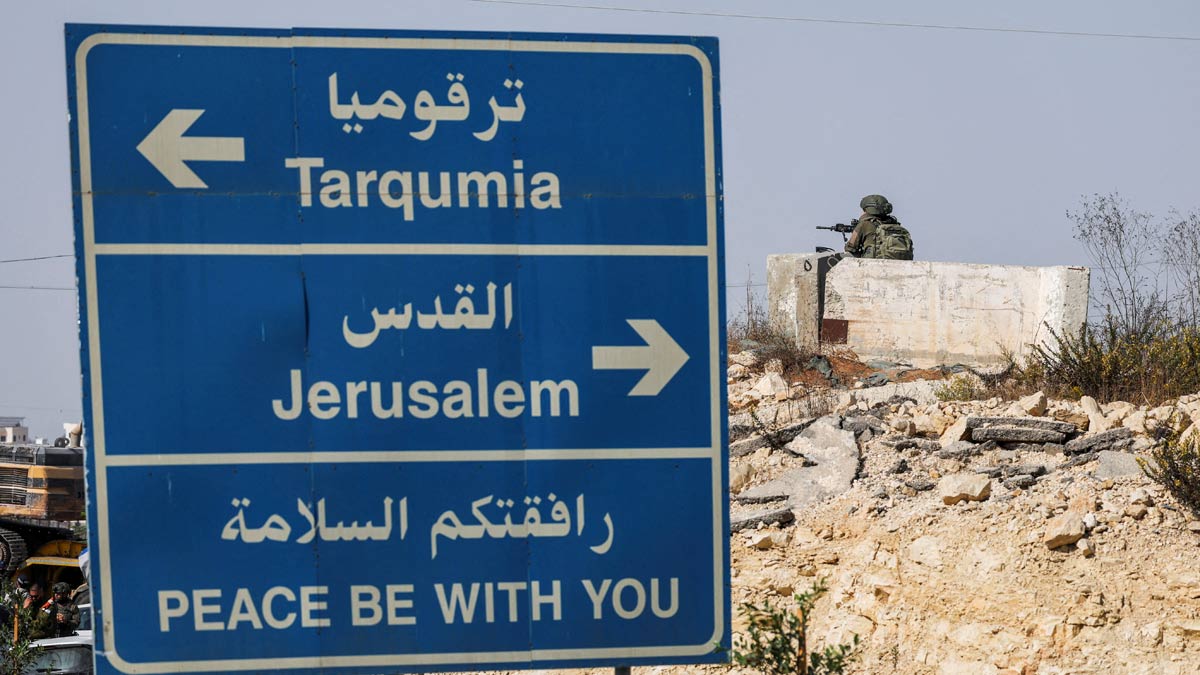
Israel has answered yesterday’s deadly shooting outside Hebron with a cordon around the city and neighbouring Halhul, together with a full lockdown across the West Bank. Two soldiers, Staff Sergeant Ron Yonatan Roytman, 23, and Sergeant Yuval Shai Svilem, 20, were killed, and three others were wounded in the attack by Palestinian gunmen. The attack took place at Judea Junction, near a temporary military checkpoint outside the settlement of Telem, west of Hebron.
Two Palestinians from Hebron, travelling in a vehicle with Israeli plates and armed with an M16 rifle and a handgun, fought soldiers for about 20 minutes before both were killed. Israeli military assessments suggest the pair had plans to strike along the busy Route 35 and opened fire at the checkpoint when they could go no further. Hamas, Palestinian Islamic Jihad and the Popular Front for the Liberation of Palestine praised the attack, presenting it as a reply to Israeli raids, settler violence and the war in Gaza.
The security response has been broad. The IDF, the Shin Bet, the Border Police and the Judea Regional Brigade have mounted multi-day operations, with house-to-house searches, roadblocks, the mapping of the attackers' homes and the questioning of dozens of suspects. Prime Minister Benjamin Netanyahu has said forces will enter the attackers' neighbourhood, displace residents, destroy infrastructure and build "infrastructure for settlement".
Plans are reportedly under review for the largest military operation in the West Bank since 1967. Within hours of the shooting, Finance Minister Bezalel Smotrich filmed a bulldozer demolishing a Palestinian structure near the site, saying it would create deterrence. Israel's Supreme Court has since issued a temporary injunction against further demolitions, after an urgent petition from local factory owners. Defence Minister Israel Katz has gone further, pledging mass demolitions and pointing to the "Jenin refugee camp model" as the template for Hebron. Smotrich and National Security Minister Itamar Ben-Gvir have called for the dismantling of the Palestinian Authority, tighter limits on Palestinian movement and a campaign modelled on those in Gaza and Lebanon.
The timing is hard to separate from politics. The shooting came four days before the election of October 27, the first national vote since the Hamas attacks of October 7, 2023. Netanyahu has built his campaign on security guarantees, and after the incident he cancelled planned rallies and described the attack as proof of the threat the country faces. Coalition ministers rushed to the scene to press for harder measures, a useful appeal to nationalist voters at a time when polls suggest the governing bloc could lose its parliamentary majority. Katz accused opposition leaders of undermining warnings on national security. Gadi Eisenkot and Naftali Bennett offered condolences to the families and commended the military's handling of the incident, which left little room for a sharper attack from the opposition benches.
The Hebron shooting should also be seen against the backdrop of a wider surge of violence across the West Bank, centred on the annual olive harvest. United Nations reports record more than 160 settler attacks in the first two weeks of October alone, many of them carried out under the protection or with the participation of Israeli forces. Farmers have been assaulted, crops stolen, trees destroyed and shots fired.
The violence has drawn in witnesses. Photojournalist Heidi Levine was seriously injured by settlers, and the American congressional candidate Brad Lander was briefly detained while volunteering with Palestinian harvesters. Israeli forces have meanwhile carried out raids and mass arrests in Jenin, Nablus, Ramallah and East Jerusalem. According to the United Nations, more than 1,100 Palestinians have been killed in the West Bank by Israeli forces or settlers since October 7, 2023.
Critics see the official response as a breach of settled principle. The Israeli rights group B'Tselem, along with the legal analysts Michael Sfard and Mohammed Dahleh, has warned that punitive demolitions, urban sieges and neighbourhood evacuations amount to collective punishment and may constitute war crimes under international law. The injunction suggests that Israeli courts, at least, are not yet ready to wave such measures through.
