



In a chilling CCTV video, a 47-year-old Dr Sahin Rahman was seen collapsing mid-workout at a gym. This isn’t a lone case. Last year, a 37-year-old Pune man died the same way. When a 27-year-old Madurai man, Sri Vishnu, died in 2022 after a gym workout, his father told a news website that he didn’t drink or smoke.
A young, seemingly fit individual collapsing during a workout and never getting up again has seemingly become recurrent. It’s termed tragic and labelled as ‘cardiac arrest,’ but it also warrants questions: Why are young Indians dying at gyms? Why is exercising taking lives?
A ‘sudden death’
“Sudden cardiac death is the commonest mode of death worldwide, which means it’s not only the first cause in cardiac patients but deaths in general,” says Dr Balbir Singh, group chairman, Cardiac Sciences, Pan Max and Chief of Interventional Cardiology and Electrophysiology at Max Super Speciality Hospital, Saket.
A sudden death happens within one hour of the symptoms setting in. Heart disease is its commonest cause.
It happens in two ways: One, a heart attack, in which an artery is clogged, obstructing blood flow into that part of the heart. The other way sudden death happens in heart patients is malignant arrhythmias. That means a heartbeat becomes uncontrollable and the person dies, the expert explains.
So what’s the relationship between a sudden cardiac death and a gym?
“We know overexertion or overstrenuous exercise can precipitate these sudden death syndromes, and it is well known that very strenuous heavy exercise can also be a risk factor,” Dr Singh explains. “We know of football players and athletes who collapsed on the field while playing and were resuscitated with CPR and defibrillators. So there are instances beyond gyms and in sports too.”
Research published in the European Heart Journal last year found sudden cardiac death responsible for an 'unusually high' proportion of deaths in male bodybuilders worldwide.
“The research challenges the idea that appearance alone is an indicator of health and highlights the hidden risks that can exist behind even the most sculpted physiques,” noted the study’s lead author Dr Marco Vecchiato, from the University of Padova.
Pressure of looking fit
But when ‘skinny is the new sexy,’ and fit means abs and biceps, the pressure of looking fit can push many to put their bodies through more than one can handle.
“One shouldn’t go with the mindset of making big muscles, or that taking supplements will help me achieve that. Instead, keep your body mass index (BMI), fat content and hip-to-waist ratio in check,” advises Dr Singh. It becomes even more crucial as fat burners and protein powders, though regulated on paper, face enforcement challenges, putting health at risk.
Go slow & steady
Exercise is extremely beneficial, but it should be progressive and appropriate for one’s fitness level, experts say.
“A useful guide is to understand your estimated maximum heart rate, often calculated as approximately 220 minus your age, and avoid suddenly pushing yourself to maximal exertion,” explains Dr Niranjan Hiremath, senior consultant and lead cardiovascular & aortic surgeon, Apollo Hospitals, Bengaluru. “Beginners should build intensity gradually and preferably exercise under professional guidance.”
Pain in the chest, unusual breathlessness, dizziness, fainting, or palpitations while exercising are the warning signs one must not ignore, he adds.
While regular physical activity reduces cardiovascular mortality by 30-40 per cent, athleticism hasn’t been shown to prevent cardiac arrests at large.
“For the general public, who’re not into aggressive sports, brisk walking, simple cardio, and some weight training can be excellent,” says Dr Singh. “Don't exert yourself too much, especially after a certain age.” Hence, no matter how much that voice in the head says: “Push yourself,” going as per one’s limits is recommended.
Gyms need to act, too
At the same time, gyms need to be careful.
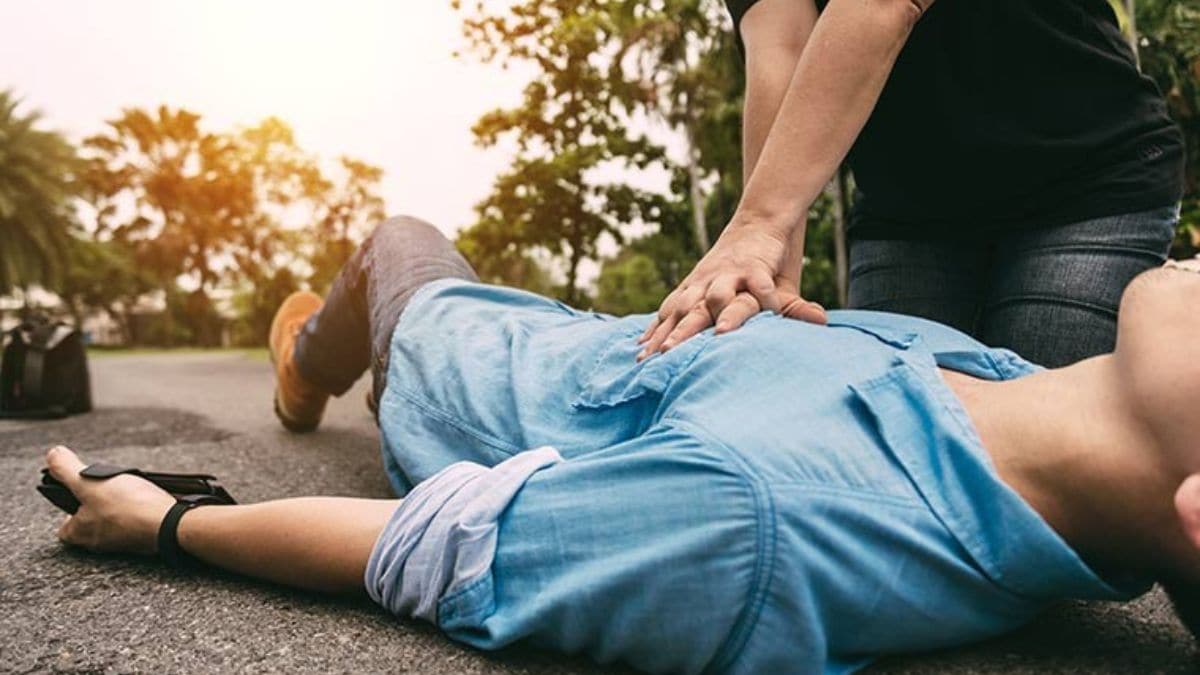
“Before one is enrolled, there should be proper screening, which includes ECG and blood tests to check for any abnormalities,” says Dr Singh. “All the gym trainers should be taught how to do CPR. There should be an automatic external defibrillator in all these gyms because you can definitely save lives.”
“The video that I saw of the patient in Assam, I'm sure if good CPR and a defibrillator were available, he may have survived. And even if you prevent one life in five years like that, it is worth having that equipment to save your people.”
