



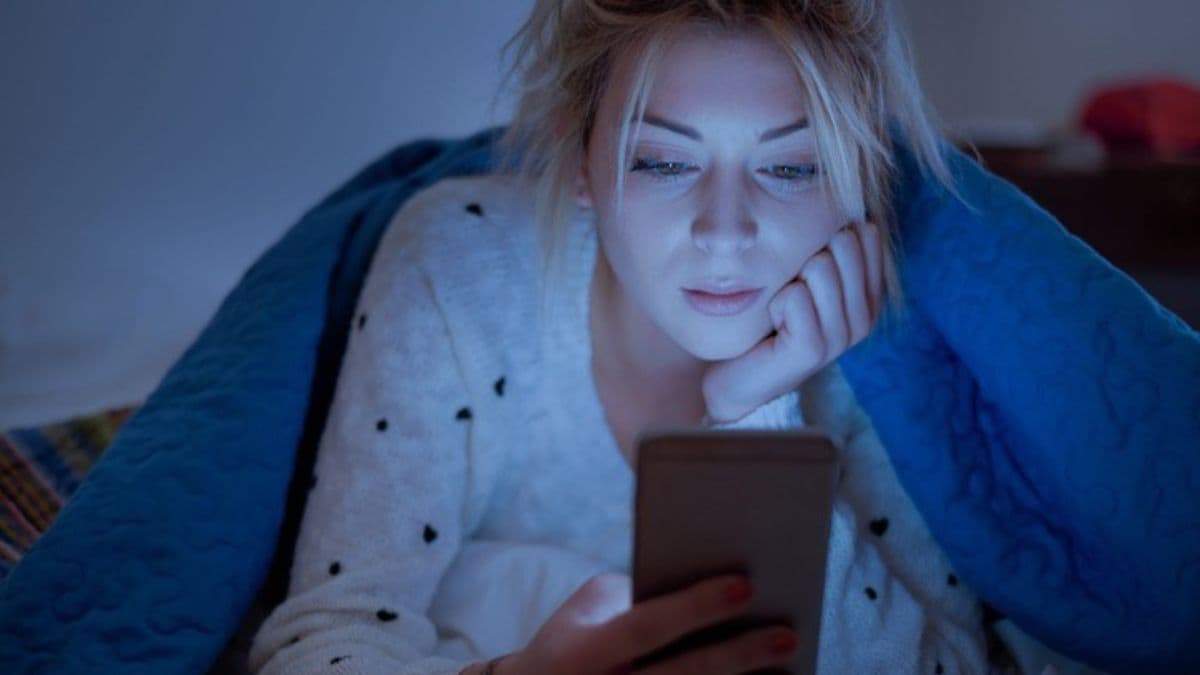
CLAIM: A viral Instagram post claims that late-night scrolling significantly raises the risk of early death, as blue light and disrupted sleep cycles damage cardiovascular health and interfere with cellular repair.
FACT: While studies suggest that disrupted sleep cycles might lead to risks of cardiovascular diseases, there are no direct links that it raises risks of early death. Doctors say that such claims are often exaggerated. The best advice for long-term health is to have restorative sleep every day.
Are you addicted to the screen till late at night? Do you think scrolling through your phone till very late is relaxing your mind? Are you doomscrolling through your social media till late at night to de-stress after a tiring day?
A viral Instagram post claims that research has found that staying up too late at night for scrolling might increase the chances of early death.
“Staying up late to scroll through your phone at night isn’t just a bad habit — new research links it to a significantly higher risk of early death. Disrupted sleep cycles and blue light exposure interfere with cellular repair and cardiovascular health, creating long-term damage,” the post reads. “Put simply: trading sleep for screen time could be shortening your life.”
Are the studies suggesting the same?
A 2018 study published in the journal Chronobiology International, which tracked over 433,000 adults in the UK for an average of 6.5 years, does find an association between being a habitual night owl and a higher risk of early death. Definite evening types had a 10 per cent higher risk of all-cause mortality compared to definite morning types. The study also found that evening types were nearly twice as likely to have psychological disorders and 30 per cent more likely to have diabetes.
However, the study does not examine late-night screen use or scrolling as a cause. Instead, it attributes the elevated risk largely to "circadian misalignment," the chronic mismatch between a night owl's internal body clock and society's early schedules. "Mortality risk in evening types may be due to behavioural, psychological and physiological risk factors," the authors note.
A 2019 study published in Current Biology, titled 'Impact of Circadian Disruption on Cardiovascular Function and Disease,' offered partial support to the post's claims, though with significant caveats. The study showed that the body's 24-hour internal clock governs heart rate, blood pressure, and blood clotting. When this was disrupted through night shifts, jet lag, or irregular sleep, there was an increase in the risk of cardiovascular diseases.
“Epidemiological data show an association between shift work and cardiovascular disease, and controlled experimental human studies indicate that circadian misalignment (typical in shift workers) adversely affects cardiovascular risk factors,” the study revealed.
However, the researchers noted that the exact mechanisms driving these adverse effects remain unclear. The study stated that it is still unknown which specific exposures in humans, such as sleep disturbance, physical inactivity, or mistimed meals, are responsible for the health impacts of circadian misalignment.
A 2021 study explored the association between sleep and myocardial infarction, commonly known as a heart attack. The study tracked over 4,576 patients and divided their sleep cycles into four different time frames finding that all groups except those who fell asleep between 10:01 pm and 11:00 pm had a higher risk of suffering a heart attack.
“Sleeping late on weekdays (>12:00 AM) independently increased the risk of MI. This finding emphasizes the importance of a proper bedtime for the maintenance of the health of the cardiovascular system,” the study noted.
A 2025 meta-analysis done on 79 cohort studies to understand the association between short and long sleep duration and all-cause mortality found that short sleep duration was associated with a 14% risk of mortality, while sleeping for 9 or more hours raised that risk to 34%. Both conditions were compared to the sleep duration of 7-8 hours.
“Sex-specific analyses indicated that both short and long sleep durations significantly elevated mortality risk in men and women, although the effect was more pronounced for long sleep duration in women. Both short and long sleep durations are associated with increased all-cause mortality, though the degree of risk varies by sex,” read the report.
What do the health experts suggest?
Dr Sanjay Bhat, Senior Consultant in Interventional Cardiology at Aster CMI Hospital, Bangalore, said that the health risk is more closely related to insufficient sleep, poor sleep quality, and circadian disruption rather than scrolling itself.
“The key concern is not simply using a phone at night, but how that behaviour affects sleep duration, sleep quality, and the body's natural biological rhythms over many years.” he said.
Dr Bhat cautioned that late-night scrolling often kept people awake longer than intended, which delayed sleep and reduced the total sleep time. “Studies have found that people who regularly sleep too little or have irregular sleep schedules may have a higher risk of obesity, diabetes, heart disease, and premature death,” Dr Bhat said.
Explaining the effects of blue light exposure, Dr Bhat said that it suppresses melatonin production and interferes with the body’s normal sleep-wake cycle. “Over time, these disturbances may increase inflammation, blood pressure, and stress hormone activity, all of which can affect cardiovascular health,” he said.
“Try to maintain a regular sleep schedule, even on weekends, so the body can adapt to a predictable routine,” Dr Bhat said suggesting that one should aim for 7-9 hours of sleep each day and create a dark, quiet, and cool sleeping environment. “While sleeping late is not ideal for everyone, getting adequate, consistent, and restorative sleep is the most important factor for long-term health.”
This story is done in collaboration with First Check, which is the health journalism vertical of DataLEADS
