



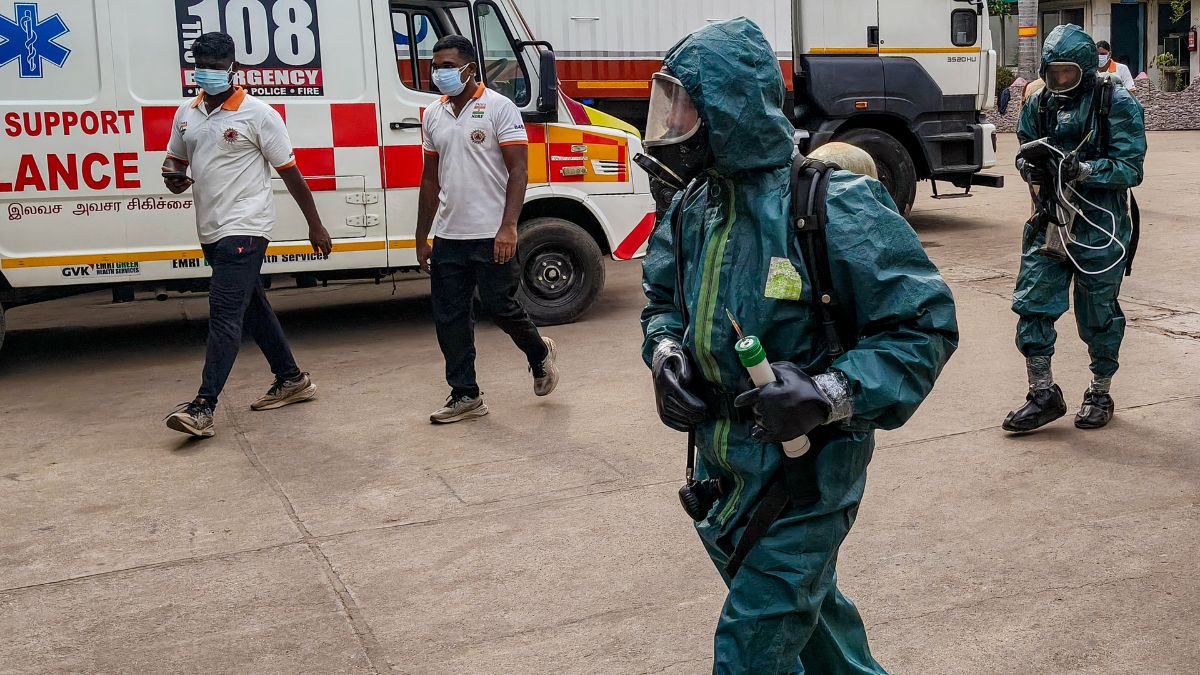
At least seven people have died, and over 40 people were hospitalised in Tamil Nadu after an ammonia gas leak at a private seafood export company at the workers' residential premises. Those critical have been shifted to Stanley Medical College in Chennai.
Earlier instances of ammonia gas leaks had cost lives in the country. In 2022, an instance of ammonia gas leak in a meat factory in Uttar Pradesh’s Aligarh affected at least 50 workers.
What happens when ammonia affects your body?
Ammonia is highly corrosive and reacts violently with moisture on the human body, forming ammonium hydroxide. This chemical, during a leak, causes severe alkaline burns, tissue damage, and respiratory failure by attacking the eyes, skin, and lungs.
Apart from causing painful blisters on the skin, it can also lead to swelling and narrowing of the throat, making it difficult to breathe.
Inhaling high concentrations of ammonia causes pulmonary edema (fluid buildup in the lungs) and rapid respiratory arrest. It also causes severe oxygen deprivation.
Immediately after inhalation, most people feel skin irritation or even start coughing. According to the US Centres for Disease Control, exposure for a long time may affect people's ability to sense the chemical.
What are the long-term consequences of exposure to high levels of ammonia?
Exposure to high levels of ammonia for a long time could lead to severe lung injury. It could cause acute respiratory distress syndrome (ARDS), which causes low levels of oxygen in the blood.
It could also cause issues including chronic cough, asthma and lung fibrosis.
Who is most at risk of ammonia exposure?
*Agricultural workers
*Miners or metallurgical workers
*Those working in petroleum refining
*Industrial workers manufacturing fertilisers, rubber, plastic, nitric acid, solvents or other chemicals
*Those working in food processing units
What's the treatment for ammonia poisoning?
There is no specific treatment or antidote for ammonia poisoning. The treatment focuses on reducing and managing any injury the exposure has caused.
The treatments include supplying humidified oxygen and using medications to make breathing easier.
How to prevent ammonia in the lungs
*Using a respirator or breathing equipment to protect against ammonia inhalation.
*Wearing protective clothing and boots to shield against hazardous chemicals.
*Wearing gloves and eye protection to shield the skin and eyes, reporting any leaks or spills immediately, evacuating the area, labelling all containers and storing ammonia in a safe place away from heat sources.
*Keeping water at hand for decontamination.
What to do if exposed?
If you have been exposed to ammonia gas, you should:
*Remove all your clothes. Do not remove it over your head to prevent further exposure to the mouth and eyes. If you have to, close your eyes and mouth before doing so.
*Wash your body with lukewarm water and soap.
*Wash your eyes with lukewarm water as well.
