



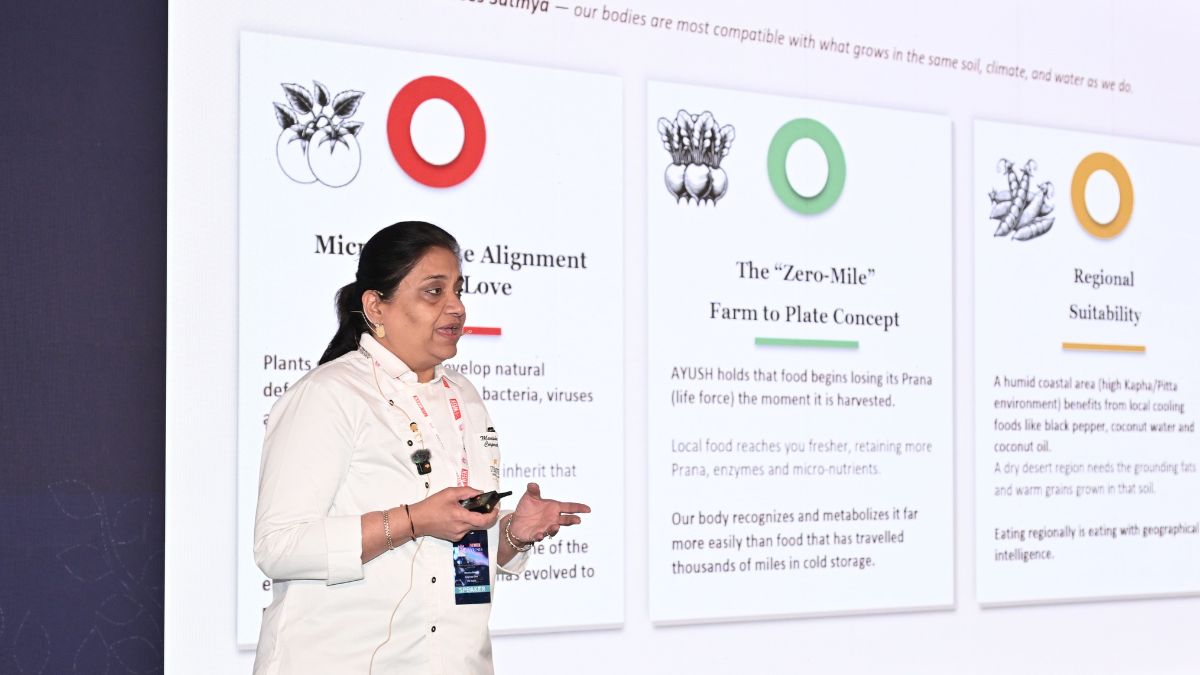
In a session that focused on local and seasonal produce, Chef Manisha Bhasin, corporate chef of ITC Hotels, said, “You are a product of the soil, but the market has changed it. For example, watermelons are available round the year. This is a change that has happened in my lifetime. As a child, I used to wait for summer to eat watermelon. You cannot avoid market forces entirely, but you can manage your food choices wisely.” The chef was speaking at THE WEEK Ayush Conclave in Delhi.
The chef said that even vegetarian food starts degrading from the time it is harvested. “Cold chains have made it possible for food to be transported over longer distances,” Bhasin said. “But if your local fruit vendor and vegetable vendor do not stock it, it is best to avoid it. Your body does not need it right now, in that geography.” The chef said that the 50-mile rule was a good rule of thumb as it ticked both boxes—freshness and geography.
The chef also spoke about the importance of metallurgy in cooking. At a time when awareness about microplastics and coatings on non-stick cookware is growing, the chef said that “brass vessels, iron kadahi, Kansa plates and porous clay pots circulate heat and moisture evenly throughout the cooking process”.
While at the table, it is best to eat silently and mindfully, Bhasin said. She said that it was best to avoid screens and other distractions to taste the food in front of oneself and also to recognise satiety signals. If you have ever opened a bag of chips and sat down to watch your favourite show, you know what she was hinting at.
A final point made by the chef was to let nature lead our cuisine based on the seasons and the geography. “In summer, nature provides cooling gourds and melons,” she said. “In winter, warming roots and seeds. Trusting this natural menu presents dosha imbalances that cause seasonal flu and lethargy.”
