



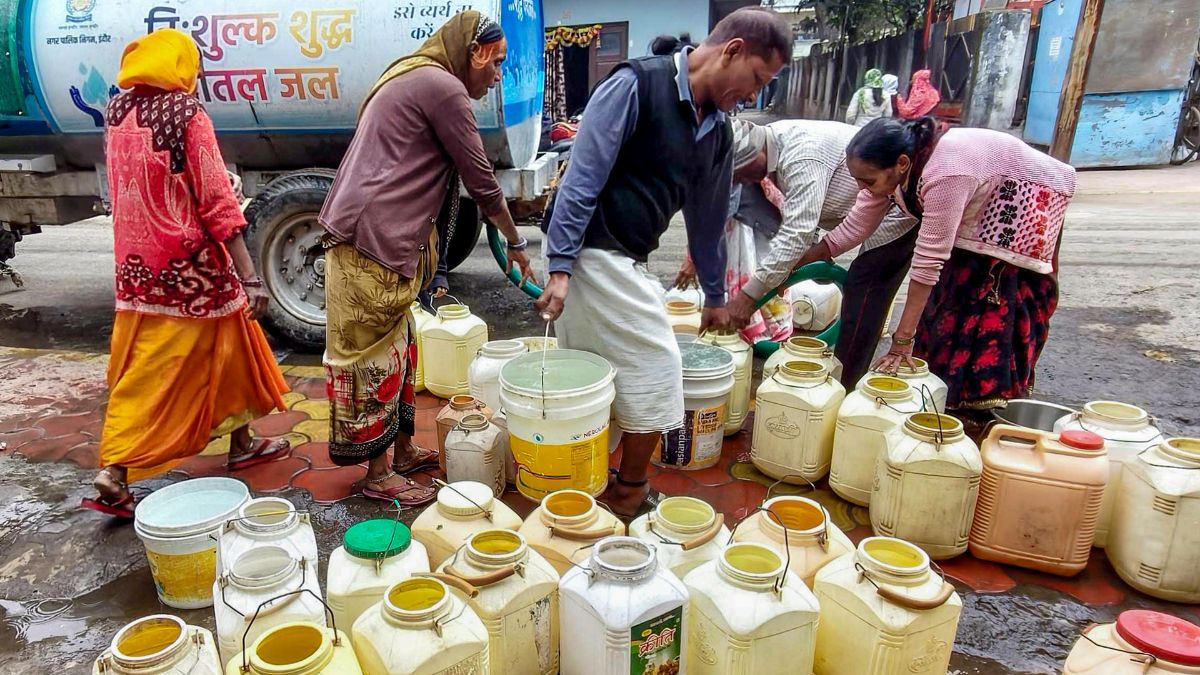
Typhoid, a life-threatening but preventable infection, remains a serious public health challenge, silently affecting millions every year and disproportionately hospitalising children. In India, nearly 47 lakh typhoid cases were recorded in 2023, with about 7,400 reported deaths. In fact, the current situation in Gandhinagar, Gujarat, has once again drawn attention to this persistent disease. Due to leakage in a water pipeline, cases of suspected typhoid were reported from Sectors 24, 28, and the Adivada area of Gandhinagar city a few days ago. According to the Municipal Corporation, the city has recorded 133 total cases registered, of which 45 have been discharged and 88 are currently hospitalised.
Caused by the bacterium Salmonella Typhi, the disease spreads through contaminated food and water, enters the bloodstream, and can lead to prolonged illness or death if left untreated. Despite medical advances and the availability of effective vaccines, typhoid continues to thrive in settings marked by poor sanitation, unsafe drinking water, and overcrowded living conditions.
Globally, typhoid fever continues to cause significant illness and mortality. As of 2019, an estimated 90 lakh people worldwide fell sick due to typhoid every year, with around 1.1 lakh deaths annually. Africa and South Asia remain the most affected regions, where access to clean water and sanitation remains uneven and outbreaks occur regularly.
Considering that typhoid can be fatal if not treated quickly, it becomes essential to understand what the disease is, how it spreads, why its prevalence remains high in India, and what experts recommend for prevention and control.
What is typhoid?
According to the Cleveland Clinic, “Typhoid fever is an illness caused by the bacterium Salmonella Typhi (S. Typhi). It infects your small intestines (gut) and causes high fever, stomach pain and other symptoms. Typhoid fever is also called enteric fever.”
According to the clinic, Paratyphoid fever is often mentioned alongside typhoid. It is a similar illness, but generally causes milder symptoms and is caused by Salmonella Paratyphi (S. Paratyphi). Both S. Typhi and S. Paratyphi are distinct from other Salmonella bacteria that cause salmonellosis, which is a common form of food poisoning.
What are the symptoms, and how does it spread?
Typhoid symptoms usually develop gradually, often appearing one to three weeks after exposure to the bacteria. The illness typically begins with a persistent fever that starts low and steadily rises, sometimes reaching as high as 104 degrees Fahrenheit. This is often accompanied by abdominal pain, headache, chills, weakness, fatigue, muscle aches, and changes in bowel habits, including constipation or diarrhoea. Some patients also develop a rash, cough, and loss of appetite.
If not treated promptly, typhoid can progress to severe complications. Weeks after the onset of symptoms, patients may develop intestinal inflammation, abdominal swelling, internal bleeding, or intestinal perforation. In some cases, symptoms can return even after the fever subsides, making early diagnosis and complete treatment critical.
The disease spreads when Salmonella Typhi bacteria enter food or water sources, usually through human faecal contamination. Drinking untreated water, consuming unwashed fruits or raw produce, ingesting unpasteurised milk or juices, or eating food prepared with poor hygiene can all lead to infection. Inadequate handwashing after using the toilet further facilitates transmission.
A major challenge in controlling typhoid is the presence of chronic carriers. Even after antibiotic treatment, some individuals continue to shed the bacteria in their stool for over a year while showing no symptoms themselves. These carriers can unknowingly infect others, particularly in settings where food handling and sanitation standards are poor.
Typhoid complications can be life-threatening and include sepsis, internal bleeding, intestinal perforation, altered mental status, and infected arterial aneurysms. These conditions require immediate medical intervention and are responsible for much of the disease-related mortality.
Why are typhoid cases rising in India?
India continues to bear a disproportionate share of the global typhoid burden. According to the Global Burden of Disease 2021 estimates, India recorded approximately 37 lakh typhoid cases and 41,586 deaths, contributing to 58 per cent of global typhoid cases and 48 per cent of global deaths. This high burden reflects persistent gaps in water safety, sanitation infrastructure, food hygiene, and vaccination coverage.
A 2021 community-based study conducted in densely populated urban communities of Vellore examined households of blood culture-confirmed typhoid cases among children aged six months to 15 years. The study found that “mothers eating food from street vendors during the previous week was independently associated with typhoid,” while “treatment of household drinking water was protective.” It concluded that street-vended food remains a significant risk factor for typhoid transmission in urban India, underscoring the importance of sanitation facilities and point-of-use water treatment.
More recent evidence from a 2023 nationwide study assessing typhoid burden by age, state, and antimicrobial resistance patterns has added further urgency. The study stated, “Our assessment of the typhoid fever burden in India by age, state, and AMR categories in 2023 have timely public health implications to inform targeted TCV introduction and prioritisation strategies in India.” It found the highest number of cases among children aged five to nine years, while hospitalisations and deaths were highest among children under five.
The study also highlighted a growing threat of fluoroquinolone-resistant Salmonella Typhi, particularly among children under 15 years. It noted that “relying solely on the routine immunisation programme, which targets TCV around nine months, would be insufficient for the immediate control of typhoid fever in India.” Delhi, Maharashtra, and Karnataka were identified as priority states, together accounting for nearly a quarter of India’s typhoid cases and deaths.
Another 2024 study reinforced the role of socio-economic and environmental factors, stating that “risk factors include lack of sanitation, unsafe water, unsanitary latrines, family size over six, overcrowding, low socioeconomic status, and illiteracy.” The study also observed that disease burden is higher in urban India, especially among the poorest households, and is not strongly associated with seasonal rainfall, indicating year-round transmission.
Compounding these challenges is the growing problem of antimicrobial resistance. A large systematic review analysing over two decades of Salmonella Typhi isolates found that while multidrug resistance has declined, it is being replaced by widespread fluoroquinolone resistance driven by genetic mutations. The study concluded that “the results reflect the effect of antimicrobial pressure which has been driving AMR in typhoidal Salmonella in India,” making treatment more complex and expensive.
What are the steps taken to address Typhoid in India?
According to a 2025 Lok Sabha reply, “The Union government is making continuous efforts to ensure safe drinking water to citizens.” Under the Jal Jeevan Mission, potable tap water is being provided to rural households, with priority given to water quality-affected habitations. The reply noted that over 2,000 water quality testing laboratories have been set up, and trained village-level volunteers are conducting regular water testing.
Another Lok Sabha reply highlighted that the Department of Drinking Water and Sanitation launched the “Handbook on Drinking Water Treatment Technologies” in March 2023, followed by a “Concise Handbook for Monitoring Water Quality of Piped Drinking Water Supply to Rural Households” in December 2024 to strengthen field-level implementation.
In response to the recent Gandhinagar outbreak, the Municipal Corporation has formed “85 survey teams and conducted surveillance of over 1 lakh 58 thousand people. Adequate quantities of chlorine tablets and ORS packets have been distributed, leakage repairs have been undertaken on a priority basis, and super chlorination has been carried out at all water sources.” The Chief Minister has also directed daily water sampling, strict chlorination protocols, and on-ground inspections of pipeline works to prevent future leakages.
What experts recommend
Dr Amit Gupta, Senior Neonatologist and Paediatrician at Motherhood Hospitals, Noida, said that “typhoid continues to spread largely due to contaminated water supply and poor sanitation infrastructure.” He noted that choked drainage systems and unsafe drinking water create conditions that allow the bacteria to spread rapidly, particularly in densely populated areas.
Based on his clinical experience, Dr Gupta said infections often rise in neighbourhoods with inadequate water safety and hygiene practices. He flagged street food as a major concern, explaining that improperly handled or contaminated food frequently becomes a source of infection.
Referring to recent reports of water contamination in places like Gandhinagar, Dr Gupta said outbreaks are often preceded by warning signs that tend to be overlooked. “Foul-smelling or visibly dirty tap water, or a sudden increase in stomach infections in an area, are clear indicators of contamination. If these early signs are ignored, isolated cases can quickly escalate into large outbreaks,” he warned.
Explaining why children are particularly vulnerable, Dr Gupta said immunity plays a key role. “Adults have been exposed to many bacteria over time and may have had subclinical typhoid infections that provide some level of immunity. Children, especially young ones, have immature immune systems, which makes them far more susceptible,” he said, adding that the elderly face similar risks due to weakened immunity.
On prevention, Dr Gupta emphasised vaccination as a critical missing link. “Typhoid vaccination should be part of the national immunisation programme. The vaccine is affordable and effective, and even a single dose can offer protection,” he said.
He advocated targeted vaccination drives in schools and vulnerable communities, along with stronger public awareness efforts. “Basic hygiene education, such as safe food practices and clean water use, can significantly reduce transmission when communities are actively involved,” he added.
This story is done in collaboration with First Check, which is the health journalism vertical of DataLEADS.
