



Saptapadi, directed by the legendary Telugu filmmaker K. Viswanath, explored the delicate relationship between caste and love within a traditional Brahminical milieu. Rather than challenging social orthodoxy through confrontation, the film conveyed its progressive message with remarkable subtlety, blending humanism with cultural aesthetics. One of its most unforgettable moments was the folk song "Govullu Tellana Gopayya Nallana...", rendered by S. Janaki and S. P. Balasubrahmanyam. The song depicted an innocent conversation between a village cowherd and his young son about cows and Lord Krishna. In that song, Janaki's astonishing voice modulation made her sound like a little boy. So convincing was her rendition that many listeners believed an actual child had sung the song. The performance earned Janaki a Nandi Award from the Andhra Pradesh government and remains one of the finest examples of her unmatched versatility as a playback singer.
Before that, her rendition of "Sirimalle Puvva" from the 1978 Telugu classic Padaharella Vayasu is another defining milestone. The film marked Sridevi's first major breakthrough as a heroine, and Janaki's voice beautifully captured the innocence, vulnerability and dreams of the young village girl portrayed on screen. The song became inseparable from Sridevi's performance and continues to evoke nostalgia among Telugu audiences. In Tamil, Janaki achieved another landmark with "Senthoora Poove" from 16 Vayathinile. Composed by Ilaiyaraaja, the song earned her the National Film Award for Best Female Playback Singer, the first of the four National Awards she would receive during her remarkable career.
These songs exemplified Janaki's extraordinary ability to breathe life into every character she sang for. Music directors across South India repeatedly turned to her whenever a composition demanded exceptional versatility, emotional depth or an unconventional vocal expression. Her voice effortlessly adapted to the character's age, mood, and personality, making every rendition unforgettable. With her passing on July 11, South India has lost one of its most cherished musical icons.
The news of her passing was shared by her granddaughter, Apsara Vydyula, through an emotional message on Instagram. "She left us peacefully, surrounded by the love of her family. To the world, she was an iconic voice whose songs became part of countless memories. To us, she was a loving grandmother," she wrote. Janaki passed away at a private hospital in Mysuru, Karnataka, after battling age-related ailments and breathing complications. Despite the efforts of doctors, she breathed her last at the age of 88, bringing to a close one of the most remarkable careers in Indian playback music. Her death marked the end of an era, leaving millions mourning a voice that had become an inseparable part of their lives.
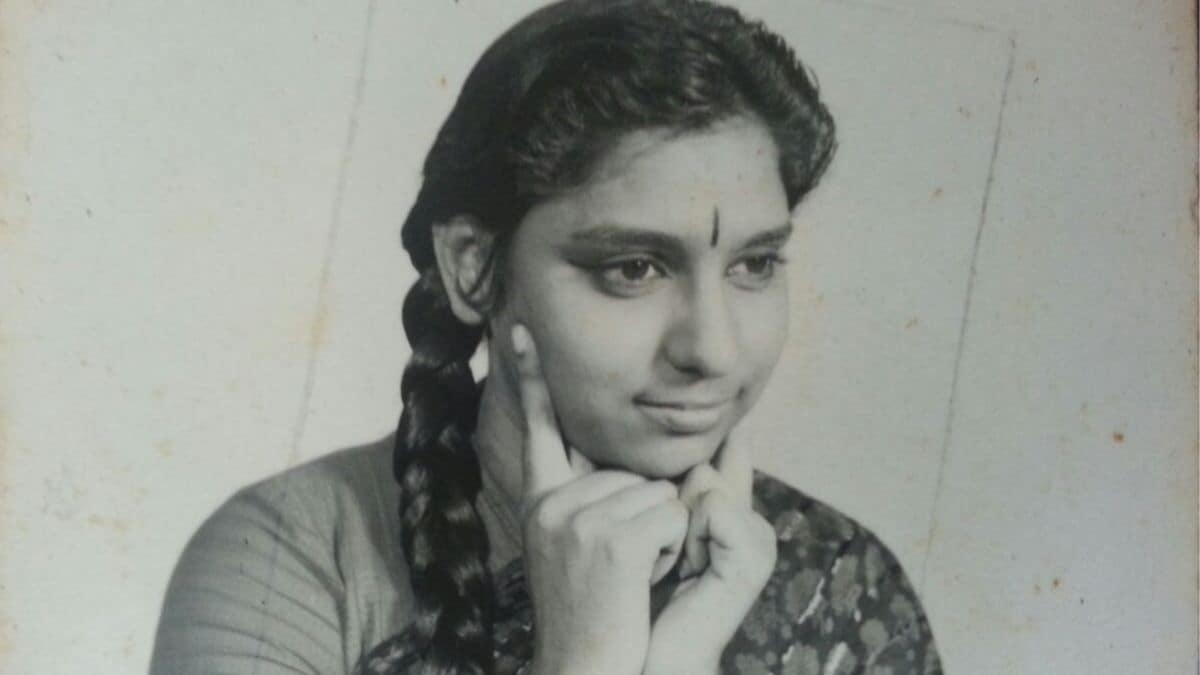
Born as Sistla Janaki on April 23, 1938, in Pallapatla village near Repalle in present-day Bapatla district of Andhra Pradesh, she was the fourth of five children in a Telugu-speaking family. Her musical talent became evident at an early age, and she trained in Carnatic music under Nadaswara Vidwan Gadavalli Paidi Swamy. Encouraged by her uncle, Dr Chandrasekhara Rao, she moved to Madras in the late 1950s to pursue a career in playback singing. Her breakthrough came with the Telugu film M.L.A. (1957), where composer T. Chalapathi Rao gave her the opportunity to sing. It marked the beginning of a career spanning nearly seven decades and more than 40,000 songs in Telugu, Tamil, Kannada, Malayalam and several other Indian languages.
One of Janaki's greatest strengths was her extraordinary ability to transform her voice to suit the character on screen. She did not merely sing a song; she became the person behind it. Music directors frequently entrusted her with compositions that demanded unusual vocal modulation, knowing she could effortlessly switch from the voice of a child to that of an elderly woman or even a male character. Her remarkable experiments with voice modulation reportedly began quite by accident. During a stage performance in Madras, she noticed children in the audience losing interest. To keep them engaged, she suddenly switched to a child's voice while singing. The spontaneous experiment delighted not only the youngsters but also producer Panchu Arunachalam, who happened to be present. Impressed by her astonishing ability, he requested her to sing an entire song in a child's voice for the Tamil film Rusi Kanda Poonai. The song became a sensation and established Janaki as the industry's first choice for compositions that required unconventional vocal expression. She later even dubbed for child characters in the Telugu films Judgment and Chandamama Raave.
Janaki's passing has also revived memories of another painful loss—that of the legendary S. P. Balasubrahmanyam, who died on September 25, 2020. The Janaki-SPB duo remains one of the greatest partnerships in Indian playback music. Long before SPB became a household name, Janaki heard him sing at a music competition in Andhra Pradesh and encouraged him to pursue a career in films, expressing confidence in his immense potential. SPB would later recall her encouragement with deep gratitude, while Janaki, true to her humble nature, always attributed his phenomenal success to his talent, hard work and God's grace. Together, they created hundreds of unforgettable duets that transcended generations and languages, leaving an indelible mark on Indian cinema. Many Telugu music lovers are still struggling to come to terms with SPB's passing. With Janaki's demise, they have now lost the other half of one of Indian cinema's most celebrated singing partnerships.
Janaki was remembered not only for her extraordinary legacy but also for her decision to decline the Padma Bhushan, India's third-highest civilian honour, in 2013. She maintained that the recognition had come far too late after more than five decades of service to Indian music and said the love of millions of listeners meant more to her than any official award. Some later interviews revealed the main reason for her rejection: she believed her stature warranted the same level of national recognition as Lata Mangeshkar, who had been conferred the Bharat Ratna, and was therefore reluctant to accept a lesser honour. Even today, many admirers remember her stand as one of dignity, conviction and self-respect.
After a career spanning nearly six decades, Janaki announced her retirement from playback singing in 2016. She chose the Malayalam lullaby "Ammapoovinum" from the film Pathu Kalpanakal as her farewell song, saying it would be her final recording. Explaining her decision, she said she had entered the industry at a young age, had sung enough, and felt it was time to step away while she was still at the peak of her abilities. She wanted to lead a quieter life, spend more time with her family and admirers, and make way for younger singers. Although she briefly returned to record a song for the 2018 Tamil film Pannaadi at the insistence of its makers, she never resumed playback singing full-time, preferring to let her vast body of work speak for itself.
Janaki endured two great setbacks in her life. She lost her beloved husband, Ramprasad, in 1997. A constant source of strength, he cared for her with unwavering affection and firmly believed that she was born to dedicate her life to music. Though devastated by his death, Janaki gradually returned to singing after a brief hiatus. Another heartbreaking blow came on January 22, 2026, when her only son, V. Murali Krishna, passed away in Mysuru after a prolonged illness. His death, just months before her own, troubled her the most, and reportedly she could not recover from his loss.
The demise of Janaki moved the artists and leaders alike across South India. Led by Prime Minister Narendra Modi and the Chief Ministers of five southern states, hundreds of leaders, artists and singers poured their hearts out. They shared their cherished memories of watching her perform and growing up with her timeless songs. For South Indian cinema, her passing marks the end of an era—the departure of a once-in-a-generation voice. Yet legends never truly die. As long as her melodies continue to echo through homes, concert halls and the hearts of countless music lovers, S. Janaki will remain immortal, her voice transcending time, language and generations.
