



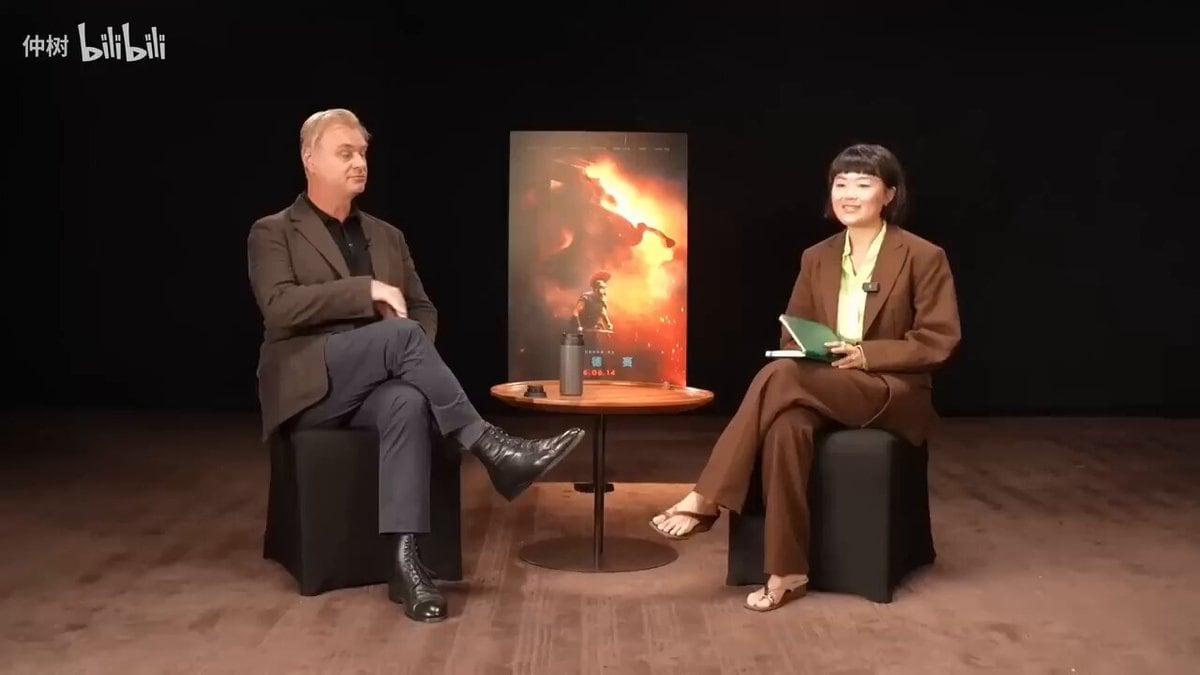
Christopher Nolan has participated in what some netizens call his "best" and most intellectually stimulating interview. During an interview by Chinese podcaster and political philosophy lecturer Zhong Shu in Beijing for his latest blockbuster, "The Odyssey," Nolan engaged in a deeply philosophical discussion. The themes are vast and diverse: hubris, atonement, and tragic consequence, among many others. And credit to Zhong for asking some of the most intellectually stimulating questions that others wouldn’t dare to ask.
Shu noted that Homer's original text or ancient Greek culture doesn’t feature the concept of atonement, asking Nolan if he had ‘Christianised’ The Odyssey. Nolan stated that he did not intentionally approach it from a specific philosophical angle, adding that "atonement is what audiences bring as viewers to the story." Touching upon the Greek concept of xenia (which the movie refers to as "Zeus's law" for simplicity) — the idea of mutual respect and treating others well because they might be a god in disguise — Nolan noted that the violation of xenia by the suitors is what causes the structural damage and catastrophe in the story.
Shu brought up the comparisons to Thucydides’ Peloponnesian War, questioning if the main character, Odysseus, should repent for his human pride and hubris. Nolan responded that it wouldn't make any difference if he repented, explaining that repentance is purely internal and spiritual; it does not change the physical world because "the damage is done" and xenia has already been broken. Nolan added that hubris is inherently tragic because its real-world consequences are fundamentally irreversible. While Christian theology values confession and internal catharsis, in practical storytelling terms, it does not stop the impending collapse of the surrounding world.
Watch the full interview (originally appeared on the Chinese platform Bilibili) here:
