



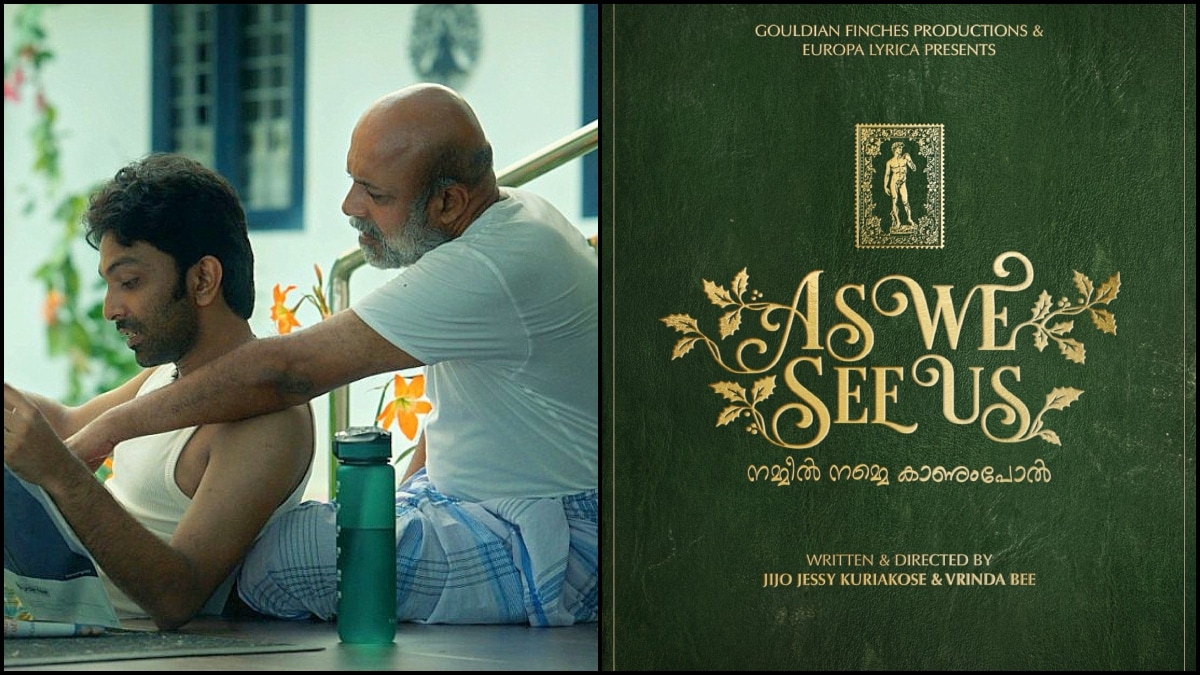
Jijo Jessy Kuriakose and Vrinda Bee's "As We See Us" is a quiet, moving queer short film inspired by Charles Dickens' "A Christmas Carol". The 24-minute film is set to embark on a festival run across national and international film festivals, following in the footsteps of Jijo's previous short film, Velipadu – The Revelation, which also travelled the festival circuit.
While borrowing the emotional framework of Dickens' classic, "As We See Us" transforms it into a story about ageing, regret, memory, and the enduring nature of queer love. It follows Christy, who arrives to care for his former teacher, David, only to uncover a hidden past marked by a lifetime of silence and an unfinished love story with a man named Jonathan.
Rather than relying on dramatic revelations, the film unfolds through conversations, photographs, letters, and recurring artistic motifs. Michelangelo's David serves as the emotional centrepiece, connecting Christy, David, and Jonathan across generations. Explaining the significance of the statue, co-director Vrinda Bee says, "It could be said that the role of the statue in this film can be read as that of deus ex machina. It's that God's supernatural hand really propels the story and brings these people together." The ambiguity in the statue's expression mirrors David's own emotional conflict—a life spent suppressing his identity despite yearning for authenticity.
The influence of "A Christmas Carol" runs much deeper than its premise. "The character of David is someone filled with remorse and guilt, which reminded me of Scrooge," Vrinda explains. "The parallels were very apparent in Scrooge and David. So I thought I should lean greatly into "A Christmas Carol". I thought it was a proper vessel to carry this story." Like Scrooge, David is haunted not by literal ghosts but by memories, missed opportunities, and the life he could never openly live.
Tagore's presence is another striking aspect of the film. Through portraits, books and poetry, his works become symbols of love that transcend conventional boundaries. Vrinda notes that she has "only seen Tagore and his works being placed in the context of spirituality or heteronormativity," but believes they can equally represent "the indescribable love between any two individuals, regardless of their gender." This reinterpretation lends the film a refreshing literary perspective on queer affection and longing.
Speaking about the changing landscape of queer cinema, co-director Jijo Jessy Kuriakose says, "When we usually talk about queer topics, the people who talk about them more are youngsters. But there are queer people in all generations." That idea lies at the heart of As We See Us.
The performances by Faizal Ananthapuri, Pradeep Kumar and Amit Gupta complement the film's quiet storytelling, making its emotional revelations feel earned rather than overstated. More than a coming-out story, "As We See Us" is a meditation on lives left undocumented. Through literature, art, and quiet conversations, it gently reminds us that love does not disappear simply because it goes unspoken—it survives in memory, in letters, and in the people who finally choose to tell its story.
