



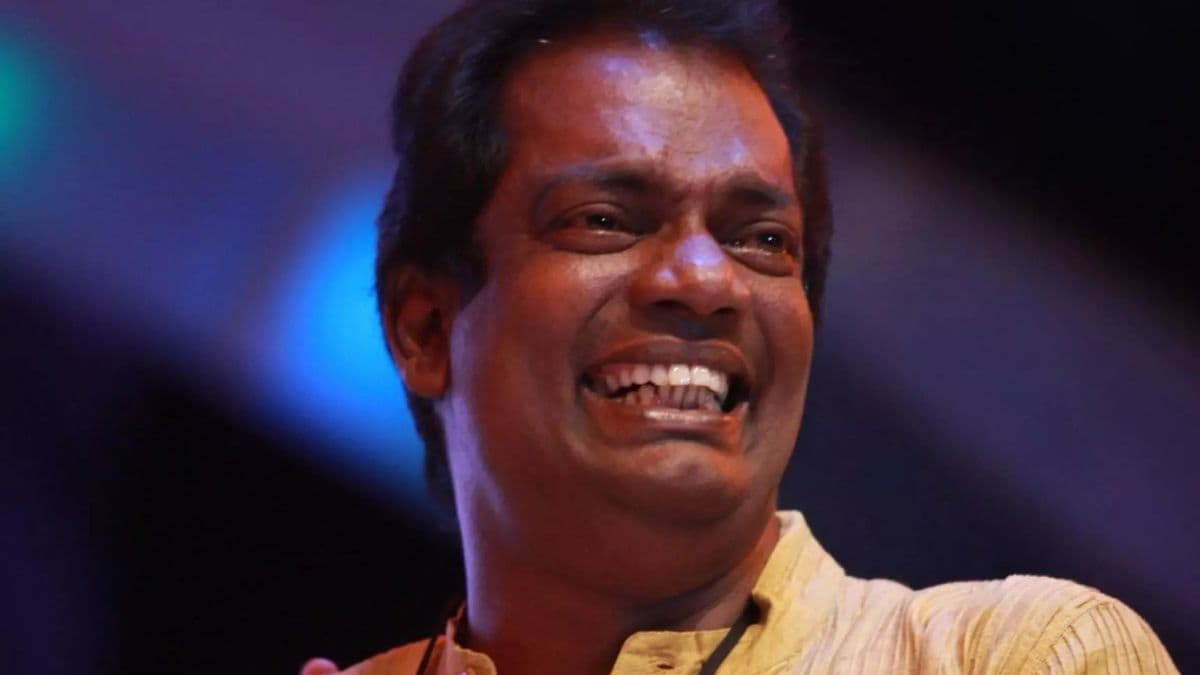
Why are some of our most adored actors taken away so soon? We haven't yet finished mourning the loss of Sreenivasan, and now comes another shocker that's bound to be overwhelming for many of us who often reach for the iconic comedy clips of Salim Kumar whenever we feel the blues coming. I'm one of those people.
There are days when I struggle to fall asleep, and when nothing else works, I pick any of the numerous hilarious scenes of the actor that go a little above five minutes to help me keep negative thoughts at bay.
My first introduction to the actor happened during my childhood, with the Asianet show Comicola. He was one of the standout artistes who had STAR written all over him. And he did turn out to be a star who ruled the comedy space for a bigger part of the 2000s.
"Pulivaal Kalyanam", "Meesha Madhavan", "C.I.D Moosa", "Chathikaatha Chanthu", "Thenkashi Pattanam", "Kilichundan Mambazham", "Kalyana Raman", "Ee Parakkum Thalika", "Chattambi Naadu"... the list is endless, since he appeared in multiple projects in a year.
Some of his humour took me a while to fully grasp. Take one of his most quoted lines, “Hmm, Kochi ethi…”, for instance. As someone from Kannur, this line made more sense after I moved to Kochi and realised exactly what his meme-friendly expression of revulsion meant. For me, he was Malayalam cinema's Vadivelu. And like the veteran Tamil comedian, Kumar, too, proved his versatility in a few years with serious, drama-heavy performances, winning much acclaim.
Just like Kalabhavan Mani before him, Kumar managed to break free of his slapstick comedic stereotype with two milestones in his career. First, there was "Achanurangatha Veedu", a devastating drama based on real events, directed by Lal Jose; the film saw Kumar essaying a grief-stricken, tormented father grappling with a shattering incident involving one of his daughters. It won him the Kerala State Film Award for Second Best Actor. Then came "Adaminte Makan Abu", in which he essayed Abu, the destitute, elderly attar seller trying to overcome his adversities and fund a Hajj pilgrimage. The film rightly fetched him the prestigious National Film Award for Best Actor along with a State award.
What he demonstrated in these roles is an ability to keep it remarkably subtle, without ever becoming melodramatic. Just as in his comedic roles, his hard-hitting serious characters also left a lasting impact, lingering in the viewer’s mind long after the film ends, and stand as a testament to his depth and range.
I sometimes wonder how Kumar's career would've turned out had he started with serious roles first. But then his incredible transition from character to comedian artiste wouldn't have been as beautiful and pronounced. Perhaps we would never have gotten to see the funny side of him at all had that happened.
