



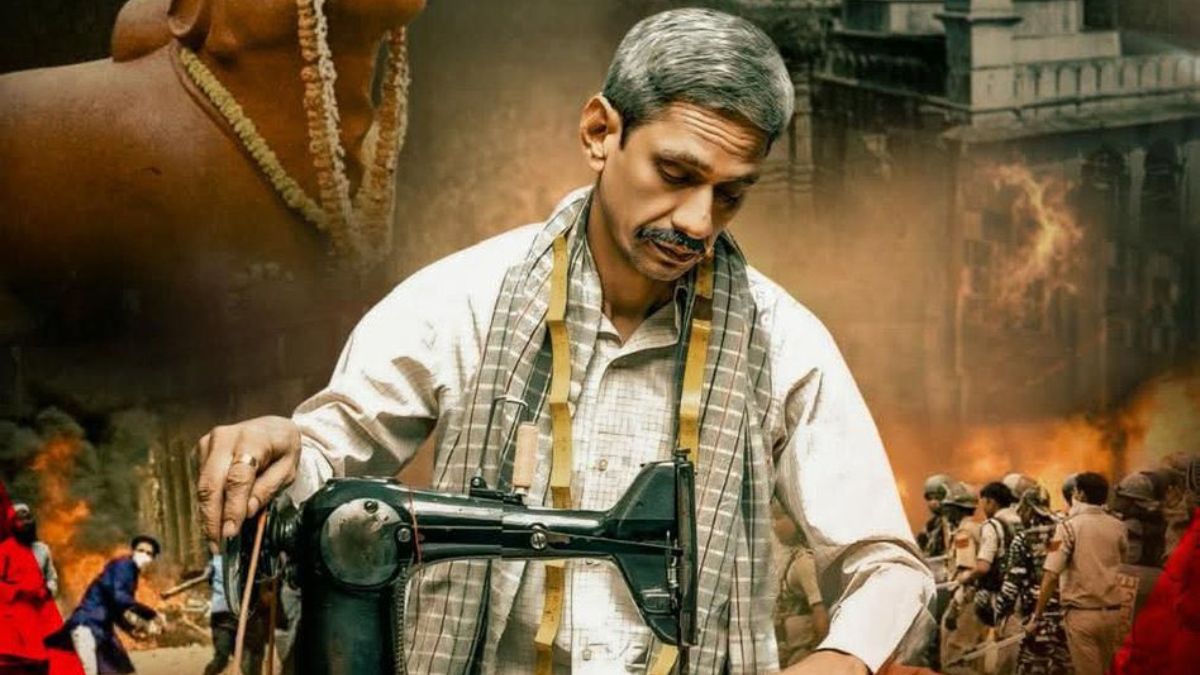
The Supreme Court on Monday agreed to hear a plea filed by the producers of the Udaipur Files: Kanhaiya Lal Tailor Murder challenging the Delhi High Court’s order staying the release of the film, initially scheduled to hit the big screens on July 11.
According to Bar and Bench, Senior Advocate Gaurav Bhatia, representing the producers, sought urgent listing of the plea. A bench of Justices Surya Kant and Joymalya Bagchi said it would hear it on Wednesday or any day thereafter. The producers’ counsel requested urgent listing as they claim that the High Court’s stay order is a violation considering the film received a Central Board of Film Certification (CBFC).
"We have spent money on the movie and obtained CBFC certification, but despite that the high court stayed its release. This is a violation of our rights," PTI quoted the counsel as stating.
Udaipur Files is based on the murder of an Udaipur-based tailor Kanhaiya Lal by two men—Mohammad Riyaz and Mohammad Ghous—as retaliation against a social media post supporting former BJP leader Nupur Sharma who faced heat from the Muslim community for remarks on Prophet Muhammad. His murder was recorded by the attackers.
The Delhi High Court’s decision to stay the release of the film stems from pleas filed by Jamiat Ulama-i-Hind president and Darul Uloom Deoband principal Maulana Arshad Madani who believe that it may "promote disharmony" in society. According to PTI, the petitioners claim that a trailer of the movie released on June 26 was replete with dialogues and instances that had led to communal disharmony in 2022.
On July 9, prior to the stay order, the top court had permitted the release of the film after rejecting a plea filed by Mohammed Javed, who is facing trial as the eighth accused in the case—who sought to hold the release until the ongoing trial is over.
