


 Add as a preferred source on Google

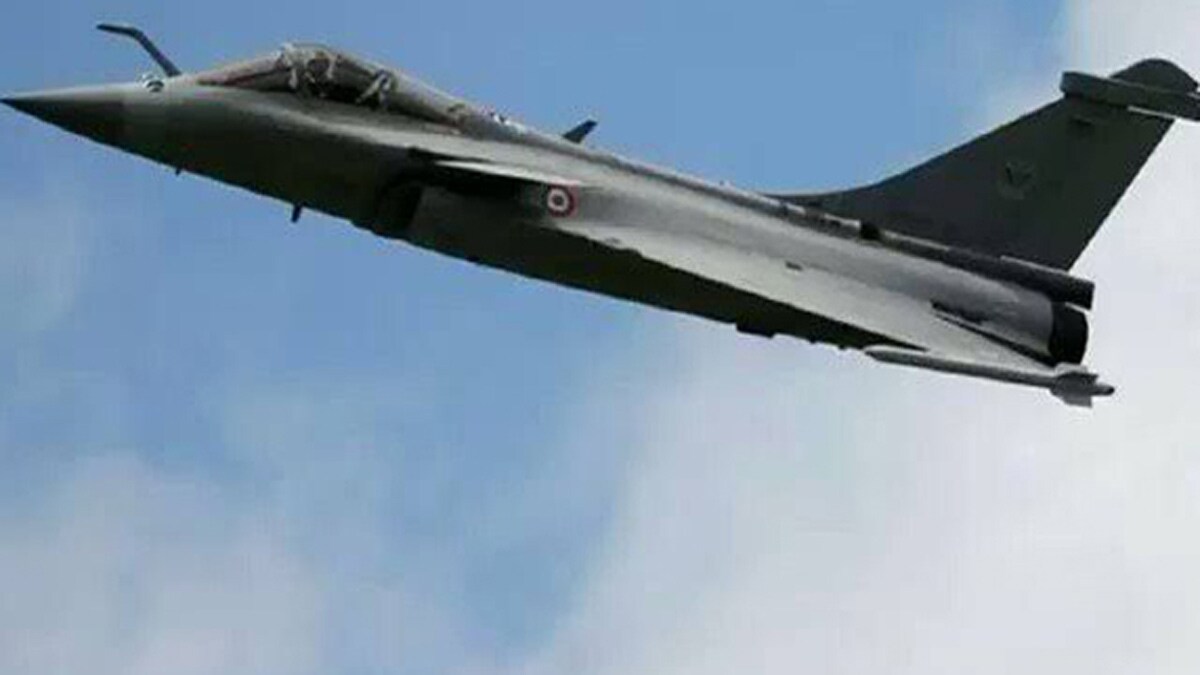
The Indian Air Force (IAF) is set to have the freedom to equip the upcoming Rafale fighter jets under the 114-aircraft deal with France with indigenous weapons, including the Astra Beyond Visual Range Air-to-Air Missile (BVRAAM), without getting approval from foreign manufacturers.
The defence ministry had, in February, cleared a long-pending proposal to procure 114 Rafale fighter jets under a government-to-government framework with France. Under the Multi-Role Fighter Aircraft (MRFA) project, 18 aircraft will be supplied by Rafale maker Dassault Aviation in a fly away condition and the rest will be manufactured in India with over 50 per cent indigenous content, which will be to be met in phases.
India has reportedly made integration of weapons made in India as one of two non-negotiable conditions for acquiring 114 additional Rafale fighter jets from France. The move would allow the IAF to integrate home-grown missiles and other weapons into the aircraft, giving it greater operational flexibility while reducing dependence on foreign suppliers.
According to a report in The Print, the IAF will be able to arm the 114 fighters with home-grown weapons, including the indigenously developed Astra missile, without needing foreign approval.
A source quoted by the media house said the arrangement would allow the IAF to integrate indigenous munitions on the additional Rafales and, if necessary, extend the same capability to the original fleet.
The source said the issue had been part of the negotiations. "Weapons integration will be a unilateral capability, giving the IAF a free hand in the matter," the source said.
A second source confirmed that the capability would be included in the current procurement proposal and that the Astra missile could be integrated across the Rafale fleet.
"The Astra missile will be integrated on the Rafale, and this can be done across the fleet, both the original tranche and the additional jets," the source said.
The integration of indigenous weapons would provide greater flexibility to the IAF while also helping reduce the cost of weapon systems deployed on the aircraft.
The second non-negotiable condition concerns the software-defined radio (SDR) aboard the 114 fighter jets.
According to the report, India has insisted that the SDR must enable faster information exchange with every IAF platform, whether already in service or planned for future induction, irrespective of its country of manufacture.
The source said this requirement had also been ensured under the proposed acquisition.
However, the agreement will not include access to the aircraft's source code, which is the underlying programming and software instructions governing its systems. This restriction will apply even to Rafale fighters manufactured in India.
Meanwhile, the defence ministry is expected to take a decision on the acquisition of the 114 aircraft from France by the end of the year.
Dassault Aviation has submitted its commercial bid to manufacture many of the aircraft in India.
"The bids are being evaluated. We should be able to reach some conclusion before the end of this year," Defence Secretary Rajesh Kumar Singh recently told ANI.