



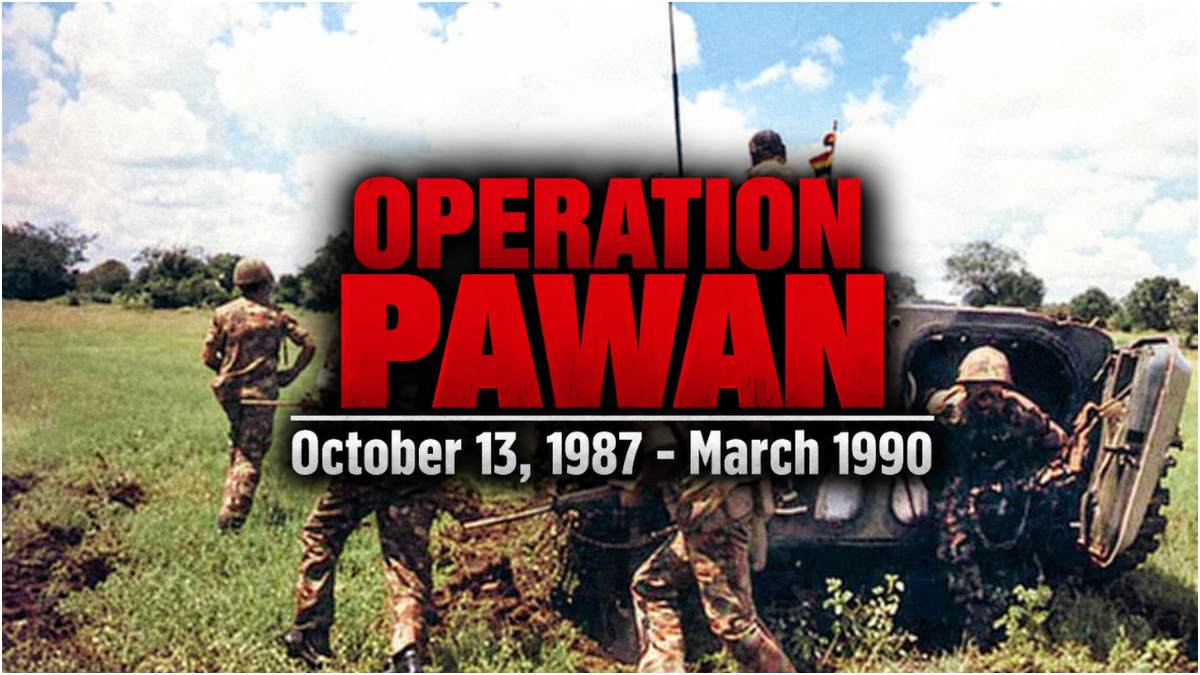
On October 13, 1987, nearly 40 years ago, the Indian Army launched Operation Pawan — a military operation against the Liberation Tigers of Tamil Eelam (LTTE), one of the world's deadliest terrorist groups. The operation began with an ill-fated attempt to capture the LTTE stronghold of Jaffna and continued for three gruelling, inconclusive years.
Let us go back to where it all began.
The origins of the conflict can be traced to the early 1980s, when Tamil militant groups intensified their activities against the Sri Lankan government, demanding greater autonomy and freedom for the Tamil-dominated areas of northern and eastern Sri Lanka. The Sri Lankan Army launched a vicious crackdown, which only fuelled resentment. By the mid-1980s, Sri Lanka was in the grip of a civil war.
In June 1987, the Sri Lankan Army had besieged Jaffna, where the LTTE leadership was hiding, and cut off food and other supplies to the town. As the suffering of innocent civilians increased and a humanitarian crisis unfolded, Indian prime minister Rajiv Gandhi decided to airdrop essential supplies into the town.
On June 4, 1987, five AN-32 aircraft, accompanied by Mirage 2000 fighters, airdropped essential supplies into Jaffna. The show of force had the desired effect. It brought President Jayewardene to the negotiating table and resulted in the signing of the Indo-Sri Lankan Accord.
(The signing ceremony was marred by an ugly incident. A Sri Lankan sailor in the guard of honour for Rajiv Gandhi struck him with the butt of his rifle to protest against Indian interference.)
Under the accord, India would provide a peacekeeping force to keep the Sri Lankan Army and the LTTE apart, disarm the LTTE and ensure the sovereignty and territorial integrity of Sri Lanka. No representative of the LTTE was present.
When the 54 Infantry Division, the first element of the Indian Peace Keeping Force (IPKF), arrived in Sri Lanka at the end of June 1987, there were no plans for active military operations. In fact, the troops had not even brought most of their heavy equipment. After all, it was supposed to be a peacekeeping operation. But things would soon go awry.
OPERATION PAWAN
Relations between the LTTE and the IPKF were initially cordial. However, the LTTE did not surrender its weapons, apart from a few symbolic handovers, as it was required to do.
Then, in early October, two LTTE leaders who were in the custody of the Sri Lankan Army committed suicide, and the LTTE turned against the IPKF.
The IPKF was now tasked with defeating the LTTE and capturing its stronghold and de facto capital, Jaffna. Thus began Operation Pawan.
The first battle of Operation Pawan was the heliborne assault on Jaffna University, where the LTTE leadership, including Prabhakaran, was supposedly based.
One Para Commando battalion — 10 PARA Commando — and an infantry battalion, 13 SIKH LI, were to be dropped by helicopters inside the Jaffna University grounds. The objective was to eliminate the LTTE leadership and bring an early end to the battle.
Two other battalions were to advance on foot towards Jaffna, enter the town and link up with the commandos inside.
The operation, launched on the night of October 12–13, was a disaster.
The troops were sent in without maps or adequate intelligence and had little idea of their exact locations or what awaited them. Worse, the LTTE had intercepted IPKF radio transmissions and positioned machine guns on the roofs of university buildings.
As the helicopters approached and the troops began to disembark, the LTTE opened fire, forcing the helicopters to abort their landings and return.
Only seven helicopters managed to land 30 soldiers of 13 SIKH LI and 17 commandos from 10 PARA Commando.
The troops who landed on the open grounds of the Jaffna University football field were met by fire from all sides.
During that cruel night, 29 of the 30 soldiers of 13 SIKH LI were killed. Sepoy Gora Singh was captured alive and survived to tell the tale.
Two Para Commandos were also killed, while the remaining commandos took shelter inside a university building.
On the outskirts of Jaffna, 4/5 Gorkha Rifles, which was advancing towards the town to link up with the heliborne force, was ambushed. Thirty-five personnel were killed, including the commanding officer and three other officers.
The situation was grave. No one had imagined that the LTTE would be so heavily armed or that it would have prepared Jaffna's defences so thoroughly.
Tanks were eventually required to extricate the trapped commandos.
The leading tank struck an improvised mine — a barrel filled with more than 200 kg of high explosives — and was hurled 30 feet into the air.
The roads had been heavily mined, making entry into the area extremely difficult. Eventually, a troop of tanks, accompanied by infantry, managed to enter along a railway embankment and rescue the trapped commandos.
In a single night, the IPKF had lost 70 men. It had become clear that Jaffna would be a tough nut to crack.
Additional troops were flown in, Jaffna was surrounded on all sides, and the Indian Navy imposed a blockade from the sea.
Marine Commandos launched two daring raids, destroying LTTE naval craft inside Jaffna Harbour.
Slowly, the IPKF advanced towards Jaffna, encountering mines virtually every few hundred metres and facing intense sniper fire along the way.
Eventually, a foothold was established and gradually expanded.
Fighting took place in every street and around every house as the town was cleared lane by lane, building by building.
What should have been a 72-hour operation took 20 days, and Indian troops gained control of the town only towards the end of November.

The Battle for Jaffna was just the beginning.
Most of the LTTE leadership had slipped away into the jungles of northern and eastern Sri Lanka.
For the next three years, the IPKF waged a slow, difficult campaign against the LTTE in the jungles of Batticaloa, Trincomalee and Vavuniya.
The LTTE was one of the most dangerous opponents the Indian Army had ever faced.
Its cadres were excellent guerrilla fighters who were rarely seen but constantly engaged Indian troops through sniper attacks and gunfire. They preferred to swallow cyanide capsules and commit suicide rather than be captured alive.
For three years, the prolonged conflict continued without tangible gains.
When the IPKF was finally recalled by the then Prime Minister, V. P. Singh, there was little to show for its efforts.
The IPKF had confined the LTTE to areas around the jungles of Vavuniya, but its leadership, including Prabhakaran, remained alive and at large.
The LTTE continued to hold its bases deep inside the jungles.
The IPKF lost 1,157 officers and men, while more than 3,000 personnel were injured.
To add insult to injury, when the troops returned to Chennai, Tamil Nadu Chief Minister M. G. Ramachandran refused to receive them.
Yet, as Lt Gen A. S. Kalkat, the commander of the IPKF, said, “They came as proud soldiers. They leave as proud soldiers.”
The contribution of Indian soldiers was belatedly recognised by the Sri Lankan government through the erection of a monument near Colombo, commemorating their role in the country.
The monument bears the names of all 1,157 Indians who died during the operations.
Another, smaller monument at Palaly, near Jaffna, commemorates the sacrifices made by Indian soldiers there.
The inconclusive operations had another tragic fallout.
In May 1991, former Prime Minister Rajiv Gandhi was assassinated by an LTTE suicide bomber for his role in sending the IPKF into Sri Lanka, completely changing the country's political equations.
Please click here to buy the book 'India's Battlefields: From Kurukshetra to Balakot'
