



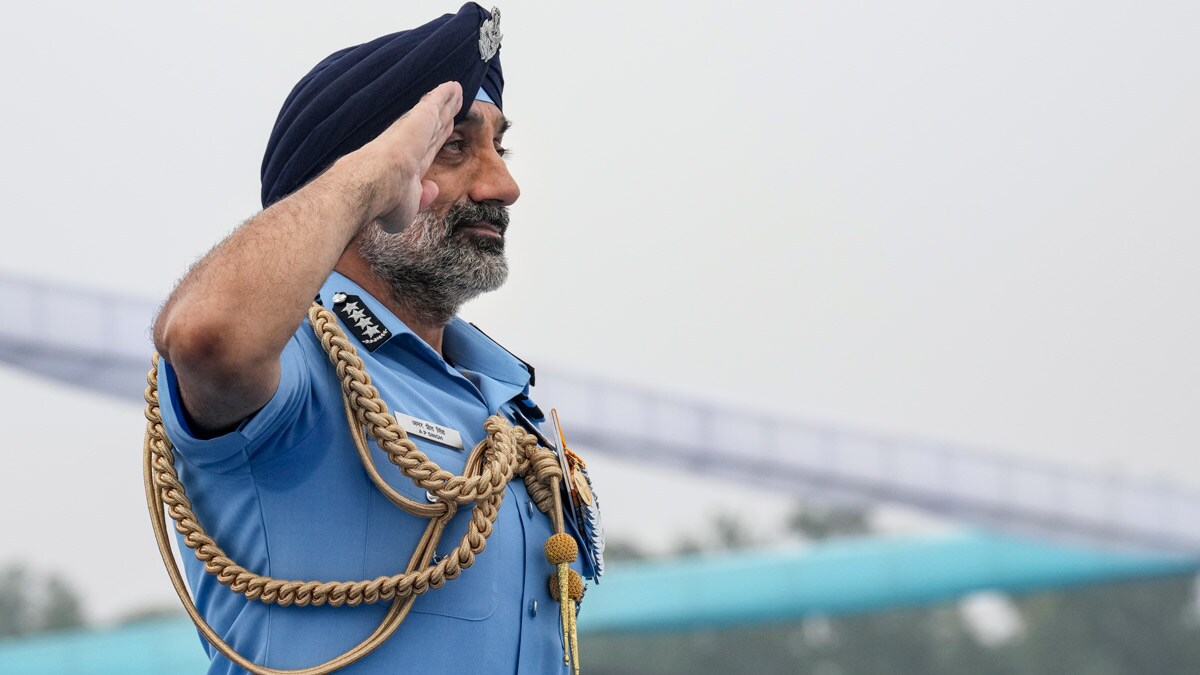
The Indian Air Force is moving in the right direction in building its capabilities, but the pace of progress needs to become faster, IAF Chief Air Chief Marshal A.P. Singh said on Wednesday as he called for quicker induction and greater combat mass amid rapidly evolving technology.
Addressing air warriors and IAF veterans on the eve of the force's 94th anniversary at the Air Force Auditorium in Subroto Park in Delhi, Air Chief Marshal Singh said the IAF needs greater capacity in certain areas and must accelerate the induction of new capabilities.
“I am happy that we are progressing in the right direction, but whether we are progressing at the correct pace, is something for everybody to judge. Yes, we can be a little faster than we are today,” the IAF chief said.
Singh, who retires this month and will hand over charge to Air Marshal Ashutosh Dixit, also flagged delays in some projects, including the LCA Mk-1A programme.
His remarks underline the challenge facing the IAF as it seeks to strengthen capabilities while dealing with delays in the induction of new combat aircraft.
Singh said there are areas where the Air Force requires “greater capacity, faster induction and more combat mass”.
The IAF has in recent years shifted its focus from a “platform-centric” approach towards a “capability-centric” one, alongside greater integration of different components, he said.
According to the Air Chief Marshal, this approach proved its worth during Operation Sindoor.
Singh said operations have tested the Air Force, military exercises have stretched it, humanitarian assistance and disaster relief missions have taken it beyond India's borders, while air diplomacy has expanded its partnerships.
Singh's call for faster progress comes days after he warned that inordinate delays in the induction of new combat jets, including Tejas aircraft, were hurting the IAF as its fighter squadron strength declined.
He had said the Air Force needs to induct two fighter squadrons every year, translating into around 36 to 40 aircraft annually, merely to stop its strength from falling below the current 30 fighter squadrons and begin moving towards the target of 42.
“We need to induct two fighter squadrons every year. That means anything between 36 and 40 aircraft should be produced and inducted into the IAF for us to stop going down from the current 30 fighter squadrons and start improving towards the target of 42 squadrons. Actually, we need even more than that,” he had said.
