



The BRICS 2026 Summit concluded successfully in New Delhi, culminating in the unanimous adoption of the New Delhi Declaration. Beijing will host the next BRICS Summit. Preparations are already underway, as China has set the agenda in motion to carry forward the momentum of cooperation and dialogue established in New Delhi.
As is customary, Xi Jinping, President of the People's Republic of China, presented five proposals during his address at the second session of the BRICS Summit. First, the open source and inclusive AI initiative. Second, the trade and investment facilitation initiative. Third, the digital industry cooperation initiative. Fourth, the intelligent manufacturing cooperation initiative. Fifth, the science and technology talent development initiative.
China has consistently advocated that dividends of AI development should extend to BRICS and the wider Global South countries, benefiting all humankind. At the Summit, China made it amply clear that it will be a pioneer in establishing a BRICS AI Open-Source community and building an open ecosystem for AI to build a “just and equitable” international order.
Meanwhile, under the Chinese initiative, the World AI Cooperation Organisation has been established in Shanghai in July 2026. While several BRICS countries have partnered with the newly formed organisation, India does not feature among the list of partner countries.
The trade and investment facilitation initiative envisions the establishment of a BRICS Special Economic Zone Partnership, under which member countries can set up an intelligent portal, coordinate policies, and build a new frontier for open development. Since both India and China are in the process of resetting their bilateral relations after a gap of six years, this initiative proposed by Xi carries great significance in the run-up to the next BRICS Summit.
The digital industry cooperation initiative and the intelligent manufacturing cooperation initiative would be important drivers in bilateral relations in the months ahead. As the bilateral relations are progressing at an accelerated pace, these initiatives are expected to provide tangible impetus in dispelling lingering uncertainties and fostering greater mutual trust.
As India aspires to become a robust economy in the coming years, it must maximise its production capacity. Earlier this year, China declared that all production houses should integrate AI to enhance efficiency and output. By adopting a similar approach India can build smart factories to accelerate its economic growth and strengthen its position in the global economy. To build a strong and sustainable AI ecosystem, reliance solely on the West may not be the most prudent path. India should also deepen its engagement with BRICS partners, leveraging their collective strengths to enrich its AI landscape. By diversifying partnerships, India can accelerate innovation, reduce dependency, and position itself more effectively in the evolving global AI order.
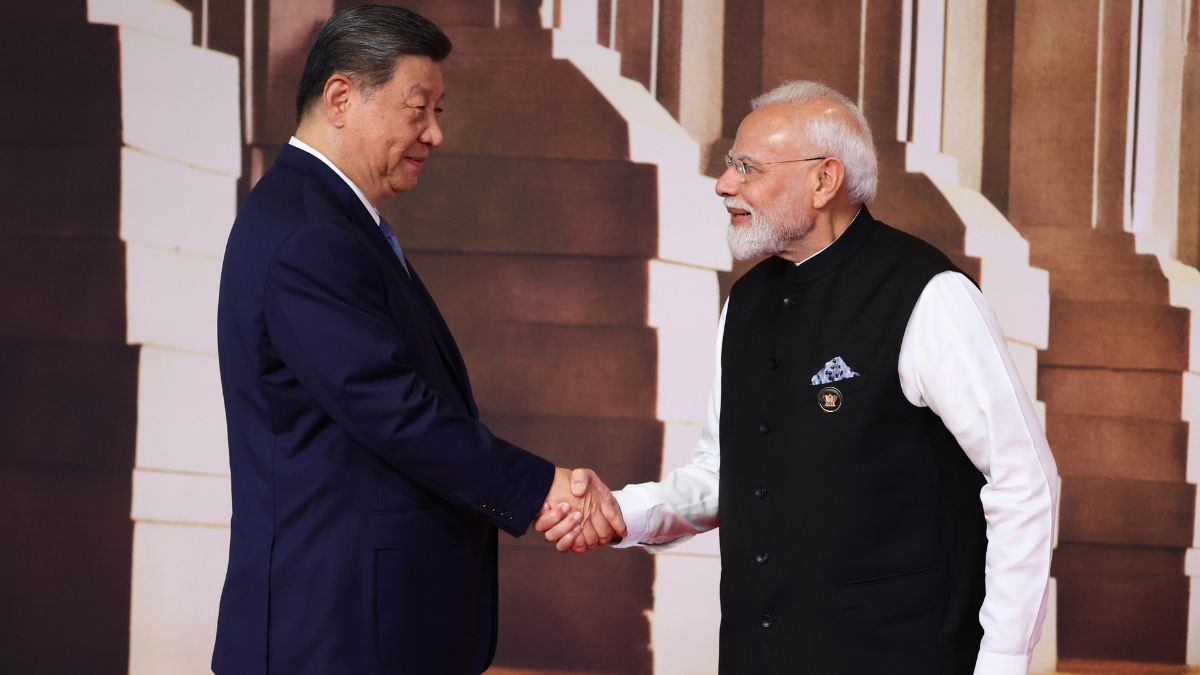
Meanwhile, BRICS Summit also provided an opportunity for a brief bilateral meeting between Prime Minister Modi and President Xi Jinping. The meeting itself was regarded as an achievement, and the result was on the expected lines. However, the readouts from both the sides differ on long-standing issues which have continued to strain relations between the two countries for decades.
Chinese readout suggests that Beijing is still not fully convinced of India’s China policy. China suspects that the US influence plays a role in shaping India’s policy towards China, and Xi wants Delhi to grasp the dynamics of the relationship as cooperative and not competitive without any external influence. In this regard, Xi has articulated the future of the relationship; the first is about strategic cognition.
A glaring difference in the readouts has been noticed on the border issue. The Indian readout states that peace and tranquillity along the border remain an essential basis for the continued development of bilateral relations. This is India’s long-standing position. However, the Chinese readout conveyed a different articulation. Beijing committed to bilateral relations and the boundary question, advancing on twin tracks and mutually promoting each other, and safeguarding peace and tranquillity in the border areas.
Meanwhile, upon returning to Beijing after the BRICS Summit, Chinese Foreign Minister Wang Yi stated that both countries should move forward without stagnation or regression, and place the boundary issue in an appropriate position within bilateral relations. Wang Yi’s statement is only an extension of China's position on border issues, and is likely to remain the same.
Interestingly, the Chinese readout stated that Beijing has raised issues related to Tibet and Taiwan with New Delhi; however, the readout of New Delhi has no mention of these issues. Later, when questioned about this omission, the MEA spokesperson refrained from providing a definitive response on the matter.
These differing viewpoints are likely to persist until other significant issues are mutually resolved, and the relationship reaches a stage where both countries have no alternative but to sustain the momentum.
The bilateral meeting underlined the need to address each other’s concerns, including structural trade imbalance and supply chain issues, and facilitation of meaningful and predictable market access. It also stressed resolving each other’s economic and trade concerns in a balanced way, and promoting the healthy and stable development of economic and trade relations between the two countries.
President Xi Jinping has now set the agenda for the next BRICS meeting with his five-point proposals. While these proposals are designed for the collective benefit of all BRICS countries, the same would also play a significant role in shaping the trajectory of Sino-India relations.
India is expected to gain considerably from deeper engagement in trade and industry cooperation. Although the supply chain issue of critical minerals is not explicitly included in the proposals, Prime Minister Modi, in the presence of Xi, underscored its importance in his BRICS opening day speech. He cautioned that the weaponisation of technology and critical minerals can hinder our shared progress.
Overall, the BRICS Summit and the bilateral meeting between PM Modi and President Xi Jinping provided an important opportunity for both sides to reset the relations and restore normalcy. The process began with the Kazan BRICS Summit, and the Rio Summit added further momentum toward fostering a cohesive approach to rapprochement in bilateral relations. In the interim, the SCO Summits in Tianjin and Bishkek also provided additional opportunities to advance dialogue and cooperation.
The year leading up to the next BRICS Summit will be a crucial period for India and China in advancing bilateral relations. Beijing is expected to press ahead with the proposals put forward by President Xi, while India has an opportunity to strengthen trade and business ties with China. On the issue of artificial intelligence, however, New Delhi may remain cautious by striking a balance with the West in order to avoid any perception of aligning with an anti-West campaign.
(The author is a Senior Fellow, Centre for Public Policy Research, Kochi.)
(The opinions expressed in this article are those of the author and do not purport to reflect the opinions or views of THE WEEK.)
