



The second edition of the India-Japan bilateral fighter exercise ‘Veer Guardian’ is scheduled to take place at the Jodhpur Air Force Station from September 11 to 22.
The Japan Air Self-Defense Force (JASDF) will deploy three F-2A fighter aircraft along with around 110 personnel for the exercise. According to reports, it will be the first time Japanese fighter aircraft have operated from an Indian air base for a joint exercise.
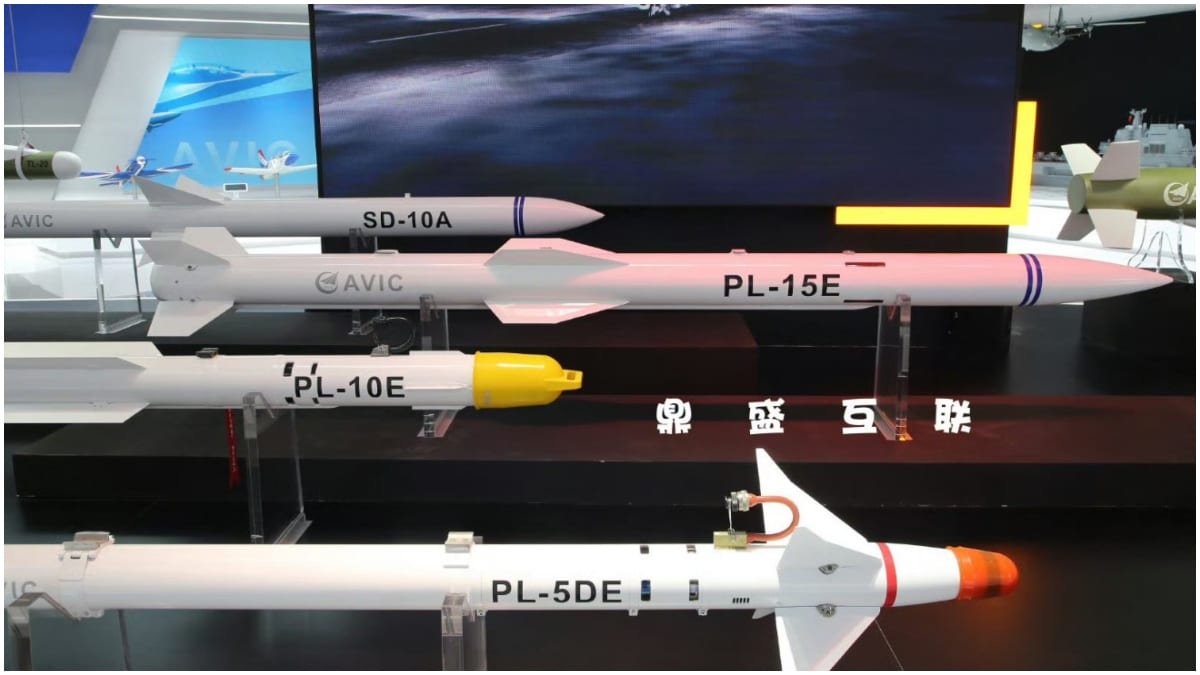
The first edition of Veer Guardian was held in Japan in January 2023. While integrated air-combat training activities, interoperability, and tactical training exercises will be conducted by the two forces, international defence analysts and bloggers are more interested in the possibility of the recovered PL-15E Chinese missiles leading to an information exchange between the two nations. During Operation Sindoor, the PL-15E missiles fired by the Pakistan Air Force (PAF) were neutralised, and the debris fell on the Indian side of the border.
It was earlier reported that the discovery of an unexploded export variant of China's PL-15E long-range beyond-visual-range air-to-air missile (BVRAAM), developed by the China Airborne Missile Academy (CAMA), in a field near Hoshiarpur, Punjab, has helped the Defence Research and Development Organisation (DRDO) to enhance India's Astra Mark-2 programme by incorporating the advanced features of the Chinese weapon.
ALSO READ | Israel offers India a solution to counter Pakistan's China-made air-to-air missiles
Why do nations want to decode the PL-15E?
The Chinese PL-15E managed to grab attention as it was created by China to rival the US's Advanced Medium-Range Air-to-Air Missile. One of the most threatening weapons in the PLA arsenal, the PL-15E already outclasses many Beyond Visual Range (BVR) assets used by India and other global powers.
Japan is among the Asian powers that cannot let Chinese military expansion and aggressive maritime ambitions go unchecked and will be interested in studying the PL-15E. "Approximately six to eight recovered missiles or major sections, including at least one or two examples retaining substantial portions of their seeker, guidance electronics, datalink hardware and propulsion components for laboratory examination," Malaysia-based Defence Security Asia said in a report.
"The timing is consequently notable because Japan’s first fighter deployment to India follows the 2025 missile recoveries and subsequent reports of Indian electronic-warfare modifications, although temporal proximity alone cannot establish an intelligence-transfer arrangement... The East China Sea creates demanding operational conditions where Japanese fighters could confront Chinese aircraft supported by airborne early-warning systems, networked sensors and increasingly long-range weapons, making missile threat characterisation central to survivability and tactical planning," the report added.
However, the report underlined that there is no credible source to assert that India will be sharing the PL-15E-related info during 'Veer Guardian 2026', and the exercise’s publicly declared objectives remain tactical training, interoperability, mutual understanding, and strengthening bilateral defence cooperation.
