



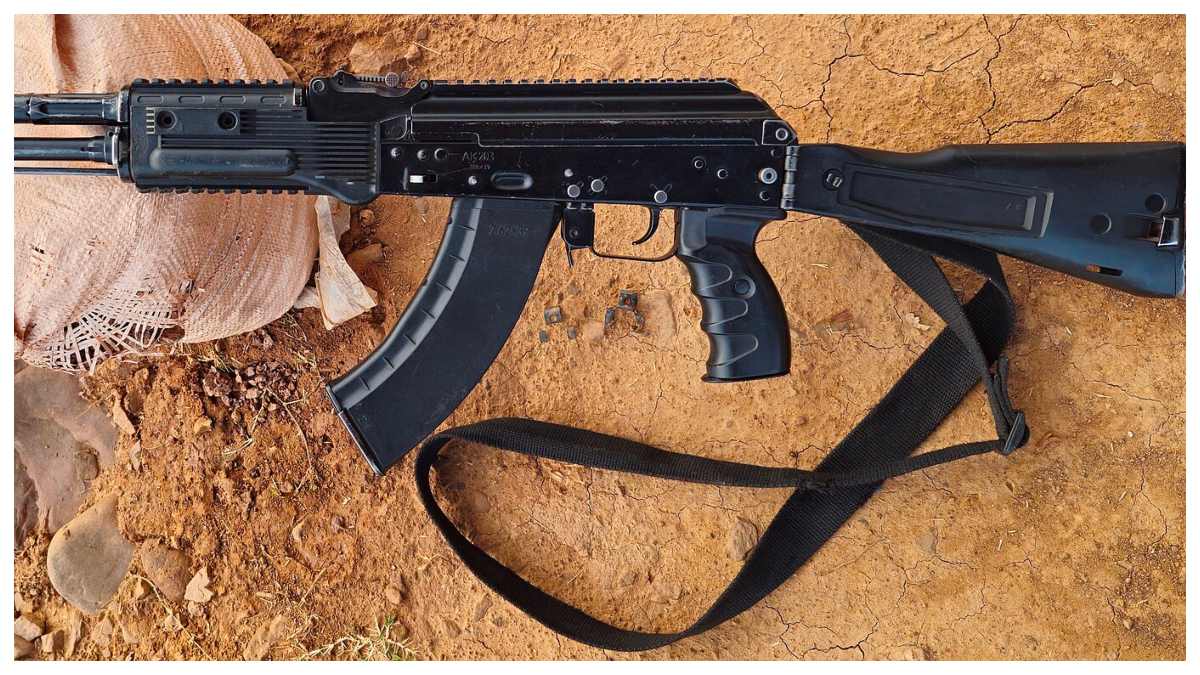
India's AK-203 assault rifle programme is set to have a stronger domestic supply chain as Adani Defence & Aerospace signed a five-year agreement with Indo-Russian Rifles Pvt Ltd (IRRPL) to supply indigenously produced ammunition for the rifles being manufactured in the country.
Under the agreement, Adani Defence will supply 7.62x39 mm ammunition required for the AK-203 programme for five years. The arrangement will provide an Indian source for the ammunition and help ensure continuity of supplies throughout the contract period.
The deal also brings two important parts of the AK-203 programme — rifle and ammunition production — together within India's domestic defence manufacturing ecosystem.
While IRRPL manufactures the AK-203 rifles in India, Adani Defence will provide the locally produced ammunition required for the weapon.
The agreement expands the domestic manufacturing footprint surrounding the AK-203 programme by pairing rifles produced in India with ammunition manufactured in the country.
This is expected to strengthen domestic capabilities across the small-arms supply chain while reducing reliance on external sources for a key consumable required by the rifle.
Adani Defence has established small-calibre ammunition manufacturing capabilities in India, including a production facility in Kanpur.
IRRPL was established in 2019 under an India-Russia intergovernmental agreement to manufacture AK-203 rifles for the Indian Armed Forces. The rifles are being produced at its facility in Korwa in Uttar Pradesh's Amethi.
The joint venture includes Indian shareholders Advanced Weapons and Equipment India Ltd and Munitions India Ltd, along with Russian shareholders Concern Kalashnikov and Rosoboronexport.
The defence ministry has identified IRRPL as the joint venture responsible for indigenous production of the AK-203.
In December 2021, the government signed a contract with the company for 6,01,427 AK-203 rifles, which are to be manufactured at the Korwa facility.
