



On December 3, 2025, the sea breeze at Shankumugham Beach in Thiruvananthapuram carried the distinct smell of aviation fuel as naval war planes zipped through the air. Warships carved neat lines across the horizon while commandos descended from helicopters in a carefully rehearsed operation.
The occasion? Navy Day—India’s annual reminder that national security is built as much on spectacle as on steel. Watching the proceedings were President Droupadi Murmu and Chief of the Naval Staff Admiral Dinesh K. Tripathi and other senior commanders.
ALSO READ: The VPVV scam: Part 1 | Inside India's largest military project investment fraud
But, for over 500 anxious investors scattered across India, the most important image that day was not a warship or a helicopter. It was a corporate logo.
Printed on promotional material circulating online and appearing around the Navy Day venue was the name of a little-known private company—VPVV Techno Construction. For four years, the company had persuaded businessmen, retired soldiers, Gulf expatriates and middle-class families that it had secured a contract to manufacture military equipment for the US department of defense under a confidential Indo-American strategic arrangement.
To those who had invested their savings, the Navy Day images appeared to settle every lingering doubt. If VPVV could stand so close to one of India’s most prestigious military ceremonies, surely its claims could not be fictitious.
The photographs travelled faster than facts. They arrived six months after the illusion had already begun to unravel.
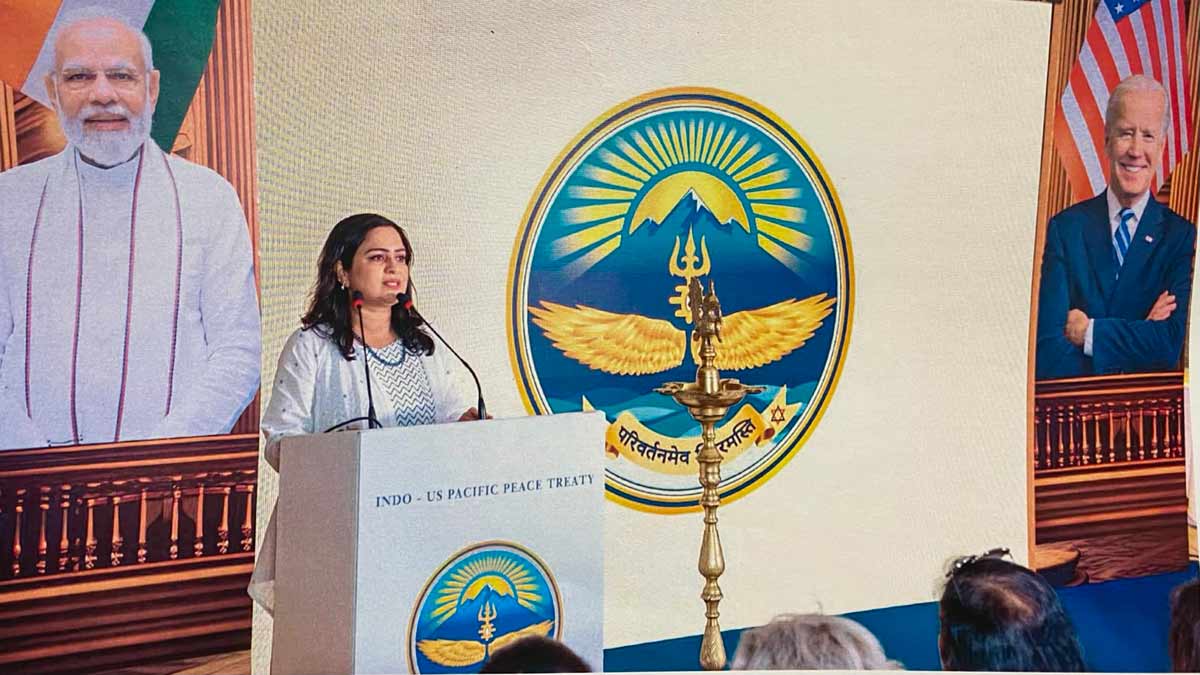
An official reply obtained under the Right to Information Act from the Indian Embassy in Washington had categorically stated that the so-called Indo-US Pacific Peace Treaty—the document repeatedly presented as the legal foundation of VPVV’s defence empire—did not exist. For many investors, that single government letter accomplished what years of rumours had failed to do. WhatsApp groups once filled with discussions about Pentagon contracts suddenly became forums for panic. Demands for refunds replaced promises of extraordinary profits.

Ordinarily, such a revelation would have ended the story. Instead, it marked the beginning of its most dangerous chapter.
According to investigators, VPVV responded not by proving its claims but by surrounding itself with the appearance of official legitimacy. By exploiting a ₹12.52 crore naval event-management contract awarded to a private firm, E-Factor Experience Limited, VPVV slipped into the Navy Day celebrations as an unauthorised sub-contractor, framing itself as a vital cog in the wheel of national security.
Investors did not understand the complexities of procurement or subcontracting. They understood only what they could see. A company that claimed to work with the Pentagon now appeared to be standing beside the Indian Navy. The symbolism was irresistible.
Successful scams rarely depend on a single forged document. They rely on the slow gathering of visual proof—a government building, a retired official, a diplomatic backdrop, a convoy carrying official-looking number plates, photographs with politicians, carefully designed certificates embossed with seals. Each image is an island on its own. Together, they create an illusion powerful enough to remove every doubt.
By the time the Navy Day photographs were circulated, hundreds of investors had already committed enormous sums. Some had mortgaged homes. Others had liquidated businesses or resigned secure jobs overseas. Many believed they were not merely making an investment but taking part in what they were told would become India’s largest Indo-American defence manufacturing partnership.
Yet, while the company projected increasing confidence in public, a different story was unfolding inside police stations across Kerala. Victims who filed complaints, expected criminal investigations. Instead, many say they were met with hesitation.
According to petitions now before courts, police stations in several districts either delayed registering First Information Reports or advised complainants to reach a settlement with the company. Some investors say they were warned that because they had introduced additional investors into the scheme, criminal proceedings could expose them to prosecution as well.
For those who had already lost their savings, the message was devastating. The state seemed unwilling to act.
That hesitation became one of VPVV’s greatest assets.
Every day without an FIR meant another day of recruitment. Every delayed complaint became evidence—at least in the eyes of prospective investors—that nothing illegal had occurred. In the strange logic of financial fraud, institutional silence became proof of innocence.
Investigators now believe that this delay was no accident.
Behind the scenes, according to court records, retired police officers allegedly emerged as some of the company’s most valuable assets. Their presence lent the enterprise something that forged documents never could: borrowed credibility.
Among those persuaded by that credibility was V.R. Gopalakrishna Pillai, a retired member of the Indian Army Medical Corps. After decades of military service, Pillai had secured a lucrative position as a security executive with a foreign company. According to his complaint, he was approached by a retired senior police officer. VPVV, he was told, urgently needed more than a hundred security personnel trained to “Pentagon standards” for a confidential defence township in south India.
The proposal sounded too good to be true. The messenger did not.
Trusting the word of a man who had once worn the uniform of the state, Pillai resigned from his job and recruited young men from across Kerala. Each paid fees for specialised training and medical examinations. What followed, according to later complaints, resembled a military recruitment programme less and an elaborate performance more. Recruits drilled with wooden sticks on a school ground before being transported to Delhi, where government-style vehicles and mysterious officials completed the illusion that they had entered India’s secret defence establishment.
Months later, many were still waiting for salaries that never arrived.
For investigators, the episode marked an important turning point. The fraud had evolved beyond forged treaties and fabricated contracts. It had begun recruiting legitimacy itself.
If the first half of VPVV’s story was built on spectacle, the second was sustained by theatre.
The company did not merely promise investors access to a defence project. It invited them into a parallel universe where diplomacy, intelligence and military secrecy appeared to merge seamlessly. Every meeting, every certificate and every public event reinforced the impression that VPVV occupied a privileged space.
The most audacious performance was staged in New Delhi.
In October 2024, as refund demands mounted and confidence began to erode, VPVV organised an international business conclave at the Constitution Club of India. Diplomats from several countries attended. Political leaders shared the dais. Cameras flashed as chairman Venkita Venkat exchanged documents and posed beside foreign representatives under banners celebrating international cooperation.
To the average investor, appearances mattered more than the fine print.
Photographs were shared instantly on social media. WhatsApp groups that had turned sceptical suddenly erupted with renewed optimism. If diplomats and public figures were willing to stand beside the company, many concluded, rumours of fraud were baseless.
The event did not answer the questions surrounding the company’s alleged defence contracts. It simply drowned them in a flood of carefully curated imagery.
Behind the scenes, according to investigators, another operation was manufacturing credibility in far less glamorous surroundings. Inside a modest printing facility in east Delhi, investigators allege that counterfeit documents were being made. Defence work orders, judicial certifications, diplomatic correspondence and intelligence clearances appeared on premium paper embossed with official-looking seals. Victims recall being handed velvet presentation boxes and documents carrying intricate watermarks that seemed impossible to fake.
Few paused to ask why the Pentagon would communicate through privately printed certificates. But, the documents looked official. That was enough.
The illusion reached its theatrical peak in March 2025 when hundreds of investors travelled to Visakhapatnam after receiving invitations to witness what they were told was one of the world’s most closely guarded strategic assets.
According to multiple complaints, visitors surrendered their mobile phones, watches and jewellery before entering a heavily guarded exhibition area. Protective suits were issued. Security checkpoints multiplied. Investors were warned about radiation exposure. Elderly visitors were reportedly advised not to proceed because of the supposed health risks.
Inside stood large steel containers carrying the insignia of American defence agencies. The company announced that the US had entrusted it with enriched uranium destined for a future defence manufacturing programme in India.
The demonstration had only one purpose. It persuaded investors that they had crossed into a world inaccessible to ordinary citizens.
By the end of the visit, they were told that every stakeholder would require an official video profile for American security clearance. Each profile carried another substantial fee.
Yet, the most revealing evidence lay not inside exhibition halls but inside balance sheets. Corporate filings showed a striking contradiction. A company presenting itself as the custodian of projects worth tens of thousands of crores possessed only modest paid-up capital and negligible cash reserves. Nevertheless, investigators allege that hundreds of crores flowed through its accounts over a relatively short period.
Former employees describe weekly collections of cash that disappeared almost as quickly as they arrived.
At the centre of those accounts stood an elusive figure known only as “Dr Saab”.
According to intelligence agencies, the man was operating under an assumed identity. Witnesses say he regularly collected cash from the company’s Delhi headquarters before leaving without explanation. Investigators now believe those collections formed part of a wider laundering network extending beyond India’s formal banking system.
The money trail, they allege, led first through hawala operators and shell entities before reaching accounts overseas, including Bahrain. Intelligence agencies have also checked links that allegedly reached Pakistan, prompting central agencies to widen the probe beyond conventional economic offences.
Those findings remain under investigation, but they transformed the case. What had begun as an alleged investment fraud increasingly acquired the dimensions of a national-security inquiry.
Meanwhile, the company’s public narrative became progressively more surreal. Facing mounting scrutiny, Venkat reportedly appeared before followers in Varkala claiming descent from the ancient Pandya royal dynasty. Gold-coloured coins, jewellery and currency were shown as proof of inherited ‘Nidhi Kumba’ (treasure pot) destined to finance religious and charitable projects.
To supporters, it reinforced the image of an extraordinary man.
To investigators, it appeared to be another attempt to sustain belief after evidence had begun to collapse.
During the recent tensions around the Strait of Hormuz, fresh appeals reportedly sought contributions for what was described as an emergency mission to recover defence-linked assets allegedly stranded in the Gulf. Investors were promised extraordinary returns once international obstacles were removed.
The storyline had changed. The business model had not.
Fresh money, investigators believe, was still being used to calm older investors while keeping the illusion alive. But behind every forged certificate and every grand performance stand people whose losses cannot be measured solely in bank statements.
Professionals abandoned successful careers abroad. Families mortgaged homes. Retired servicemen persuaded friends to invest. Parents committed children’s education funds to what they believed was a patriotic industrial mission.
Many now live with a second burden beyond financial ruin. They unknowingly became ambassadors for the deception, persuading relatives, neighbours and colleagues to join them.
The collapse destroyed savings. It also destroyed trust.
The judicial response, however, is beginning to catch up. Orders from Kerala courts have directed deeper probe into the alleged fraud and the conduct of those accused of shielding it. Central agencies, including the Enforcement Directorate and the National Investigation Agency, have begun examining allegations ranging from money laundering to possible national-security implications.
Whether every allegation ultimately survives judicial scrutiny remains to be determined. One conclusion, however, is already difficult to ignore.
VPVV’s greatest asset was never a forged treaty or a counterfeit defence contract. It was the ability to borrow the authority of institutions.
Photographs replaced verification. Uniforms replaced scrutiny. Symbols replaced evidence.
For years, according to investigators, an elaborate fiction prospered because it learnt to dress itself in the language of patriotism, diplomacy and national security. By the time the illusion began to crack, hundreds of families had already paid the price.
In the end, the most valuable thing the syndicate allegedly stole was not money. It was public faith itself.
