



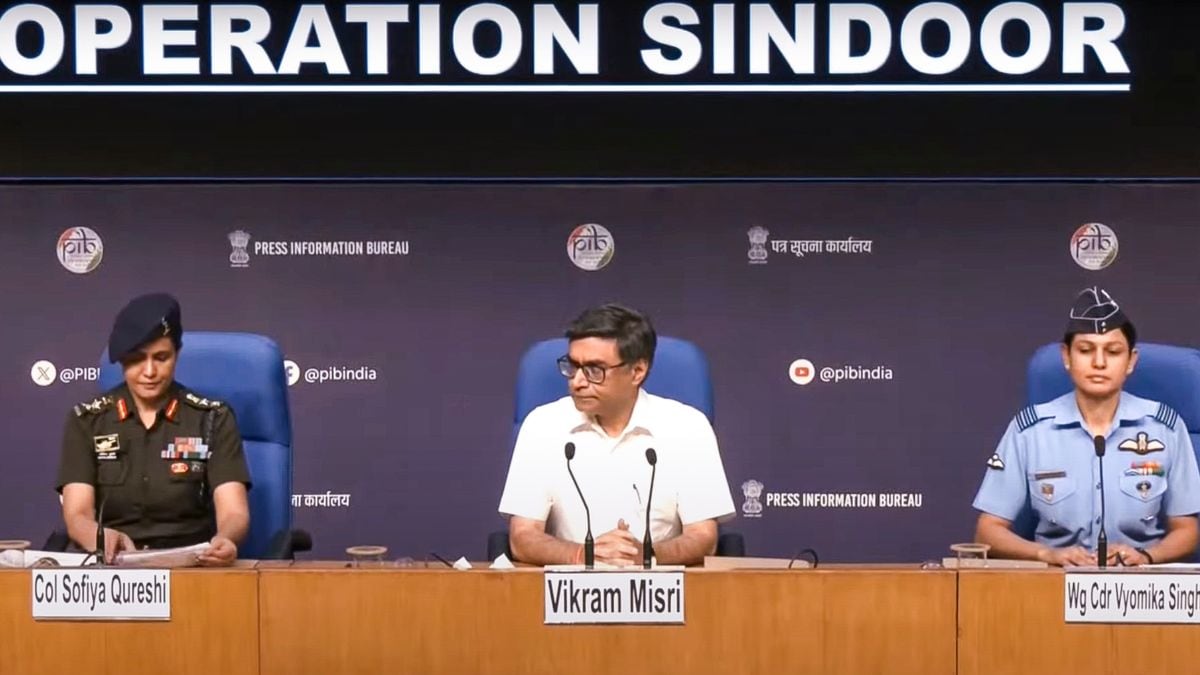
The names of the six Indian defence personnel killed in action during Operation Sindoor have been reportedly inscribed at the National War Memorial in New Delhi. The names of the fallen heroes have also been published in the Roll of Honour section on the National War Memorial website. According to reports, these are the first formal public acknowledgements of the casualties suffered by the Indian armed forces during the operation.
The martyrs of the military operation against Pakistan are Subedar Major Pawan Kumar of Headquarters 10 Infantry Brigade, Rifleman Sunil Kumar, Vir Chakra, of 4 Jammu and Kashmir Light Infantry, Lance Naik Dinesh Kumar of 5 Field Regiment, Aviation Technician Mood Muralinaik of 851 Light Regiment, Havildar Sunil Kumar Singh of 237 Field Workshop Company and Sergeant Surendra Kumar, Vayu Medal, of 39 Wing.
These names are engraved on Wall 3D of the memorial in the 2025 section, Hindustan Times said in a report.
On April 22, 2025, Pakistani-sponsored terrorists killed 26 tourists in Pahalgam. India launched Operation Sindoor, a military campaign against terrorist hubs in Pakistan and Pakistan-occupied Kashmir, in May in retaliation for the massacre. It sparked a brief but intense military conflict between the nuclear-armed neighbours, with Pakistan launching a drone strike on India. The Indian forces hit back, inflicting heavy damage on several military installations and airbases inside Pakistan.
On the intervening night of May 6-7, a strike package of IAF Rafales, Mirage 2000s and Sukhoi Su-30 MKI fighters launched a precision strike on terrorist camps within Pakistan, firing SCALP Storm Shadow long-range cruise missiles and Hammer air-to-ground precision bombs, which were launched from well within Indian airspace. Long-range artillery using precision-guided munitions was used for targets closer in range.
Other aircraft simulated activity all along the front to divide the enemy reaction. The entire operation was controlled by an Airborne Early Warning and Control aircraft, while loitering drones sent back videos of the strike and the damage before they too finally crashed into their designated targets with their explosive payloads. The entire strike lasted just 24 minutes—from 01.04 am till 01.30 am. By the time it was over, 24 missiles had hit nine terrorist camps—five in PoK and four in Pakistani Punjab.
FULL STORY | Operation Sindoor - India's retaliation against Pakistan-sponsored terror
Islamabad launched its own Operation Bunyan-un-Marsoos. At around 20:30 hours, Pakistan targeted 15 military establishments all the way from Bhuj to Srinagar, striking with drones and missiles. The very next day (May 8), the conflict escalated even further as Pakistan fired over 500 missiles and drones at military and civilian locations. The missiles were intercepted and shot down—eight in the Jammu region itself—but a number of drones did get through, inflicting localised damage. It was the first time since 1971 that both sides had targeted each other’s cities—something that was not done even during the Kargil War.
According to Pakistan, Indian planes involved in the initial strikes were brought down by its pilots during air-to-air combat. India had later said that after assessments of the initial strike that caused some losses, its forces effectively switched tactics and established an advantage before a ceasefire came into force. India also claimed it downed "a few planes" of Pakistan but didn't give an exact number, while Islamabad denied losing any planes but did acknowledge Indian strikes damaging its air bases.
