



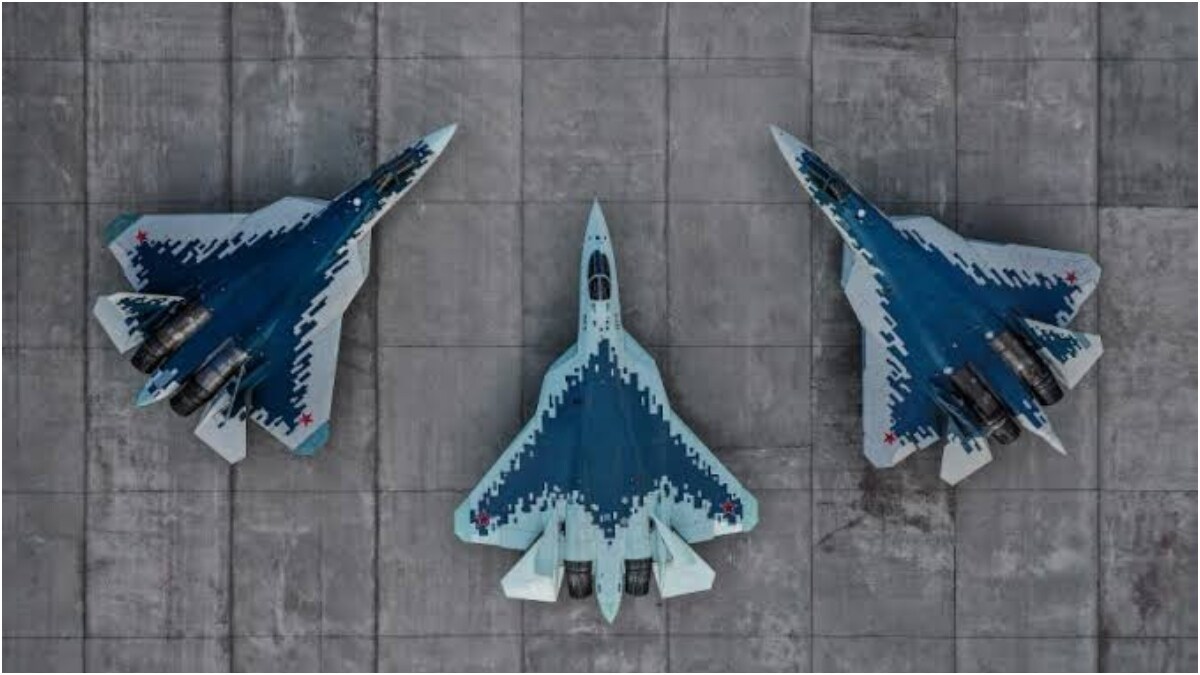
It was reported earlier this month that the Indian Air Force (IAF), which has been facing a severe fighter squadron shortage, has not given up on the Russian fifth-generation Su-57 offer, despite official claims of not actively pursuing a deal. Delays in key indigenous programmes, particularly the fifth-generation Advanced Medium Combat Aircraft (AMCA), have prompted India to look for stop-gap measures, including the Russian stealth fighter jet.
Su-57 two-seater aircraft are central to the Russian Manned-Unmanned Teaming (MUM-T) concept. The IAF's shortage—operating around 30 squadrons, well below the sanctioned strength of 42—has opened discussions on the possibility of India developing MUM-T collaborations as a way around it. Many air forces around the world have plans to deploy unmanned UAVs—including kamikaze drones and others—to accompany and complement their next generation of fighter aircraft.
Understanding Manned-Unmanned Teaming
As the name indicates, Manned-Unmanned Teaming or MUM-T involves combining conventional human-operated vehicles with unmanned platforms for enhanced effectiveness on the battlefield. Greater situational awareness and decision-making capability can be ensured by MUM-T operations, alongside a reduction in the loss of personnel.
In terms of aerial battlefields, MUM-T generally means the integration of Unmanned Aerial Vehicles (UAVs) with a fleet of manned aircraft. The unmanned UAVs used in MUM-T operations are referred to as Collaborative Combat Aircraft (CCA) drones or "Loyal Wingmen". They are a "disparate array of unmanned aerial systems (UAS) spanning various sizes and capabilities, from agile micro-UAVs for reconnaissance missions to larger and more robust platforms for striking targets and conducting electronic warfare operations. The flexibility of the CCA concept allows for tailored solutions to meet specific mission requirements," a report by UA Navigation said.
The US and Russian models of MUM-T
The US and Russian air forces depend on two different schools of MUM-T autonomy as things stand. The US Air Force is developing a more AI-driven model, while the Russians entrust their human pilots to hold the key to the formation. The United States deploys its single-seat F-35 for MUM-T, while Russia uses the twin-seated Su-57. The "mission commander" in the rear seat of the fighter jet will be entrusted with the simultaneous control of four to eight giant stealth drones called S-70 Okhotnik-B that are part of the formation.
The pilot, meanwhile, needs to deploy his guns and missiles to ensure the jet—which acts as the MUM-T command centre while the mission is ongoing—is not harmed. The drones can patrol, reconnoitre, attack, defend, or even provide air cover to ground forces as tasked by the mission commander while remaining at a safe distance. In extreme situations, the Russians envisage the two human pilots delivering their respective roles in tandem, meaning the pilot engages enemies in aerial combat while the commander in the back uses the drones, unbothered by the jet's manoeuvres.
The US using single-seated fighter jets means advanced military-grade AI technology remains central to the success of its MUM-T model. This could be a more expensive affair compared to the Russian model.
