


 Add as a preferred source on Google

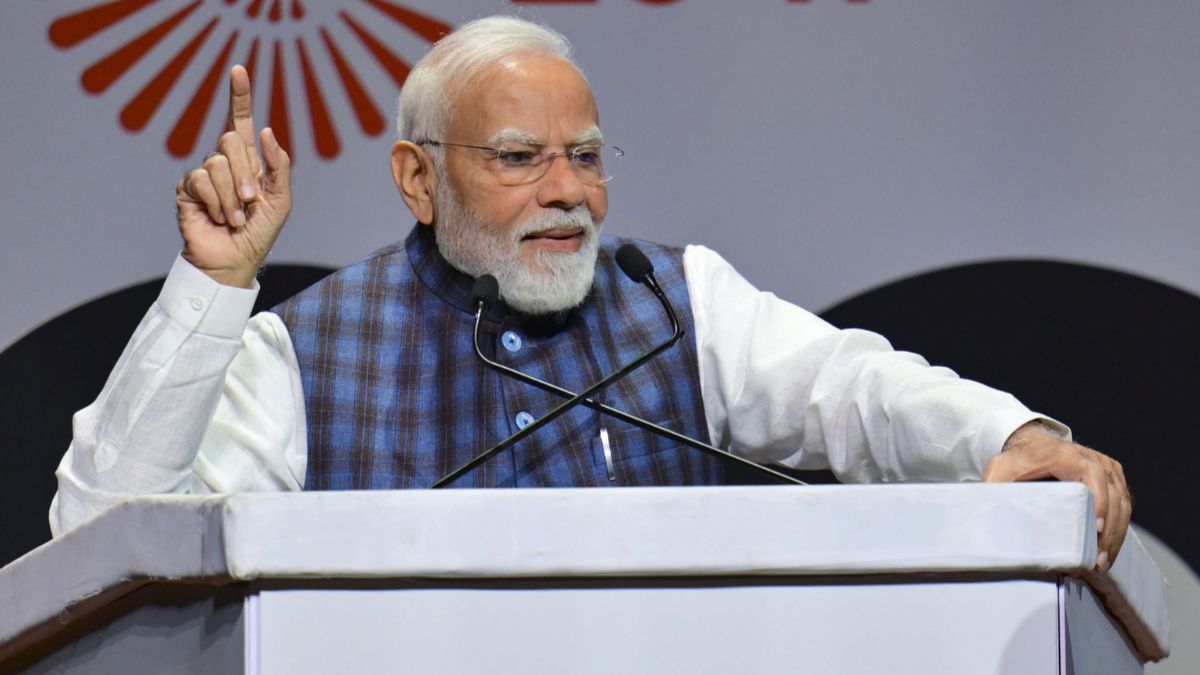
Prime Minister Narendra Modi’s lambasting of corporate India at a FICCI event in Delhi on Thursday has again highlighted an uncomfortable fact: while profits of companies have surged since the pandemic, wage growth has markedly lagged.
At the same time, this general view may have several distinctions. Trends in both profit and wage growth vary when one peels off the layers. For instance, large companies outperformed the rest in the immediate years after the pandemic, but since then, smaller companies have picked up pace.
Similarly, there is a wide disparity in the growth of wages too. Top management pay has generally grown much faster than for employees down the organisation.
First, let’s take a deeper look at corporate India’s earnings. The overall trend is unmistakable. Corporate profit as a percentage of GDP rose from 1.9 per cent in 2020 to 7.3 per cent in 2024 before slowing down to 6.9 per cent in 2025.
Profit of the Nifty-500 companies expanded at a CAGR of 28.7 per cent from 2020 to 2026. Sectors such as financial services, oil & gas, auto and metals led the surge.
Large cap companies dominated the surge in bottom line. But that wasn’t the report card for all the companies. The smaller ones had a particularly hard time, recovering from the disruption caused by the pandemic. Even as the economy came back to life post-pandemic, it was the bigger companies who recovered first, often at the expense of the smaller ones. In many of the sectors, there was a wave of consolidation with smaller companies merging with bigger peers.
It was only after 2023 that the medium- and small-scale firms recovered and their balance sheets became healthier. In 2025, they even outperformed their larger peers. A study by Ionic Wealth, a SEBI-registered wealth management firm, showed that mid-cap companies recorded a 22 per cent growth in net profit, and small-cap companies saw a 17 per cent growth. This was much faster than the large-cap companies, for whom profit growth slowed down to 5.6 per cent.
So yes, as the PM pointed out, Indian businesses recorded credible growth in their profitability. But it was not uniform.
The wage growth in comparison has been dismal. A Business Standard report quoting CMIE data said that while overall wages grew at an annualised 8-9 per cent since 2019, the salaried class had to do with a much slower 6.2 per cent increase in their pay. Adjusting for inflation, which has ranged from 6.1 per cent in 2021, 5.5 per cent in 2022 and to the latest 6.09 per cent in October this year, there’s not much of additional money in the hands of people.
Here, a distinction has to be made between the formal and informal economy, especially because up to 80 per cent of the Indian working population is outside the formal sector. Rural pay, for instance, grew just 2 per cent in 2025.
Within the formal sector too, the disparity is high. That is especially the case in big companies. Across BSE 500 companies, says a study by Mint, remuneration of top executives jumped 40 per cent in the 2026 financial year. But median employee remuneration in these companies grew by a paltry 1 per cent.
Given the disparities, the debate over profit and wage growth will continue. What needs to be seen is India Inc's response to PM Modi’s comments.
