



Entire American and European businesses, from plane makers like Boeing to fast food chains like McDonald’s, exited Russia following orders from their country of origin, the US, in this case—what if the same were to happen to India?
In a doomsday scenario, that could mean no internet (Google, Apple and Instagram are all US companies and bound by orders from their government), no fast food or pop culture (McDonald’s is American, so are Netflix and Amazon), and hell, no air travel either! (Almost all commercial planes flying in India are from America’s Boeing or Europe’s Airbus; same with their engines, which all need maintenance and support from their parent companies).
It isn’t entirely in the realm of imagination, or too absurd as first reactions go. Just a few days ago, the Delhi High Court had to step in to push accounting software major SAP to continue its services to Indian private oil company Nayara, after it stopped providing services based on European Union (EU) sanctions.
And don’t forget that the US President Donald Trump just last fortnight signed into law an act imposing 100 per cent tariffs on countries purchasing Russian oil, in a law that could impact virtually every Indian entity that exports to the US, which is India’s biggest and most lucrative trading partner.
“The question related to sanctions and tariffs goes beyond the legality in one’s own country because the extraterritorial expansion of these sanctions, though not “binding” under Indian laws, can significantly affect Indian nationals or entities because of their impact on trade and commerce by cutting access to global markets,” said Faraz Alam Sagar, partner, head dispute resolution & white collar crimes at CMS INDUSLAW, a leading legal firm.
“Sanctioning States simply prohibit or restrict any persons subject to their jurisdiction from dealing with these entities, which effectively creates operational difficulties for these entities, whether through access to finance, technology, goods, software, and other levels of the supply chain.”
The issue then is the exposure of a nation to a Sanctioning State’s operating realm. Even in an interconnected ‘global village’ of trade and business, some nations have a clout unmatched by others. For example, many of the brands, including the many mentioned at the beginning of this article, are from either the US or Europe. And these two entities have been at the forefront of using this weapon as a tool of war, be it against Russia, Iran or other states they consider ‘rogue’.
Officially, only sanctions approved by the United Nations Security Council are binding on India, as well as other nations of the world. But the fact is that the US and EU have autonomous and unilateral sanctions regimes that far exceed that of the UN—while India does not recognise such sanctions, the real-world implications can be debilitating.
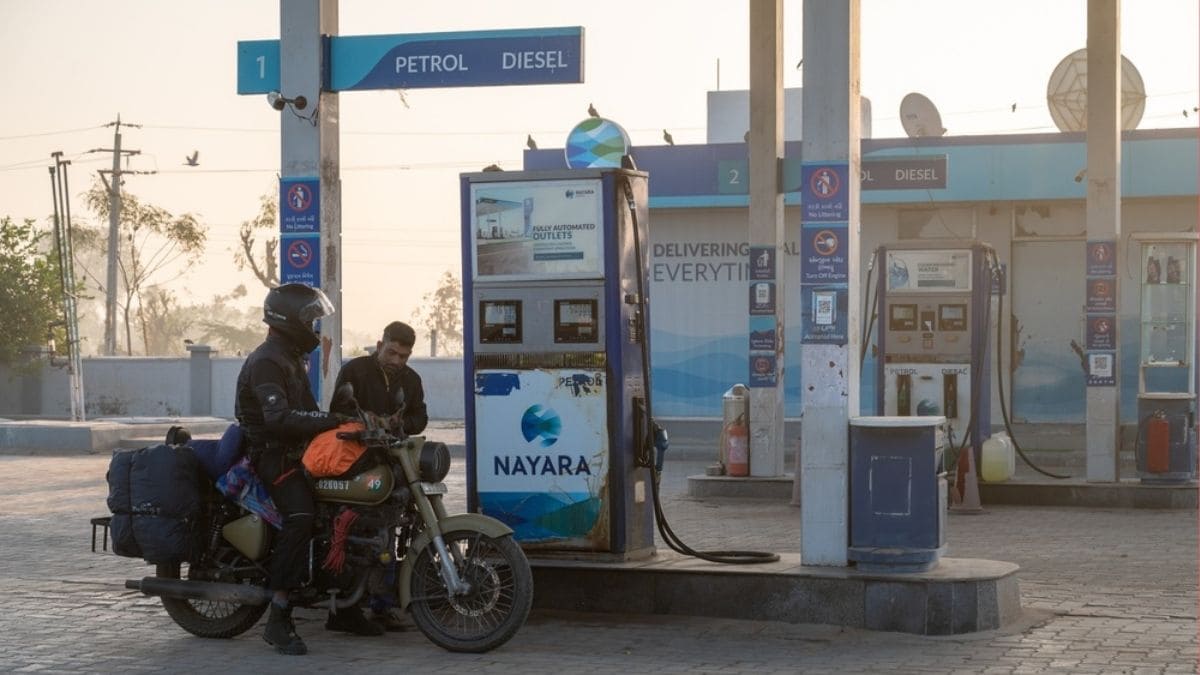
Like what happened with Nayara, which forced the Delhi High Court to step in. Nayara is one of India’s top private oil refineries and retailers, having thousands of petrol pumps across the country. Issues cropped up with its contract with SAP—since Nayara has a 49 per cent stake held by a consortium headed by the Russian oil company Rosneft, when the EU sanctioned Russian oil, SAP claimed that it was governed by rules from its parent company, which is based in Germany, to cut off Nayara’s accounting system.
Delhi High Court may have helped save Nayara by basing its interim injunction (final order is awaited) on the fact that the contract was between Nayara and SAP’s Indian division and hence EU rules don’t apply, but that throws up more worries. “While the Delhi High Court order upholds the binding force of a contract, it does not provide a solution [if] future contracts include a clause which [specifies] laws of the United States or the European Union as governing laws. This takes away the force of [this] judgement.”
While this is a single incident, the implications are many for a similar future scenario. Sure, being a massive market of 1.4 billion consumers would make any government or business think twice before cutting off India, but that is no cold comfort.
“India’s options lie in capacity building and legal shielding,” suggests Sagar. “India must secure its digital presence by building a robust infrastructure that allows for data localisation or allows for a locally controlled cloud for critical information while simultaneously consolidating its presence in the digital sphere. UPI is a stellar example of the same, but only as a first step. This capacity building must be accompanied by sharpening the force of its regulatory laws such as the Information Technology Act, 2000 and the Digital Data Protection Act, 2023 for cross-border data transfer controls and systemic controls for supply chain continuity and other such relevant measures.”
Strengthening legalities will also help. “While India builds its infrastructure, it must also provide a legal shield for its businesses and nationals. More immediate steps may include careful consideration to contract drafting regarding, specifically, the clauses on governing laws, sanctions and exit rights, whereas in the long term, India could consider enacting a blocking statute which safeguards the interests of persons subject to Indian laws by diluting the force of any extraterritorial laws,” he added.
