



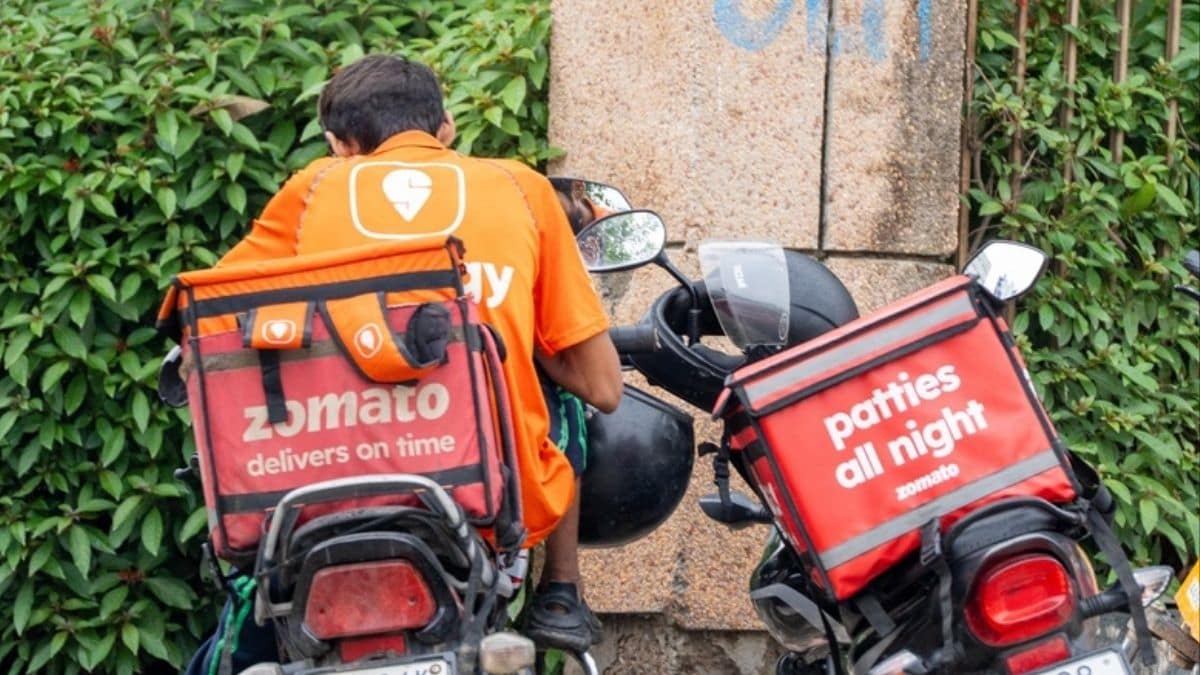
India has always had an uneasy relationship with work that defies categorisation. For decades, a job meant a government posting, a factory floor, or a desk in a private firm. Semi-skilled labour, the delivery rider, the domestic helper, the cab driver occupied a grey zone, economically essential, socially invisible. The arrival of app-based platforms in the early 2010s began to quietly shift that. And the shift is more profound than most policy conversations acknowledge.
The story starts around 2010–2013, when a clutch of startups, Ola in 2010, followed by Uber's India entry in 2013, and then the food delivery wave with Zomato and Swiggy gaining ground through 2014–2015 introduced a new kind of earning opportunity in India. This meant, for the first time, a smartphone-mediated marketplace that could match a semi-skilled worker with a customer in minutes, and deposit earnings directly into a bank account.
This was a genuinely novel economic form for India. The platforms did not invent gig work, but they gave it infrastructure, visibility, and scale. Within a few years, hundreds of thousands of workers had plugged into these platforms across metros. By the latter half of the decade, the model has extended into hyperlocal delivery, home services, freelance logistics, and beyond.
For the better part of three decades, India's development story has been shadowed by a paradox: cities grow, yet the workers who built them could not economically participate in them. Migration was a one-way survival valve. Young men from Bihar, Jharkhand, and Odisha arrived in Delhi or Pune not to build lives there, but to remit money home. As Zomato, Uber and their peers have expanded into Tier 2 and Tier 3 cities, workers there now increasingly have access to structured earning pathways that previously didn't exist locally, reducing, for some, the compulsion to migrate.
India’s gig workforce is projected to grow from 1 crore in 2024–25 to 2.35 crore by 2029–30. However, the more consequential number is the proportion of those workers operating in Tier 2 and Tier 3 cities, where platform penetration is growing faster and where there were previously almost no structured earning pathways for semi- or low-skilled workers.
There is a cultural dimension shift that economists routinely undercount. For generations, occupational status in India has been tightly bound to a narrow hierarchy, government service at the top, followed by white-collar private employment, with semi-skilled and manual work sitting firmly at the bottom. A delivery rider, a domestic worker, a cab driver: these were roles that families quietly hoped their children would move beyond, not into. The social stigma attached to such work was not merely about earnings; it was about legibility, about whether a livelihood could be named at a dinner table or a wedding.
Part of this change is cosmetic but not trivial. Uniforms, branded equipment, app-mediated workflows, and digital payment trails have introduced a visual grammar of professionalism to roles previously associated with informality and vulnerability. The profile of a food delivery partner represents a profound evolution within the informal economy. Rather than engaging in traditional daily wage labour, today's partners operate as digitally fluent micro entrepreneurs. They navigate smartphone applications, manage real-time earnings dashboards, and independently finance or own their vehicles.
When a role can be explained as "I am a Delivery Partner with Blinkit," "I am a Captain with Rapido”, it acquires a social grammar the traditional informal sector never possessed. This legibility matters enormously in a society where what you do to earn a living is closely tied to social identity.
The data bears this out. A 2023 Ipsos survey of over 3,600 gig workers across six Indian metros found that 84 per cent were satisfied with their experience in the gig economy, with desire for independence ranking among the top three motivators alongside earning potential and schedule flexibility. Around 77 per cent said they would recommend gig work to others seeking employment. More recently, a March 2025 study by IDinsight, surveyed 2,547 delivery platform workers across India's urban areas and found that workers consistently valued the autonomy and flexibility of platform work, with a third choosing to work exclusively during their free time, and nearly a quarter simultaneously enrolled in education. Far from being a last resort, platform work is increasingly a deliberate economic choice.
To be clear-eyed about this, we must acknowledge that platform work arrived in India faster than the regulatory imagination could follow. For years, gig workers occupied a legal no-man's-land: not employees, not contractors in any protected sense, not covered by most social security frameworks designed for the organised sector.
The implementation of the Code on Social Security, 2020 has been a watershed moment. For the first time, gig and platform workers were explicitly defined and brought within the ambit of a central legislation. The Code mandates aggregators, defined broadly to include app-based platforms, to contribute to a dedicated social security fund for platform workers. This legislative development reflects an important policy acknowledgement that platform workers form a vital economic constituency. As the policy architecture continues to evolve, there is a clear shift towards recognising platform livelihoods as a durable and permanent feature of the Indian labour market.
A delivery partner generating average gross earnings of ₹25,000 a month in Lucknow is spending it into the local economy. Before covering household needs like rent and education, a significant portion of this revenue sustains local ancillary businesses through daily fuel purchases, regular vehicle maintenance, and asset financing. This combined operational and personal spending creates a powerful multiplier effect worth noting in policy conversations.
India's consumer economy has historically been powered by the salaried middle class. Platform work is creating a new stratum of urban earners whose consumption patterns are deepening local markets in cities. The gig worker is not just a supply-side phenomenon. They are demand-side infrastructure for the next phase of Indian urban growth. What began in the early 2010s as a handful of ride-hailing apps has grown into an economic layer where millions of Indians earn and participate in city life on their own terms. The question now is whether the institutions around that layer; legal, social, financial will mature at the pace the workers within it deserve.
Author is partner, Indian Governance & Policy Project (IGAP)
